
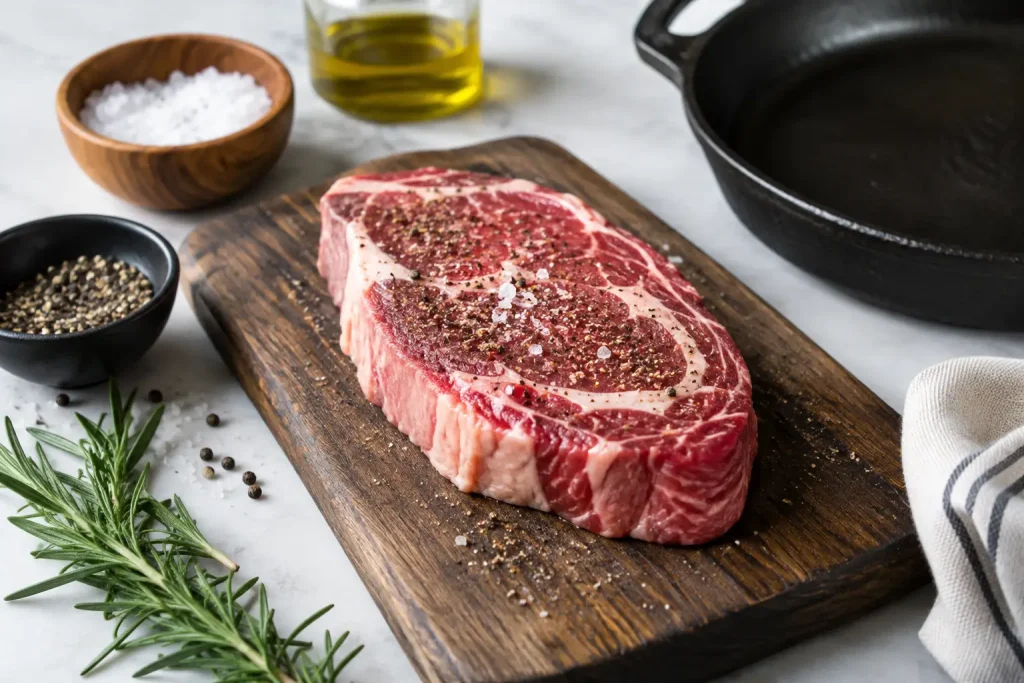
A cast iron skillet can turn a Tuesday-night steak into the kind of dinner that makes everyone hover near the stove. The secret is not a complicated marinade or a cabinet full of spices. To season cast iron steak well, start with a dry surface, use enough seasoning to create a real crust, and give the meat time to meet a properly hot pan.
Cast iron holds heat like a champ. That steady heat gives steak its deep brown exterior, savory little charred edges, and the contrast between a crisp crust and a tender center. Your seasoning has a big job here: it needs to bring flavor to the beef without scorching before the steak is cooked.
Start With the Right Steak and a Dry Surface
A well-marbled steak is naturally forgiving in cast iron. Ribeye is a favorite for its rich fat and big beefy flavor, while New York strip delivers a firmer bite and a bold crust. Top sirloin is a solid weeknight choice when you want steakhouse satisfaction without the premium price. Filet mignon cooks beautifully too, but because it is leaner and more delicate, it benefits from a gentler hand with strong seasonings.
Whatever cut you choose, take it out of the refrigerator 20 to 30 minutes before cooking. You do not need to bring it fully to room temperature, but taking the sharp chill off helps it cook more evenly. Then pat every side dry with paper towels. This step is not glamorous, but it matters. Moisture steams in the pan, and steam is the enemy of a browned crust.
If your steak has a thick fat cap, make a few shallow cuts through the fat, not into the meat. That keeps the edge from curling away from the skillet and gives you more even contact with the hot surface.
How to Season Cast Iron Steak Without Hiding the Beef
Salt, pepper, garlic, and herbs are classic for a reason. They support the flavor of beef instead of trying to cover it up. A balanced steak blend gives you that familiar savory backbone while saving you from measuring individual spices when dinner is already moving fast.
Season the steak generously on both sides and press the blend lightly into the surface. For a steak about 1 inch thick, season it 30 to 45 minutes ahead when you can. The salt has time to work into the exterior, improving flavor and helping the surface dry for better browning. If you are short on time, season immediately before the steak goes in the skillet. What you want to avoid is seasoning just a few minutes ahead, then letting the steak sit in a puddle of drawn-out moisture.
A clean-label blend with quality salt and real herbs brings more than heat to the table. Himalayan pink salt gives a clean, mineral-forward salinity, while cracked pepper, garlic, onion, and complementary herbs build layers around the beef. Heath’s Blends Steak & Taters is made for that hearty, savory direction, whether you are cooking a strip steak, a burger, or a thick-cut pork chop.
The best seasoning amount depends on the steak and the blend. A thin skirt steak has a lot of surface area and can take a punchier coating. A rich, heavily marbled ribeye may need less because the fat carries flavor so well. If your blend contains sugar, use medium-high rather than ripping-high heat, since sugar can burn quickly in cast iron. For a classic peppery, savory blend with no sugar, high heat is your friend.
Do You Need Oil Before Seasoning?
A light coat of high-smoke-point oil helps seasoning cling and encourages even browning. Avocado oil, grapeseed oil, and canola oil are all reliable choices. Rub or brush on just enough to make the steak glisten. Do not drench it. Excess oil can smoke aggressively and leave the seasoning patchy.
You can oil the pan instead, but oiling the steak gives you more control and makes it easier to coat every edge. Butter is better saved for the end. It adds incredible flavor, but its milk solids can burn during the initial hard sear.
Get the Cast Iron Hot Enough
Place a dry cast iron skillet over medium-high to high heat and let it preheat for several minutes. The pan should be hot enough that a tiny drop of water skitters and disappears quickly. If it merely bubbles, wait another minute or two.
This is where cast iron earns its place in the kitchen. When a cold steak hits the skillet, the pan temperature drops. A lightweight pan can lose too much heat and leave you with gray, soft meat. Cast iron has the heat reserve to keep browning going.
Turn on your vent fan, open a nearby window if needed, and resist the urge to crowd the skillet. Cook one or two steaks at a time, depending on pan size. Each steak needs room. If the pan is packed, moisture has nowhere to go, and your beautiful sear turns into a steam bath.
Sear, Flip, and Baste for Big Flavor
Lay the seasoned steak in the hot skillet away from you to avoid splatter. Once it touches the pan, leave it alone. Moving it too soon tears at the developing crust. For a 1-inch steak, cook the first side for about 2 to 4 minutes, depending on thickness and your desired doneness.
Flip when the underside releases easily and looks deeply browned. Cook the second side for another 2 to 4 minutes. Instead of flipping repeatedly, let each side build color with solid contact. If you have tongs, briefly sear the fat cap and edges too. Those browned bits are pure flavor.
For a steak thicker than 1 inch, lower the heat slightly after the initial sear. Add a tablespoon or two of butter, a smashed garlic clove, and a sprig of rosemary or thyme if you like. Tilt the pan and spoon the foaming butter over the steak for about a minute. The butter carries the seasoning, garlic, and herbs across the surface while the interior finishes cooking.
A thermometer removes the guesswork. Pull the steak a few degrees before your final target because it will continue cooking while it rests. Aim for 125 to 130°F for medium-rare, 135 to 140°F for medium, and 145°F or higher for medium-well. Thickness, pan heat, and the starting temperature of the steak all change timing, so temperature is more dependable than the clock.
Resting Is Part of Cooking
Move the steak to a plate or cutting board and let it rest for 5 to 10 minutes. This is the moment that protects all the work you just did. Slice too early, and flavorful juices run onto the board instead of staying in the meat.
Do not cover the steak tightly with foil. It can trap steam and soften the crust. A loose tent is fine if your kitchen is chilly, but an uncovered rest usually works beautifully for a cast iron steak.
When it is time to slice, cut against the grain, especially with cuts like flank, skirt, and hanger steak. Finish with a small pinch of seasoning only if the steak needs it after tasting. A final hit should brighten the crust, not bury it.
Common Cast Iron Steak Mistakes
The most common problem is a pan that is not hot enough. The steak may cook through, but it will not develop that craveable, brown crust. Another is using a wet steak, which leads to steaming instead of searing. Finally, many cooks overdo sweet blends at very high heat. Sugar can be delicious on the grill or during a lower-heat finish, but it needs attention in a blazing skillet.
A well-seasoned cast iron pan also makes a difference, though you do not need a flawless black mirror to cook a great steak. A pan with a smooth, maintained seasoning layer releases food more easily and handles high heat with confidence. After dinner, wipe out excess fat, scrub off stuck bits with hot water and a stiff brush, dry the pan completely, and rub on the thinnest film of oil before storing.
Great steak is not about chasing perfection on every flip. It is about a dry cut of beef, a seasoning you trust, a hot cast iron skillet, and the patience to let each step do its work. Set the pan on the burner, let that first sizzle happen, and make room at the table.