
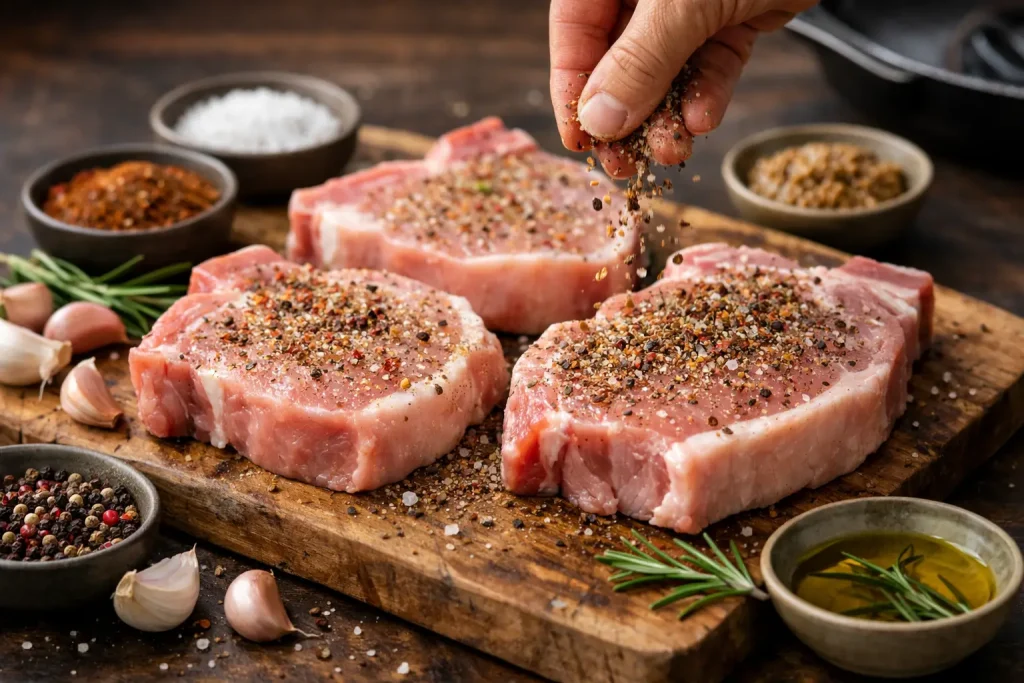
A pork chop can go from dry and forgettable to the most-requested dinner on the table with a few smart choices before it ever hits the pan or grill. Learning how to season pork chops is less about piling on spices and more about matching bold, clean flavor to the cut, then giving it enough time to do its job.
Pork has a mild, lightly sweet character that welcomes everything from peppery garlic and smoky barbecue to bright lemon and warm Southwest heat. The trick is keeping the seasoning intentional. A great chop should still taste like pork, just with a savory crust and a flavor that carries into every bite.
Start With the Right Pork Chop
Seasoning works best when you begin with a chop that can stay juicy. Bone-in rib chops and center-cut loin chops are excellent choices for grilling, pan-searing, and roasting. The bone adds a little insulation during cooking, while a chop that is at least 1 inch thick gives you more room to build a golden exterior without overcooking the center.
Thin, boneless chops can absolutely be delicious, but they cook fast. Give them a lighter coating of seasoning and keep a close eye on the heat. With a thinner chop, the goal is a flavorful surface without letting the spices scorch before the meat is done.
Before seasoning, pat the chops dry with paper towels. Moisture on the surface creates steam, and steam gets in the way of the browning you want. A dry chop, a little oil, and a hot cooking surface are the foundation of that beautiful, savory crust.
How to Season Pork Chops Step by Step
First, lightly coat both sides of the chops with a high-heat oil such as avocado oil, canola oil, or olive oil. You do not need much – about 1 to 2 teaspoons for four chops is usually enough. The oil helps herbs and spices cling to the meat and promotes even browning.
Next, season both sides generously, including the edges. For average 1-inch chops, plan on roughly 1 to 1 1/2 teaspoons of seasoning per chop, depending on the salt level in your blend and how boldly you like to eat. Press the seasoning in gently with your hands rather than rubbing aggressively. You want a well-covered surface, not a paste.
Let the pork rest for at least 15 to 30 minutes before cooking. This short rest gives the salt time to begin seasoning the meat beneath the surface and lets the herbs and spices settle in. If you are planning ahead, season the chops and refrigerate them uncovered for up to 8 hours. That longer dry-brine window is especially good for thick, bone-in chops.
If the chops have been refrigerated for more than an hour, take them out about 20 to 30 minutes before cooking. Starting closer to room temperature helps them cook more evenly. Do not leave raw pork out for extended periods, but a brief rest on the counter is useful for thick cuts.
Choose a Flavor Direction, Not a Crowded Spice Cabinet
The best pork chop seasoning has balance: salt for depth, black pepper for bite, garlic and onion for savoriness, and herbs, smoke, citrus, or chile for personality. You can build that profile from individual spices, but a dependable gourmet blend makes weeknight cooking a lot easier and more consistent.
For a classic grilled pork chop, choose a blend with garlic, pepper, onion, and herbs. This savory profile plays well with almost any side, from roasted potatoes to grilled corn or a crisp green salad. A pepper-forward blend is especially good when you are serving chops with a creamy pan sauce, since it gives the dish contrast without fighting the sauce.
For barbecue flavor, reach for a seasoning with paprika, gentle sweetness, pepper, and a touch of tang. Pork loves smoky, slightly sweet notes, but there is a trade-off: blends with a lot of sugar can darken quickly over direct high heat. Use a two-zone grill, sear first and finish over lower heat, or add a sugary barbecue sauce near the end of cooking rather than at the beginning.
When you want something brighter, lemon pepper, garlic, and herbs make pork chops feel fresh and lively. This route is perfect for a skillet dinner with green beans, asparagus, or a simple rice pilaf. Citrus-forward seasonings are also a smart pick for lean boneless chops because their brightness keeps each bite from feeling heavy.
Southwest-style seasoning brings a whole different kind of energy. Think chile, cumin, garlic, pepper, and warm herbs, paired with grilled peppers, charred onions, black beans, or corn. If your family likes heat, use a spicy blend freely. If not, start with a milder savory seasoning and bring heat to the table with a finishing sauce.
Heath’s Blends makes that choice simple with clean, flavor-driven options such as Steak & Taters for savory, peppery depth, Tom’s Tangy BBQ for backyard-style chops, or Peppery Lemon for a bright finish. The goal is not to cover up good pork. It is to give it a bold, dependable flavor with organic herbs and spices, Himalayan pink salt, and no artificial fillers getting in the way.
Salt Timing Makes a Real Difference
Salt is the part of seasoning that reaches beyond the surface. When it has time to sit on the meat, it helps the chop retain moisture as it cooks and seasons more evenly. That is why a 30-minute rest can make such a noticeable difference.
If your seasoning blend already contains salt, apply it early and skip extra salt unless you know you need it. If you are using a salt-free spice blend, season the chops with salt first, then add the blend. A good starting point is about 3/4 teaspoon kosher salt per pound of pork, adjusted for your taste and the rest of the meal.
There is one timing situation to avoid: salting just a few minutes before cooking and then waiting around. Salt either needs a brief moment right before the chops go on the heat or at least 15 to 30 minutes to begin working its way in. In between, it can draw moisture to the surface without enough time for the meat to reabsorb it.
Add a Marinade Only When It Brings Something New
A dry seasoning is usually all pork chops need, especially if you want a crisp sear. Marinades are useful when you are after a particular flavor profile, such as citrus-garlic, soy-ginger, or a tangy barbecue finish. They can add great flavor, but they are not a requirement for juicy pork.
Be careful with highly acidic marinades containing lots of vinegar, lemon juice, or lime juice. A short soak of 30 minutes to 2 hours can be delicious. Much longer, particularly with thin chops, can make the outside texture soft or slightly mushy. For an all-day prep option, choose an oil-based herb marinade with moderate acid, or stick with a dry brine and add fresh citrus after cooking.
After marinating, blot off excess liquid before the chops meet the skillet or grill. You can leave the seasoning that clings to the meat, but puddles of marinade will steam instead of sear.
Cook the Seasoning Without Burning It
A well-seasoned chop needs the right heat. For a skillet, preheat a heavy pan over medium-high heat, add a thin layer of oil, and place the chops in without crowding them. Let the first side develop color before moving it. Depending on thickness, this often takes 3 to 5 minutes per side, followed by a short finish over medium or indirect heat.
On the grill, create both a hotter direct zone and a cooler indirect zone. Sear the chops over direct heat, then move them to the cooler side if they need more time. This approach is especially useful for thick chops and spice blends containing herbs, paprika, or sugar, which can burn if they stay over intense flames too long.
Cook pork chops to an internal temperature of 145°F, measured in the thickest part away from the bone. Then rest them for 3 to 5 minutes before slicing. The juices settle back into the meat during that rest, and the result is tender pork rather than a cutting board full of lost moisture.
Finish With One Fresh Touch
The seasoning does the heavy lifting, but a small finishing touch can make dinner feel restaurant-caliber. A squeeze of lemon works beautifully with peppery or herb-seasoned chops. A spoonful of barbecue sauce belongs on smoky chops. A little butter with fresh herbs can soften a spicy crust, while sliced scallions or a pinch of flaky salt add texture and color.
Keep the finish connected to the seasoning you chose. Bright pork wants brightness, smoky pork wants a little sweetness or tang, and spicy pork often benefits from something cool and creamy on the plate. Once you taste the difference a thoughtful seasoning routine makes, pork chops stop being a backup dinner and become one of the easiest ways to put serious flavor on the table.