
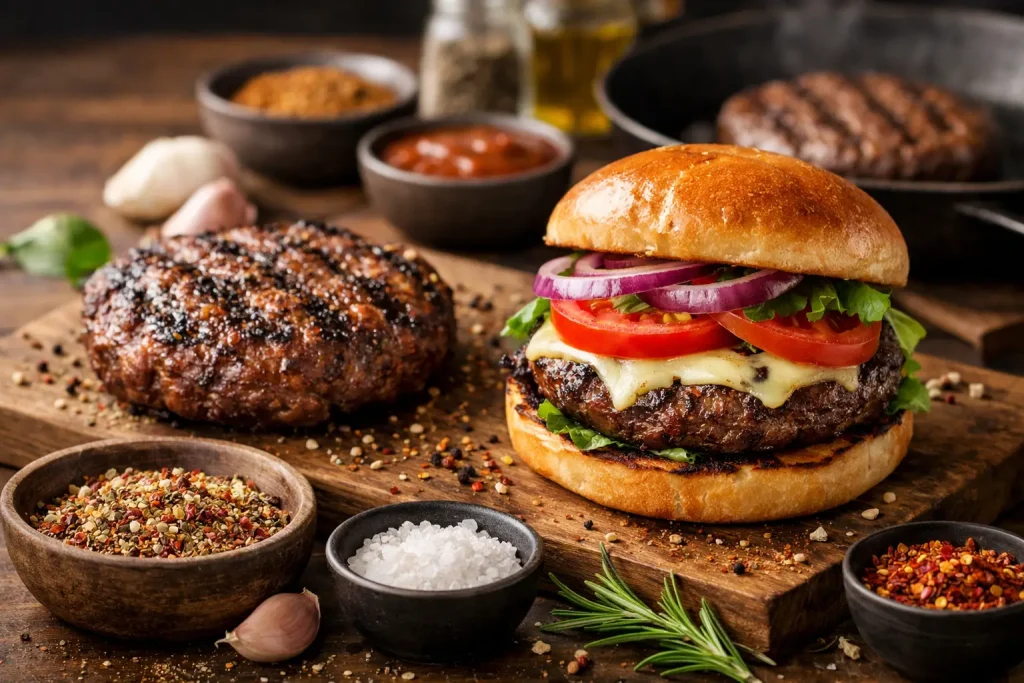
A great burger does not need a crowded ingredient list. It needs a hot cooking surface, meat that has not been overworked, and the best seasoning for burgers applied with a little intention. That final piece is what turns a plain patty into the one everyone reaches for first at the cookout.
The goal is not to bury beef under a mountain of spices. A burger should still taste like beef, with salt bringing out its richness, pepper adding a little bite, and supporting flavors building a savory crust. Once you understand what each element contributes, it is easy to choose a blend that fits your burger, your grill, and the people gathered around the table.
What Makes the Best Seasoning for Burgers?
For classic ground beef burgers, salt and black pepper are the foundation. Salt seasons the meat and helps create a deeply savory exterior, while black pepper brings sharp, earthy warmth. Garlic and onion round out the flavor with the familiar, steakhouse-style character most burger lovers want.
The best blends go a step further without getting fussy. Paprika can add gentle sweetness and color. A touch of chile brings warmth. Herbs can give a burger a fresh, savory finish. The key is balance. If a seasoning is too sugary, it can burn over high heat. If it is too salty, toppings like bacon, cheese, pickles, and sauce can push the finished burger over the edge.
Ingredient quality matters here because burgers are simple food. There is nowhere for stale spices, artificial flavors, or filler-heavy blends to hide. Fresh herbs and spices have more aroma, so a modest amount delivers a fuller flavor. A clean blend made with real ingredients lets the crust taste bold without leaving a harsh, powdery finish.
Start With Salt, Pepper, Garlic, and Onion
If you are seasoning burgers for a crowd, a savory all-purpose blend built around salt, coarse black pepper, garlic, and onion is the dependable choice. This profile works with grilled burgers, skillet burgers, smash burgers, and even burgers cooked on a flat-top.
A blend such as S.P.O.G – salt, pepper, onion, and garlic – brings that reliable burger-joint flavor in one shake. It is especially good when the toppings are classic: American cheese, lettuce, tomato, onions, pickles, and a favorite sauce. You get a seasoned crust that supports the toppings instead of competing with them.
For a thicker pub-style burger, look for a blend with a more noticeable pepper presence. Beef can stand up to it, particularly when the patty is topped with mushrooms, Swiss cheese, caramelized onions, or a rich barbecue sauce. A little peppery edge keeps every bite from tasting too heavy.
Match the Blend to the Burger You Are Making
Not every burger calls for the same seasoning. The meat, cooking method, and toppings should all have a say.
A thin smash burger benefits from a straightforward savory blend. The patty cooks fast, and its flavor comes from the crisp, browned edges created when beef meets a ripping-hot griddle. Salt, pepper, garlic, and onion give you the right kind of support. Skip heavy herbs or large pieces of spice that may scorch before the burger is done.
A thick backyard burger can carry more personality. Try a smoky blend with paprika, pepper, garlic, and a controlled amount of chile. It pairs beautifully with cheddar, grilled onions, and a toasted brioche bun. If you like a little Southwest energy, a blend with chile, cumin, and bright spice can take a burger toward pepper jack, avocado, roasted green chiles, and a crisp pile of shredded lettuce.
Turkey burgers need extra help because they are leaner and milder than beef. Garlic, onion, pepper, herbs, and a touch of citrusy brightness make them taste more lively. Peppery Lemon is a natural fit when you want a lighter burger with arugula, tomato, feta, or a yogurt-based sauce.
Veggie burgers vary widely. A bean-based patty can handle smoky, Southwest-style seasoning, while a mushroom or grain burger often shines with garlic, black pepper, and herbs. Season the patty itself if you are making it from scratch, then add a light extra dusting before cooking so the outside has real flavor too.
When to Season Burgers for the Best Crust
Timing makes a bigger difference than many home cooks realize. For patties you are shaping yourself, do not mix salt directly into the ground beef well ahead of time. Salt changes the texture of meat, and a heavily mixed, pre-salted patty can become firm and springy rather than tender and juicy.
Instead, form the patties gently and season the outside just before they go on the grill or into the skillet. Be generous enough that every surface gets coverage, but do not create a thick blanket of seasoning. Think of it as seasoning the crust, not breading the burger.
For smash burgers, season the exposed side after pressing the meat onto the hot surface. Once you flip it, season the second side. This method keeps the texture loose while giving the crust plenty of savory flavor.
If you are using a seasoning blend with sugar, cook over medium or medium-high heat rather than the fiercest flame possible. Sugar can caramelize beautifully, but it can also blacken quickly. For high-heat searing, a savory, low-sugar blend is usually the safer choice.
How Much Burger Seasoning Should You Use?
A good starting point is about 3/4 teaspoon of seasoning per quarter-pound patty, divided between both sides. That is a guide, not a rule. A fine-grain blend will taste saltier by volume than one with coarse pepper and larger spices, so start with a light hand if you are trying a new blend.
The smartest way to dial in your amount is to cook one small test patty. Taste it without a bun or toppings first. If it needs more pop, add a little more seasoning to the remaining patties. This is especially helpful when serving different cheeses, sauces, or salty toppings.
Remember that burger toppings are seasonings, too. Blue cheese, bacon, pickles, jalapenos, barbecue sauce, and seasoned fries all bring salt and bold flavor. A burger loaded with those ingredients usually needs a cleaner, pepper-forward blend. A bare burger with only cheese and a bun can handle something smokier or more complex.
Avoid the Most Common Burger Seasoning Mistakes
The biggest mistake is working the meat too much. Even the finest seasoning cannot rescue a dense, tight patty. Handle ground beef just enough to portion and shape it, then let the heat do its job.
Another mistake is seasoning only one side. Burgers are thick enough that both sides deserve attention, particularly if you are cooking them over grates where some seasoning is lost to the fire. Also, resist the urge to press down on patties as they cook. That dramatic sizzle is your burger juice hitting the heat, not a sign that the burger is improving.
Finally, do not choose seasoning based on heat alone. A blend can be bold without being painfully spicy. Smoky paprika, cracked pepper, garlic, onion, cumin, and real herbs create layers that make people take another bite. Heat should be a welcome guest, not the only thing anyone remembers.
Heath’s Blends makes it easy to keep that kind of flavor close at hand, with organic herbs and spices, Himalayan pink salt, and no MSG, artificial flavors, fillers, or preservatives. A versatile savory blend belongs beside the grill because it can season the burgers, the onions, the corn, and the potatoes without making dinner feel complicated.
The next time burger night rolls around, make one small change: season the outside right before cooking, then let the crust tell you when you got it right. When the edges are browned, the center is juicy, and the first bite tastes like beef with a little extra swagger, you have found your house burger.