
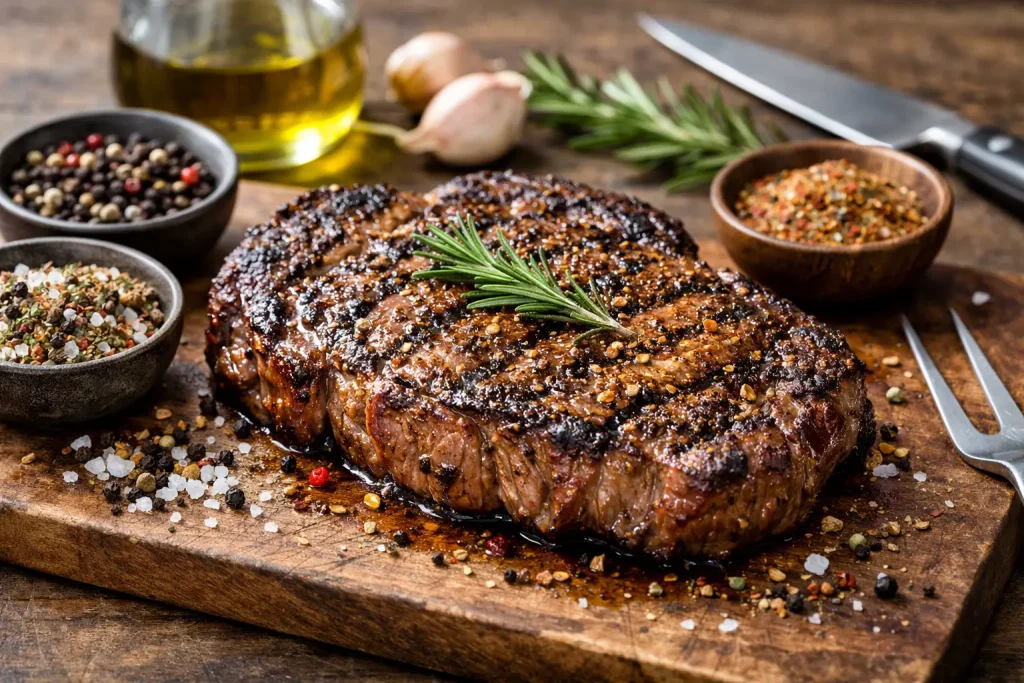
A great steak does not need to be buried under a long list of flavors. The best steak seasoning brings out what you paid for: the deep, savory character of the beef, a bold browned crust, and that first juicy bite that makes everyone quiet at the table. It should season the meat all the way through while leaving room for the steak itself to shine.
That is why the answer is not one magic jar for every cut, grill, or appetite. A thick ribeye can carry plenty of cracked pepper and garlic. A leaner sirloin often benefits from a more measured hand. The goal is not to make every steak taste the same. It is to use a balanced blend and the right technique so each cut tastes like its best version.
What Makes the Best Steak Seasoning?
Start with salt. Salt does more than make food taste salty. Given a little time, it seasons beyond the surface, helps the steak retain moisture as it cooks, and makes savory flavors feel fuller. A mineral-rich salt, such as Himalayan pink salt, brings clean, direct seasoning without requiring a heavy coating.
Then comes pepper. Fresh, coarse black pepper adds the familiar steakhouse bite, especially on a hard-seared strip steak or ribeye. It should be present, but it should not take over. Too much fine-ground pepper can turn acrid over extremely high heat, so a blend with a sensible grind gives you flavor and a better crust.
Garlic and onion round out the savory backbone. They add warmth and depth without pulling the steak into barbecue territory. A touch of paprika can contribute color and a gentle earthiness. Herbs such as rosemary, thyme, or parsley are welcome when used with restraint, particularly for grilled filet, tri-tip, or steak-and-potatoes dinners.
The real difference is balance. The best steak seasoning is not simply the saltiest, hottest, or most complicated blend on the shelf. It has enough salt to season the meat, enough pepper to bring character, and enough supporting spices to create a memorable crust. Just as important, it should not depend on artificial flavors, MSG, fillers, or preservatives to taste exciting.
Match Your Seasoning to the Steak Cut
Fatty cuts welcome assertive flavor. Ribeye, New York strip, and flat iron steak have enough richness to stand up to a pepper-forward blend with garlic, onion, and herbs. Their marbling melts as they cook, carrying those savory flavors through every bite.
Leaner steaks call for a lighter touch. Filet mignon has a delicate texture and mild beef flavor, so use enough seasoning to form a crust without masking it. Top sirloin is versatile and budget-friendly, but because it has less fat than ribeye, avoid over-salting it or cooking it past medium.
For flank steak, skirt steak, and hanger steak, seasoning can be a little more energetic. These cuts love garlic, pepper, and a bit of Southwest-style warmth. They also benefit from a short rest after cooking and thin slices cut against the grain. Good seasoning helps, but slicing direction is what keeps these steaks tender on the plate.
If you are serving a steak with a rich sauce, compound butter, or chimichurri, choose a simpler seasoning profile. Let the sauce handle the big finishing flavor. On the other hand, a steak served straight from the grill with nothing more than roasted potatoes and a salad can take a more layered blend.
Clean ingredients make a better everyday choice
When steak is a regular part of your grill rotation, ingredient quality matters. Organic herbs and spices, non-GMO ingredients, and a clean salt base give you flavor you can feel good about using on more than a special-occasion dinner. There is no need for mystery ingredients when real garlic, pepper, herbs, and spices do the job beautifully.
A cleaner blend is also more versatile. The seasoning that makes a ribeye sing can go on burgers, chicken thighs, roasted mushrooms, grilled zucchini, and baked potatoes. That makes it easier to keep one dependable flavor tool within reach instead of collecting half-used jars that only work for one recipe.
How to Season Steak for the Best Crust
Pat the steak dry first. Surface moisture is the enemy of browning. Use paper towels to blot both sides, then apply seasoning evenly, including the edges of a thick cut. You want a visible, even layer, not a crust so thick that it falls away when you slice.
For a weeknight steak, season 20 to 40 minutes before cooking and leave it uncovered on a plate or rack in the refrigerator if you have room. This gives the salt time to start working while keeping the surface dry. If you are short on time, season immediately before the steak hits the hot pan or grill. The awkward middle ground is seasoning only a few minutes ahead, when salt has begun pulling moisture to the surface but has not had time to draw it back in.
For thick steaks, a longer dry brine is worth it. Season them the night before, place them uncovered in the refrigerator, and cook the next day. The result is a more deeply seasoned interior and a drier exterior that browns with less effort. This works especially well for bone-in ribeyes, thick strip steaks, and reverse-seared cuts.
Use more seasoning than you think on very thick steaks, but remember that not all blends have the same salt level. If your steak seasoning includes Himalayan pink salt as its base, taste and learn how it behaves on your preferred cut before adding extra salt at the table.
Heat, Timing, and the Finish Matter Too
Even the finest blend cannot rescue a steak cooked in a lukewarm pan. Preheat a cast-iron skillet, grill grates, or flat-top until it is properly hot. Add a high-smoke-point oil if needed, then set the steak down and let it make contact. Resist the urge to move it around. That stillness is how the browned crust develops.
For most steaks, flip once the first side has a deep mahogany color and releases easily from the cooking surface. Then use an instant-read thermometer rather than guessing by touch. Pull the steak a few degrees before your target temperature because carryover heat continues the cooking while it rests.
Resting is not optional. Give smaller steaks five to seven minutes and larger cuts 10 minutes or more. The juices settle back into the meat instead of flooding the cutting board. Finish with a small pat of butter, a squeeze of lemon for brightness, or a final pinch of seasoning only if the steak needs it after tasting.
A Dependable Blend Beats a Complicated Spice Cabinet
Building your own blend can be fun, especially when you want to adjust the heat or herb level. But a well-made steak seasoning saves time and gives you the same satisfying result every time the grill is fired up. Look for a blend that tastes bold without being harsh, uses real herbs and spices, and has a salt level you can work with across different cuts.
Heath’s Blends Steak & Taters fits that everyday role especially well: a savory, steak-ready blend that also earns its place on crispy potatoes, burgers, vegetables, and the rest of the plate. That kind of versatility is the secret to cooking with more confidence. Keep a quality seasoning by the stove, respect the heat, and let your next steak do the talking.