
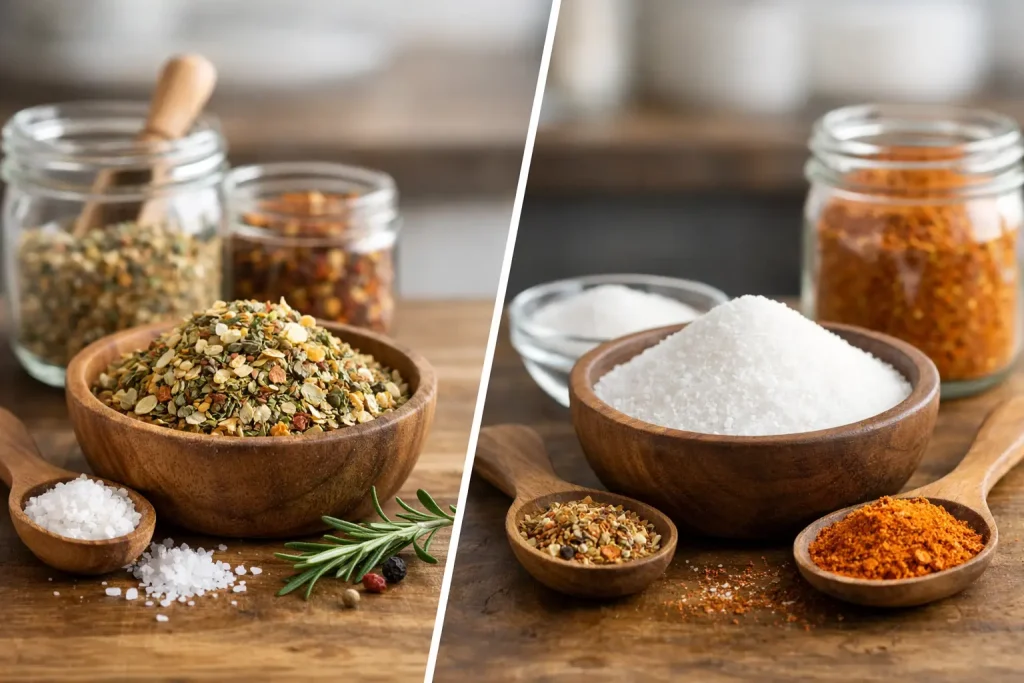
A good seasoning should make a grilled burger smell impossible to ignore, give roasted vegetables real personality, and turn a quick chicken dinner into something the whole table remembers. That is where the MSG free versus regular seasoning conversation gets interesting. The choice is not simply about whether one tastes good and the other does not. It is about how flavor is built, what is on the label, and what feels right for the way you cook.
For home cooks who care about clean ingredients, the best answer usually starts with a jar in your hand. Read the ingredient panel, think about the dish you are making, and choose a blend that brings flavor without covering up the food itself.
What MSG Does in a Seasoning Blend
MSG stands for monosodium glutamate. It is a flavor enhancer that brings out umami, the savory quality people associate with foods like mushrooms, tomatoes, aged cheese, roasted meat, and rich broth. In a seasoning blend, MSG can make flavors seem fuller, meatier, and more intense with a small amount of product.
That effect is why it appears in many packaged foods and some conventional spice blends. It can be especially noticeable in seasoning designed for snacks, soups, noodles, chips, and highly savory meat dishes.
MSG is not the same thing as salt, although it does contain sodium. It is also related to glutamate, an amino acid found naturally in many foods. The practical cooking question is less about chemistry and more about preference: Do you want umami to come from added MSG, or do you want a blend built around herbs, spices, salt, pepper, garlic, onion, chiles, citrus, and other recognizable ingredients?
MSG Free Versus Regular Seasoning: The Real Difference
“Regular seasoning” is a broad label, not a fixed recipe style. A regular all-purpose blend might contain only salt, pepper, garlic, and spices. Another may include MSG, sugar, natural flavors, anti-caking agents, or preservatives. You cannot tell from the front of the bottle alone.
An MSG-free seasoning excludes added monosodium glutamate. That does not automatically make every MSG-free blend better, lower in sodium, less processed, or more flavorful. A blend can skip MSG and still lean heavily on salt, sugar, fillers, or vague flavoring ingredients. Likewise, a regular blend without an MSG-free claim may not contain MSG at all.
The ingredient list tells the real story. Look for clear names you recognize: paprika, black pepper, garlic, onion, oregano, cumin, chile, lemon peel, or a quality salt. Those ingredients give you a more specific picture of how the blend will taste and where it will shine.
Flavor: Immediate Punch or Layered Character?
Seasonings with MSG often deliver a quick, savory boost. That can be useful when you want a familiar, full-bodied profile fast, particularly in a big pot of soup, a ground-beef filling, or a late-night bowl of popcorn.
A well-made MSG-free blend gets its character another way. Garlic and onion create depth. Pepper brings warmth. Smoked paprika adds barbecue-style richness. Chiles bring heat and fruitiness. Lemon, vinegar powder, and herbs brighten heavier foods. The result can feel more layered because each ingredient has room to show up.
Neither approach is automatically wrong. But if you love tasting the char on a steak, the sweetness of shrimp, or the earthiness of roasted potatoes, a thoughtfully balanced MSG-free blend can enhance those flavors without making every dish taste like the same salty-savory shortcut.
Sodium: Do Not Assume MSG-Free Means Low-Sodium
This is the label-reading detail worth remembering. MSG-free does not mean sodium-free, and it does not necessarily mean low-sodium. Many seasoning blends rely on salt for both flavor and preservation, whether MSG is present or not.
Check the Nutrition Facts panel if sodium is a concern in your household. Then consider how you use the seasoning. A salt-forward rub may be perfect for a thick pork chop or a rack of ribs, but you may want a lighter hand when seasoning soup, eggs, or a casserole that already includes cheese, broth, or cured meat.
Using a flavorful blend also helps you season with intention. When herbs, spices, pepper, garlic, and citrus are doing more of the work, you may not need to keep shaking salt over the plate to get a satisfying bite.
Ingredients and Transparency Matter
For many cooks, the biggest advantage of MSG-free seasoning is not a dramatic flavor claim. It is knowing exactly what is in the blend. A short, straightforward ingredient list makes it easier to cook for your family, accommodate preferences, and build meals you feel good about serving.
That is particularly helpful when you are seasoning ANY type of food. The same dependable blend might land on grilled chicken one night, roasted cauliflower the next, then a pot of beans, salmon fillets, or Sunday potatoes. Versatility is easier when a blend tastes like real spices rather than a mystery formula.
If you avoid artificial flavors, fillers, preservatives, or certain allergens, look beyond the MSG statement. Those standards are separate, and each matters in its own way.
When Regular Seasoning May Make Sense
There is no need to treat every conventional seasoning as off-limits. A regular blend may be the right fit when you enjoy its flavor, understand its ingredients, and it works for the recipe. Sometimes a family favorite has a bold, nostalgic taste that belongs on game-day wings or a particular chili recipe.
The key is to choose it on purpose. If a blend contains MSG and you enjoy it, use it as directed and balance it with the rest of your meal. If you are trying to reduce sodium, rely less on the label claim and more on serving size, total sodium, and how many other salty ingredients are in the pan.
Regular seasoning also varies wildly in quality. Some blends are simple and spice-forward. Others are built to taste intense at a low cost. The category alone cannot tell you what you are getting.
How to Get Big Flavor Without Added MSG
Building satisfying flavor at home does not require a crowded spice cabinet or a chef’s coat. It does require matching the blend to the cooking method and giving the food a little attention.
For grilling, apply seasoning early enough for salt and spices to settle onto the surface. For steaks, burgers, chops, and chicken thighs, pat the protein dry first, season generously, and let the heat create a crust. Peppery, garlicky, smoky, and chile-forward blends are especially good here.
For roasting, toss vegetables or potatoes with oil before seasoning so the spices cling evenly. High heat brings out sweetness in carrots, squash, onions, and cauliflower, while a bright lemony or herbaceous blend keeps the finished dish from feeling heavy.
For soups, sauces, and beans, add seasoning in stages. Start with a modest amount while the aromatics cook, then taste again near the end. Dried herbs and spices need time to bloom, and that extra few minutes can bring out a deeper, rounder flavor without over-seasoning.
A final splash of acid can also do what people often expect from an extra shake of seasoning. Lemon juice, vinegar, or a spoonful of tomato paste can wake up savory foods beautifully. Salt makes flavor louder, while acid makes it sharper and more lively. Knowing when to use each is a home-cooking superpower.
Choosing a Blend You Will Actually Use
The best jar is not the one with the most dramatic claim. It is the one you reach for again and again because it makes dinner easier and tastier. Choose a profile that fits your kitchen: smoky and bold for the grill, peppery and savory for steaks and potatoes, tangy for barbecue, or bright and citrusy for seafood and vegetables.
At Heath’s Blends, that means building flavor with organic herbs and spices, Himalayan pink salt, and ingredients selected without MSG, artificial flavors, fillers, preservatives, or nuts. The goal is simple: give everyday cooks a dependable way to make food burst with flavor, from a quick Tuesday-night meal to a backyard barbecue.
Keep one blend near the stove and one near the grill. Season with curiosity, taste as you cook, and let the ingredients on your plate have something delicious to say.