
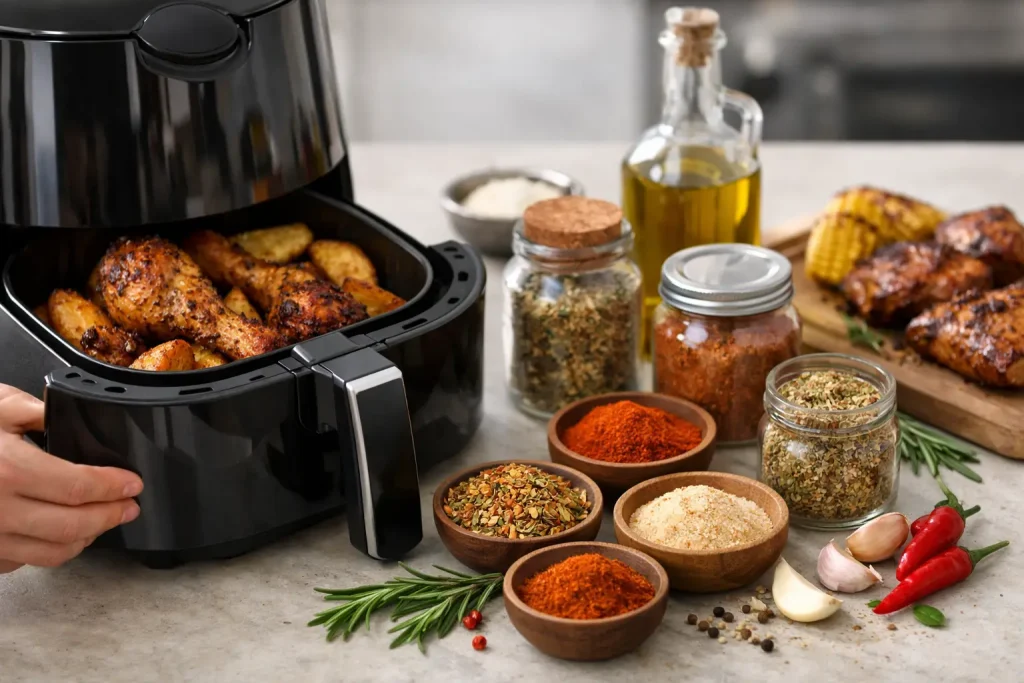
That basket of chicken thighs or potato wedges is only a few minutes away from a seriously good dinner. The right air fryer seasonings bring out the browned edges, savory crust, and big flavor that make this little appliance work so hard in a home kitchen. The trick is not piling on more spice. It is choosing a blend that fits the food, helping it stick, and giving it enough room to crisp.
Air frying moves hot air quickly around your food, so seasonings meet high heat fast. That is great news for pepper, garlic, smoked spices, herbs, and tangy flavors. It also means a heavy hand with sugar or loose dried herbs can turn bitter before the center of your food is cooked. Once you understand that balance, weeknight chicken, vegetables, seafood, and even leftovers get a whole lot more exciting.
What Makes Air Fryer Seasonings Work?
A good air fryer blend has enough savory backbone to season the food all the way through, plus spices that taste even better after a little browning. Garlic, black pepper, onion, paprika, chile, citrus, and sturdy herbs are all at home in the air fryer. They cling to a lightly oiled surface and build flavor as the food crisps.
Salt matters, too. A blend with salt already included makes seasoning simpler, but it calls for a measured hand. Start with less than you think you need, especially with foods that are already salted, cured, or marinated. Sausage, deli-style meats, frozen fries, and some seafood can carry plenty of salt on their own.
Clean, fresh spices earn their place here. When a seasoning is made with recognizable herbs and spices instead of fillers or artificial flavors, you can taste the difference in a fast-cooked meal. Heath’s Blends uses organic herbs and spices, Himalayan pink salt, and no MSG, artificial flavors, fillers, or preservatives – a quality-minded approach that lets the food stay front and center.
How to Use Air Fryer Seasonings Without Burning Them
Pat proteins and vegetables dry first. Moisture is the enemy of browning, and it can leave spice blends sliding off instead of forming a flavorful coating. Then toss the food with a small amount of oil, usually one to two teaspoons for a pound of food or a full basket of vegetables. The oil is not there to make food greasy. It helps the seasoning adhere and encourages that golden, crisp finish.
For most foods, season right before they go into the basket. This is especially true for vegetables, shrimp, fish, and smaller cuts of chicken. If they sit too long after salting, they can release moisture and lose some of their potential crunch.
Larger cuts are the exception. Bone-in chicken, pork chops, and thick potatoes can benefit from seasoning 20 to 30 minutes ahead. That gives salt time to work into the surface. Keep the coating light, though. You should see the food beneath the spices, not a thick, dusty layer that can scorch.
Give the basket breathing room. Crowding is one of the fastest ways to turn a promising batch of seasoned food into something pale and steamy. Cook in a single layer when possible, shake vegetables and fries midway through, and turn thicker proteins for even color. If you are making a big family dinner, cook in batches and keep the first batch warm while the next one crisps.
Air Fryer Seasonings for the Foods You Cook Most
The best blend depends on what is in the basket and what is on the table with it. Think about whether you want smoky and bold, bright and peppery, tangy and familiar, or warm with a Southwest kick.
Chicken, Wings, and Turkey
Chicken loves a savory blend with garlic, pepper, paprika, and herbs. For wings, choose a blend that is flavorful without a lot of sugar, then add barbecue sauce only after cooking if you want a sticky finish. Sauce applied too early can burn long before wings are crisp.
For chicken breasts and tenderloins, a peppery lemon profile brings welcome brightness and keeps a lean cut from tasting flat. Southwest-style seasoning is a natural fit for tacos, rice bowls, chopped salads, and chicken served with corn or black beans. Bone-in thighs can handle a bolder, smokier blend because their richer meat stands up to it.
Steak, Pork Chops, and Burgers
An air fryer can give thick chops, burgers, and smaller steaks a satisfying crust, especially when you start with a dry surface and a pepper-forward seasoning. Garlic, onion, coarse pepper, and savory spices are dependable choices for these hearty cuts.
Avoid treating all beef the same. A delicate filet needs less seasoning than a burger or well-marbled ribeye. For burgers, season the outside just before cooking so the salt does not tighten the texture of the ground meat. With pork chops, a tangy or smoky blend adds contrast to the natural sweetness of the meat.
Fish and Seafood
Seafood cooks quickly, so lighter seasoning is usually better. Lemon-pepper flavors, gentle garlic, herbs, and a touch of chile work beautifully on salmon, cod, shrimp, and scallops. Coat seafood with a thin film of oil, season it, and cook it just until opaque or flaky. Overcooking is a bigger risk than under-seasoning.
For fish tacos, go bolder with a Southwest blend and finish with fresh lime after cooking. The acidity wakes up the spices without exposing citrus juice to the basket’s high heat.
Vegetables, Potatoes, and Plant-Based Favorites
Potatoes are made for big, savory flavor. Toss cubes, wedges, or smashed baby potatoes with oil and a confident amount of seasoning, then shake the basket once or twice as they cook. Smoky paprika, black pepper, garlic, and tangy notes turn a basic side into the part everyone reaches for first.
Broccoli, cauliflower, zucchini, Brussels sprouts, and green beans need a lighter coating than potatoes. Their edges can char quickly, which is delicious until dried herbs go too dark. Use medium heat when your blend contains delicate herbs, and add a final pinch of seasoning after cooking if you want a fresher herbal pop.
Crispy chickpeas, tofu cubes, and plant-based tenders also benefit from seasoning, but their surfaces need special attention. Dry chickpeas thoroughly. Press tofu before cutting it. If you use cornstarch for extra crunch, mix it with the seasoning before tossing so every piece gets an even coating.
When to Add Sweet, Tangy, or Extra Spicy Flavor
Sugar is not the enemy, but it needs a little strategy. Brown sugar, honey powder, and sweet barbecue-style seasonings can caramelize beautifully at moderate temperatures. At very high heat, they can blacken fast. Cook sweetly seasoned food at a slightly lower temperature, check it early, and save additional sweet sauce for the final few minutes or for serving.
Tangy flavors are more flexible. Vinegar-forward blends bring a welcome punch to fries, chicken tenders, roasted vegetables, and popcorn-style chickpeas. Citrus-pepper seasoning is excellent before cooking, then even better with a squeeze of lemon after cooking. The two layers of brightness taste fresher than either one alone.
Heat is personal, so build it rather than gamble on it. Start with a medium-spicy blend, cook your food, then offer crushed red pepper, hot sauce, or an extra dusting at the table. That keeps dinner friendly for everyone while still giving chile lovers their kick.
A Simple Seasoning Routine for Better Results
Keep the process easy: dry the food, add just enough oil to coat it, season evenly, and leave room in the basket for hot air to circulate. Taste once the food is cooked before adding more salt. A final pinch of seasoning, fresh citrus, or chopped herbs can make the flavor feel finished without burying the crisp texture you worked for.
The next time dinner feels routine, do not reach for a complicated recipe. Pick one ingredient, match it with a seasoning that sounds delicious, and let the air fryer do its crispy, golden work.