
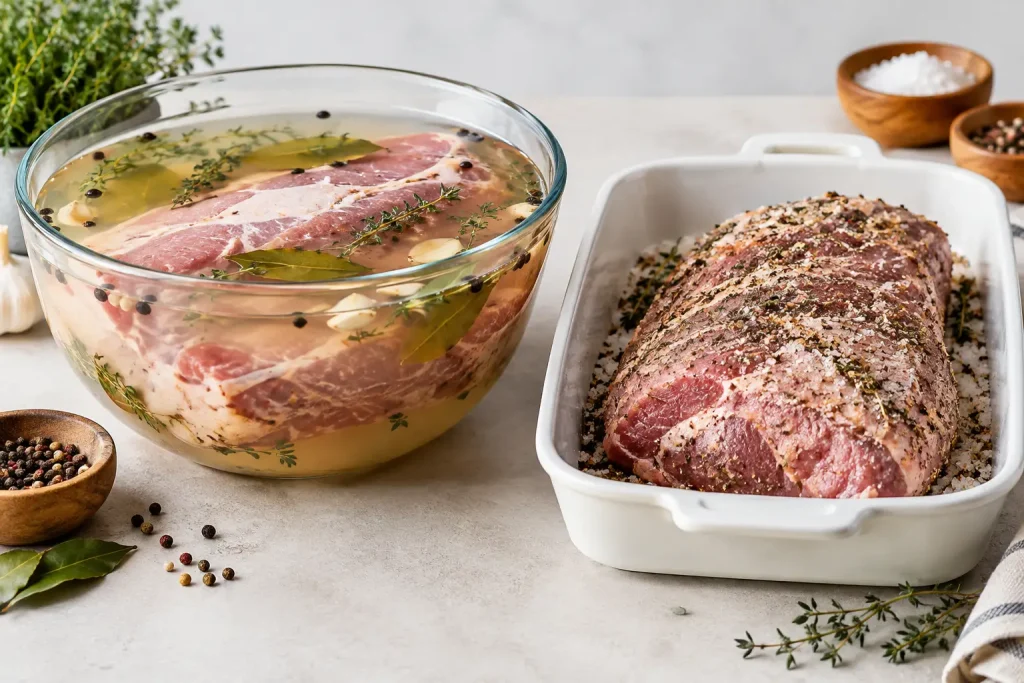
A beautifully browned turkey with crisp skin, a juicy grilled chicken breast, or a thick pork chop that stays tender after the first cut all have one thing in common: salt did some work before the heat came on. When choosing wet brine versus dry brine, the best answer is not always the same. Your available time, refrigerator space, cut of meat, and desired finish all matter.
Both methods improve seasoning and help meat hold onto moisture as it cooks. But they get there in different ways. Wet brining gives you a saltwater soak. Dry brining uses salt directly on the surface, then lets time do the rest. One can be a smart choice for a big holiday bird; the other may be your secret weapon for better weeknight chicken and steak.
Wet Brine Versus Dry Brine: The Real Difference
A wet brine is a solution of water and salt, often with sugar, aromatics, citrus, herbs, peppercorns, or spices added for character. The meat sits submerged in that seasoned liquid for several hours or overnight. As it rests, salt moves into the meat, changing the structure of its proteins so they retain more moisture during cooking.
A dry brine skips the water. You season the exterior of the meat with salt, then refrigerate it uncovered or loosely covered. At first, the salt draws a little moisture to the surface. That moisture dissolves the salt, and the seasoned liquid is gradually reabsorbed into the meat. The result is deeper seasoning, improved moisture retention, and, when the meat is left uncovered, a drier exterior that browns beautifully.
Neither method is a magic trick. A brine cannot save overcooked chicken, and it will not turn a thin steak into a prime rib. What it does is give you a wider margin for success while building flavor from the inside out.
Why Dry Brining Often Wins at Home
For most home cooks, dry brining is the easier, less messy choice. There is no giant bucket of salty liquid to mix, chill, store, and eventually pour out. You need a tray, a rack if you have one, and enough refrigerator room for the meat.
It also gives you a serious advantage when crisp skin or a bold crust is the goal. Wet-brined meat must be dried extremely well before roasting, smoking, or grilling. Any surface moisture slows browning and can leave poultry skin soft instead of crackly. A dry-brined chicken, turkey, or pork roast has already spent time in the refrigerator drying at the surface, so it is ready for better color and texture.
Dry brining is especially good for bone-in chicken, turkey, pork chops, pork loin, prime rib, and thicker steaks. It fits the way many people actually cook: season tonight, roast or grill tomorrow. It is also an excellent foundation for a clean, flavor-forward seasoning blend. Salt handles the deeper seasoning while herbs, spices, garlic, pepper, chile, or citrus-forward flavors bring excitement to the outside.
The trade-off is timing. Salt needs time to move past the surface. For a thick cut, a quick sprinkle five minutes before it hits the grill is seasoning, not really dry brining. Give smaller cuts at least 45 minutes when possible, and give larger roasts or whole poultry overnight.
How to Dry Brine Without Overdoing It
Use kosher salt whenever a recipe calls for a measured amount, since crystal size varies among salts. A dependable starting point is about 1 teaspoon of kosher salt per pound for larger cuts and whole birds. For a steak or chop, season both sides evenly rather than creating a heavy salt crust.
Place the meat on a rimmed pan, ideally on a wire rack so air can circulate. Refrigerate uncovered for the best skin and crust, unless you need to protect it from strong refrigerator odors. A whole chicken can benefit from 12 to 24 hours. A turkey can go 24 to 48 hours. Steaks and chops are often great after 1 to 12 hours, depending on thickness.
Before cooking, do not rinse. Rinsing washes away surface flavor and creates unnecessary kitchen splatter. Simply pat away any visible moisture if needed, add a salt-free or lower-salt seasoning blend, and cook as planned.
When a Wet Brine Makes Sense
Wet brining earns its place when you want extra insurance against dryness, particularly with very lean poultry. It can be helpful for a large turkey, chicken breasts, or lean pork that will be cooked at higher heat or served later at a gathering. The added water weight can make the finished meat feel notably juicy.
It is also useful when you want a gentle background flavor from ingredients in the liquid. Brown sugar, bay leaves, garlic, citrus peel, apple cider, and warm spices can make a brine smell downright fantastic. Still, manage expectations: most large aromatics do not penetrate deeply into meat during a standard brine. Salt is the ingredient doing the heavy lifting. Use your favorite seasoning rub or blend after brining to make the final flavor really pop.
The drawbacks are practical. A wet brine requires enough cold space to keep the meat safely chilled below 40°F. You will need a nonreactive container large enough to hold both the meat and the brine. And after the soak, the meat needs a thorough pat-down, followed by time uncovered in the refrigerator if crisp skin matters.
A basic wet brine can be made with 1 gallon of water and about 3/4 cup kosher salt, though exact formulas vary by salt brand and recipe. Dissolve the salt in part of the water, cool the mixture completely, then add the meat and refrigerate. Never put food into warm brine, and never brine on the counter.
Wet Brining Time Matters
Longer is not always better. Overbrined meat can develop a hammy, spongy texture and taste too salty. Chicken pieces generally need only 2 to 4 hours. A whole chicken can take 4 to 12 hours, while a turkey may need 8 to 18 hours depending on its size and the strength of the brine.
Check the label before you begin. Many supermarket turkeys, chickens, and pork products are already enhanced with a salt solution. Brining one of those again can push it far past pleasantly seasoned. If the label mentions broth, sodium solution, or “contains up to” a percentage of retained liquid, use a lighter hand or skip the brine altogether.
Choose by What You Are Cooking
For a Thanksgiving turkey, both methods can work beautifully. Choose dry brining if crisp, deeply bronzed skin and easier refrigerator logistics are your priorities. Choose wet brining if you have a reliable cold setup and want maximum moisture insurance for a lean bird.
For chicken wings, dry brine is the clear favorite. A little salt and refrigerator air help render the skin and build that craveable crisp finish. For chicken breasts, either method works, but a short wet brine can be useful when you need a fast path to juicy results.
For steaks, dry brine nearly always makes more sense. It seasons the beef, improves the crust, and does not dilute the naturally rich flavor. Give a thick ribeye, strip, or sirloin at least an hour, or season it the night before for an even better result.
For pork chops and pork loin, dry brining provides a flavorful, grill-friendly finish. A wet brine is worth considering for very lean chops, especially if you are cooking for guests and want a little extra cushion against overcooking. For ribs, use a dry brine or rub and let the smoker do its patient work. A wet brine can make it harder to develop the bark barbecue fans love.
Seafood needs a different approach. Most fish does not need a long brine. A brief dry salt treatment or a quick, light wet brine can firm delicate fillets and help them stay moist, but minutes matter more than hours.
Seasoning After the Brine
Brining is salt-forward by nature, so adjust the rest of your seasoning accordingly. If your blend contains salt, use it more lightly after a full dry brine or wet brine. If it is salt-free, you can season more generously for a bigger hit of herbs, pepper, garlic, smoke, citrus, or chile.
This is where the meal becomes yours. Take dry-brined chicken in a smoky direction for the grill, brighten fish with peppery lemon notes, or give pork a Southwest-style kick. Heath’s Blends are made to bring those layers of flavor without artificial fillers, preservatives, or MSG getting in the way of the food itself.
Cook to temperature, not just to time. Pull poultry when the thickest part reaches 165°F, and let larger cuts rest before slicing so the juices settle back into the meat. The brine helps, but careful cooking finishes the job.
The best brining method is the one that suits tonight’s dinner and tomorrow’s plans. Keep a dry-brined chicken ready for the grill, save wet brining for the occasions when its extra moisture insurance is worth the setup, and let good ingredients do what they do best: make everyday food taste like you meant it.