
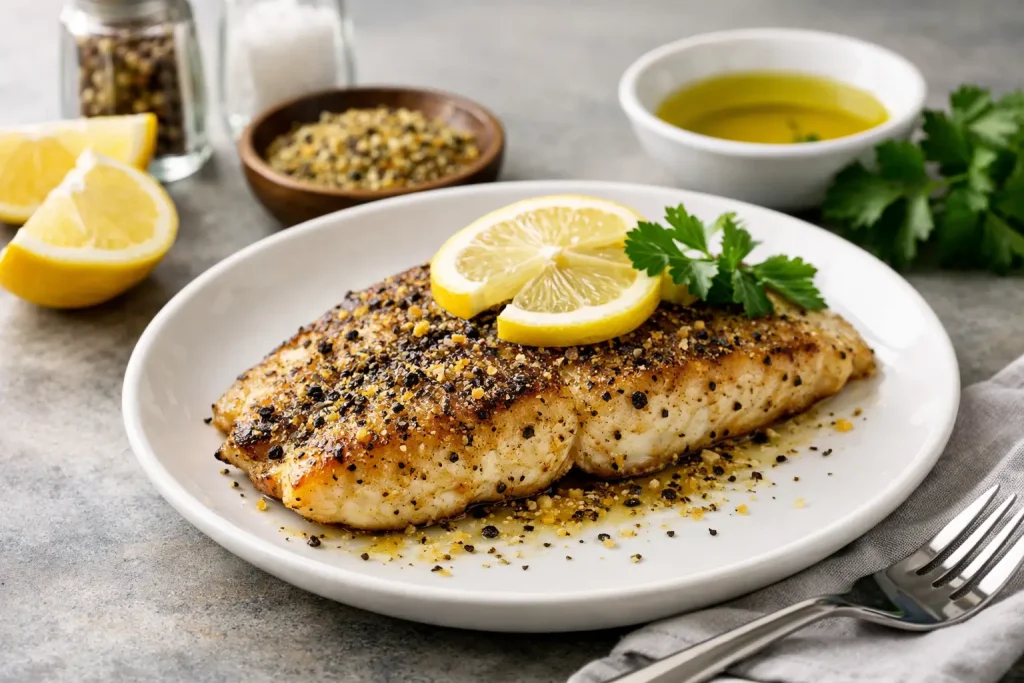
A good fish dinner needs more than a squeeze of lemon at the table. Lemon pepper seasoning for fish brings bright citrus, warm peppery bite, and savory depth to the fillet from the very first minute of cooking. It is the kind of simple move that turns a plain Tuesday-night piece of salmon into a plate everyone gathers around.
The magic is balance. Fish has a clean, delicate flavor, so it does not need a cabinet full of competing spices. Lemon wakes it up. Pepper gives it character. A well-made blend adds salt and herbs in amounts that support the seafood instead of covering it up. Whether you are roasting cod, grilling snapper, pan-searing trout, or cooking shrimp for tacos, the right seasoning gives you restaurant-caliber flavor without a complicated prep list.
Why Lemon Pepper Works So Well on Fish
Lemon and fish are classic partners for a reason. The citrusy aroma cuts through the natural richness of salmon, mackerel, and black cod, while also making mild fish taste livelier. Black pepper adds a gentle heat and earthy fragrance that stays interesting after the bright lemon notes hit your palate.
There is also a practical reason this pairing earns a permanent spot by the stove. A lemon pepper blend spreads flavor evenly across a fillet, which is harder to achieve with lemon juice alone. Juice can pool in the pan, dilute a crust, and turn the surface of delicate fish soft before it cooks. Seasoning gives you that lemon-forward character while keeping the exterior ready to brown.
That does not mean fresh lemon is off the table. Use the seasoning before cooking, then finish with a small wedge of fresh lemon if the fish needs another pop of acidity. Think of the blend as the foundation and the fresh citrus as the final bright note.
Choosing Lemon Pepper Seasoning for Fish
Not all lemon pepper seasonings cook the same way. Some lean heavily on salt, while others contain artificial lemon flavor, sugar, or fillers that can burn in a hot skillet. For fish, clean ingredients matter because the flavor has nowhere to hide.
Look for a blend built with real herbs and spices, recognizable citrus ingredients, and a salt you feel good about serving. A clean-label seasoning without MSG, artificial flavors, preservatives, or unnecessary fillers lets the natural flavor of the fish stay in the lead. Himalayan pink salt is especially welcome in a seafood blend because it delivers dependable seasoning with a subtle mineral character.
The texture matters, too. A finely ground blend is excellent for thin white fish, shrimp, and scallops because it adheres evenly and cooks quickly. A coarser blend can be terrific on thick salmon portions or whole grilled fish, where the larger pepper pieces have time to toast and become fragrant.
Heath’s Blends Peppery Lemon is made for cooks who want that bright, peppery lift with quality ingredients and none of the extra clutter. Keep the hand light on mild fish, then build from there. You can always add another pinch after cooking, but you cannot pull excess salt back out of a fillet.
How Much Seasoning to Use
For most fish fillets, start with about 1 teaspoon of lemon pepper seasoning per 6 to 8 ounces of fish. Season both sides if you are cooking a thick piece of salmon, halibut, or swordfish. For thin fillets such as sole, flounder, or tilapia, use a lighter coating and focus on the presentation side.
Pat the fish dry first. This small step is one of the biggest differences between a pale, steamed-looking fillet and one with a beautiful golden surface. Moisture on the outside works against browning, especially in a skillet.
Brush the fish with a little avocado oil, olive oil, or melted butter, then sprinkle the seasoning from several inches above the fillet. That helps it land in an even layer instead of in salty pockets. Let it sit for five to 10 minutes while the pan, grill, or oven heats. Longer is not always better. Citrus ingredients and salt can begin to change the texture of very delicate fish if they sit too long.
For shrimp, toss 1 pound of peeled shrimp with 1 to 1 1/2 teaspoons of seasoning and a tablespoon of oil. For scallops, season just before they hit the pan. They release moisture quickly, so a short wait helps preserve that prized golden crust.
The Best Cooking Methods for Lemon Pepper Fish
Pan-searing for crisp edges
A hot skillet is the fast route to fish with real personality. Heat a heavy pan over medium-high heat, add enough oil to lightly coat the bottom, and place the seasoned fish in the pan presentation-side down. Leave it alone until it releases easily. Moving it too soon tears the surface and steals the crust.
Thin fillets may need only two to three minutes per side. A thicker salmon fillet often needs four to five minutes on the first side, then a few minutes after flipping. Lower the heat if the pepper starts to darken too quickly. Pepper should smell toasted and warm, not bitter.
Finish with butter, a few capers, or chopped parsley if you want a quick pan sauce. Keep it simple. Lemon pepper already brings plenty of flavor to the party.
Roasting for easy family dinners
Roasting is forgiving, especially when you are cooking several portions at once. Set seasoned fish on a lightly oiled sheet pan at 400 to 425 degrees F. Cod, mahi-mahi, and salmon all do beautifully here. Most average fillets cook in 10 to 15 minutes, depending on thickness.
Add vegetables that cook at a similar pace. Asparagus, green beans, zucchini, cherry tomatoes, and thin-sliced potatoes are natural choices. If you are using potatoes, give them a head start in the oven before the fish goes on the pan.
This is where lemon pepper earns its keep on a busy night. One seasoning can tie the entire meal together. Dust the vegetables lightly with the same blend, but remember that fish and vegetables do not absorb salt at the same rate. Season each component with intention rather than shaking freely over everything.
Grilling for smoky, citrusy flavor
Lemon pepper and a little grill smoke belong together. Choose firm fish such as salmon, tuna, swordfish, halibut, redfish, or skin-on snapper. Oil both the fish and the clean grill grates, then cook over medium to medium-high heat.
For fillets with skin, start skin-side down. The skin protects the flesh and can become wonderfully crisp. Close the lid, resist the urge to flip repeatedly, and turn only when the fish releases cleanly. If you are cooking tender fish, use a grill basket or place it on a cedar plank to avoid a frustrating breakup at the grates.
Baking in foil when tenderness is the goal
Foil packets are a smart choice for delicate fish and easy cleanup. Place the seasoned fish on a sheet of foil with a drizzle of oil, sliced zucchini, fennel, or a handful of green beans. Seal loosely so steam has room to circulate, then bake at 400 degrees F until the fish flakes easily.
This method will not create a crisp crust, but it delivers tender, juicy fish and captures every bit of the seasoned cooking juices. It is especially good for cod, pollock, tilapia, and smaller salmon portions.
Match the Fish to the Flavor
Lemon pepper is versatile, but each fish benefits from a slightly different approach. Salmon can take a generous seasoning layer and a high-heat roast or grill. Its richness stands up to bold pepper and a final squeeze of lemon.
Mild white fish such as cod, haddock, tilapia, and flounder needs a gentler hand. Use enough seasoning to add character, then pair it with a buttery side, rice pilaf, or roasted vegetables. Halibut and mahi-mahi sit in the middle: firm enough for the grill, mild enough that the lemon notes remain front and center.
Shrimp is perhaps the easiest place to start. Season it, sauté it quickly, and serve it over grits, tucked into warm tortillas, or tossed with pasta and a little butter. For fish tacos, add a pinch of cumin or chili powder alongside your lemon pepper seasoning if you want a Southwest-style edge. The trade-off is simple: extra spices bring more heat and complexity, while classic lemon pepper keeps the seafood flavor clearer.
A Few Mistakes Worth Avoiding
The most common mistake is seasoning fish and then cooking it in a lukewarm pan. You lose browning, and the seasoning can taste flat rather than fragrant. Preheat first, then cook with confidence.
Another is using lemon pepper as if it were only a finishing salt. It can absolutely finish a dish, but its pepper and herb notes become more rounded when they meet heat. Season before cooking, taste at the end, and add only a small extra pinch if needed.
Finally, do not cook fish until it is dry just because you are waiting for a darker crust. Fish is done when it flakes with gentle pressure and looks opaque through most of the center. Thick salmon can stay slightly translucent in the middle if that is how you enjoy it. Timing depends on thickness, not just the clock.
Tonight, set out a clean sheet pan or heat up your favorite skillet, season that fillet with a steady hand, and let lemon and pepper do what they do best. It is amazing what one thoughtful blend can do for a simple piece of fish.