
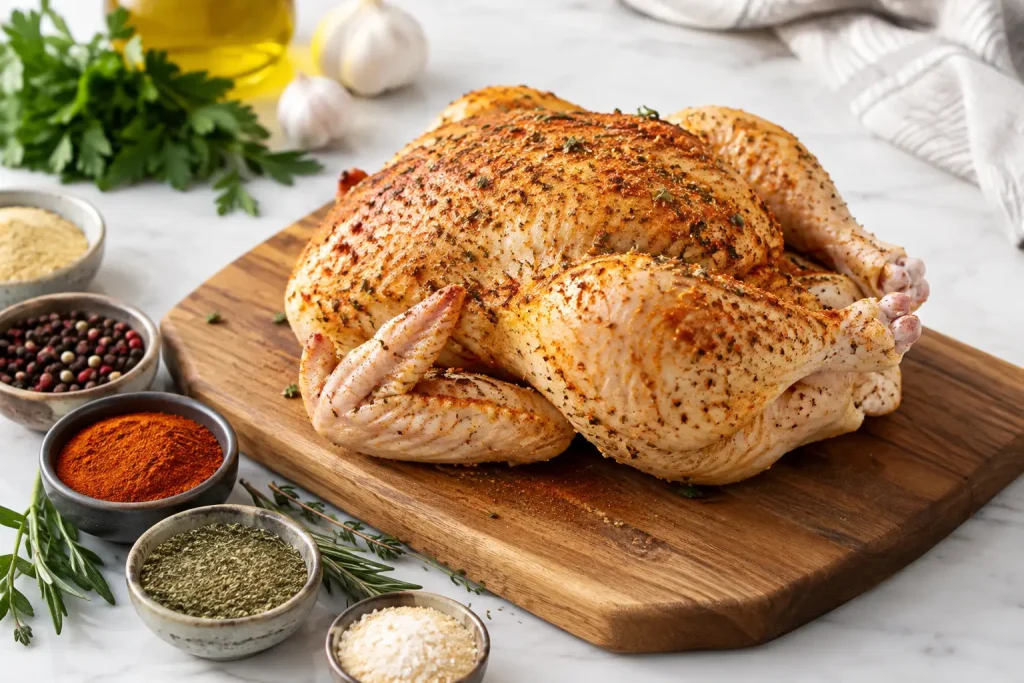
A whole chicken is one of the best values in the kitchen, but it can taste plain fast if the seasoning only sits on the surface. This whole chicken seasoning guide is built for the cooks who want juicy meat, crackly golden skin, and flavor that reaches every bite – whether the bird is headed for the oven, grill, smoker, or rotisserie.
The good news is that you do not need a cabinet full of spices or a complicated overnight project. You need the right amount of seasoning, a little attention to the skin, and a cooking method that lets the flavor do its job.
Start With a Dry, Well-Seasoned Bird
For most whole chickens, plan on 1 to 1 1/2 tablespoons of seasoning per pound. A 4-pound chicken generally needs 4 to 6 tablespoons total, depending on how boldly seasoned you like your food and how much salt is already in your blend.
Pat the chicken very dry with paper towels before anything else. Moisture on the skin works against browning, especially in the oven. Once it is dry, rub the bird lightly with oil or softened butter. This helps the seasoning adhere and encourages that deep, appetizing color everyone reaches for first.
Season the outside generously, but do not stop there. Gently loosen the skin over the breast and thighs with your fingers, then work a little seasoning directly onto the meat. This simple move makes a major difference because the flavorful skin is not the only thing carrying the meal.
Add a small amount inside the cavity as well. You can tuck in lemon halves, garlic cloves, onion wedges, or fresh herbs for extra aroma, but keep the cavity loose. Packing it tightly can slow cooking and leave the center of the bird steaming instead of roasting.
What Makes a Great Whole Chicken Seasoning?
A good chicken blend needs balance. Salt brings the flavor forward, pepper adds warmth, herbs provide savory depth, and spices create character. Garlic, onion, paprika, citrus, chiles, and earthy Southwest-style spices can all work beautifully, but the best choice depends on what you plan to serve alongside the chicken.
For a classic roasted chicken dinner with potatoes and green beans, choose a savory, herb-forward profile with garlic, black pepper, and a little paprika. For grilled chicken with corn, beans, or a big summer salad, reach for something brighter and bolder, with pepper, citrus, or a gentle kick of chile.
Smoked chicken can carry more assertive flavor because the wood smoke adds its own richness. A barbecue-style blend with tangy notes, pepper, garlic, and a hint of sweetness is a natural fit. The trade-off is simple: heavily sweet blends can darken quickly over high heat, so watch the skin closely if you are grilling.
Clean ingredients matter here. When your seasoning is made with quality herbs and spices instead of fillers, artificial flavors, or excess sugar, you can build flavor with confidence and let the chicken still taste like chicken. Heath’s Blends uses organic herbs and spices, Himalayan pink salt, and no MSG, making it easy to bring big flavor to a simple bird without overcomplicating dinner.
Whole Chicken Seasoning Guide by Cooking Method
Oven-roasted chicken
Roasting is the most dependable route to crisp skin and tender meat. Season the chicken at least 30 minutes before it goes into the oven, or refrigerate it uncovered for up to 24 hours if time allows. That longer rest acts like a dry brine: the seasoning has time to work into the meat, while the uncovered skin dries for better browning.
Roast at 425°F for about 15 minutes, then reduce the oven to 375°F until the thickest part of the thigh reaches 165°F. A 4- to 5-pound bird usually takes around 60 to 80 minutes total, but a thermometer is more reliable than the clock. Rest it for 10 to 15 minutes before carving so the juices stay in the meat, not on the cutting board.
Grilled chicken
Grilling brings smoky edges and savory char, but a whole chicken needs indirect heat to cook evenly. Set up a two-zone grill, placing the chicken away from the direct flame for most of the cook. Season it well, then cook with the lid closed at roughly 350°F to 400°F.
For faster, more even grilling, spatchcock the chicken by removing the backbone and flattening the bird. More skin faces the heat, the breast and thighs cook more evenly, and dinner gets to the table sooner. Finish skin-side down over direct heat for a minute or two only if the skin needs extra crispness.
Smoked chicken
Smoke is made for a savory, peppery chicken seasoning. Keep the smoker around 275°F to 325°F so the skin has a better chance of rendering instead of turning rubbery. Fruit woods like apple and cherry are mild and slightly sweet, while hickory delivers a fuller barbecue flavor.
Avoid basting too often. Every time the lid opens, heat and smoke escape, and frequent wet basting can soften the skin. If you want a glaze, brush it on during the final 10 to 15 minutes, after the seasoning and smoke have already formed a flavorful crust.
Salt Timing: Season Now or Later?
If your blend contains salt, seasoning 30 minutes to 24 hours ahead is usually ideal. In the first few minutes, salt draws moisture toward the surface. Given more time, that seasoned moisture is reabsorbed, helping the meat taste more deeply seasoned and stay juicier.
If you are cooking immediately, that is still perfectly fine. Apply the seasoning right before the chicken hits the heat, and focus on getting an even coat. What you want to avoid is seasoning 10 to 20 minutes ahead and then expecting the same result as a longer dry brine. At that point, the surface may be wet without having time to reabsorb the moisture.
Salt-free blends are more flexible. Use them generously under the skin and in the cavity, then add salt separately to your preferred level. This is especially useful when serving salty sides, sauces, or gravy.
Don’t Forget the Vegetables and Drippings
A seasoned chicken makes its own built-in flavor base. Place onions, carrots, potatoes, or halved Brussels sprouts beneath the bird in a roasting pan. As the chicken cooks, the drippings season the vegetables with all the garlic, herbs, pepper, and spices from the skin.
There is one caveat: vegetables crowded under a very large chicken may become tender without getting crispy. If crisp edges are the goal, roast them on a separate sheet pan and spoon a little chicken fat or drippings over them halfway through cooking.
After carving, do not leave those pan juices behind. Spoon them over sliced breast meat, stir them into a quick gravy, or toss them with the roasted vegetables. This is where a simple seasoned chicken turns into a meal that tastes like someone put in far more effort than they did.
Common Whole Chicken Seasoning Mistakes
The biggest mistake is under-seasoning because the bird looks well coated. Remember that a whole chicken includes several pounds of meat, plus bones, so a light dusting disappears quickly once it is carved. Use enough blend to create an even visible layer without forming a thick, pasty crust.
Another common problem is burning the spices before the chicken is cooked through. Paprika, sugar, dried herbs, and garlic can all darken fast over direct high heat. Use indirect heat for the majority of grilling, and if the skin gets dark too quickly in the oven, loosely tent the bird with foil while it finishes.
Finally, do not carve too soon. Even a beautifully seasoned chicken loses its juiciness when it is cut straight from the heat. Give it a short rest, then carve with confidence and serve while the skin is still crisp and the kitchen smells downright irresistible.
The next time a whole chicken lands in your cart, give it the seasoning it deserves. One thoughtful blend, a dry surface, and a little patience can turn an everyday bird into the kind of dinner people remember – and request again.