
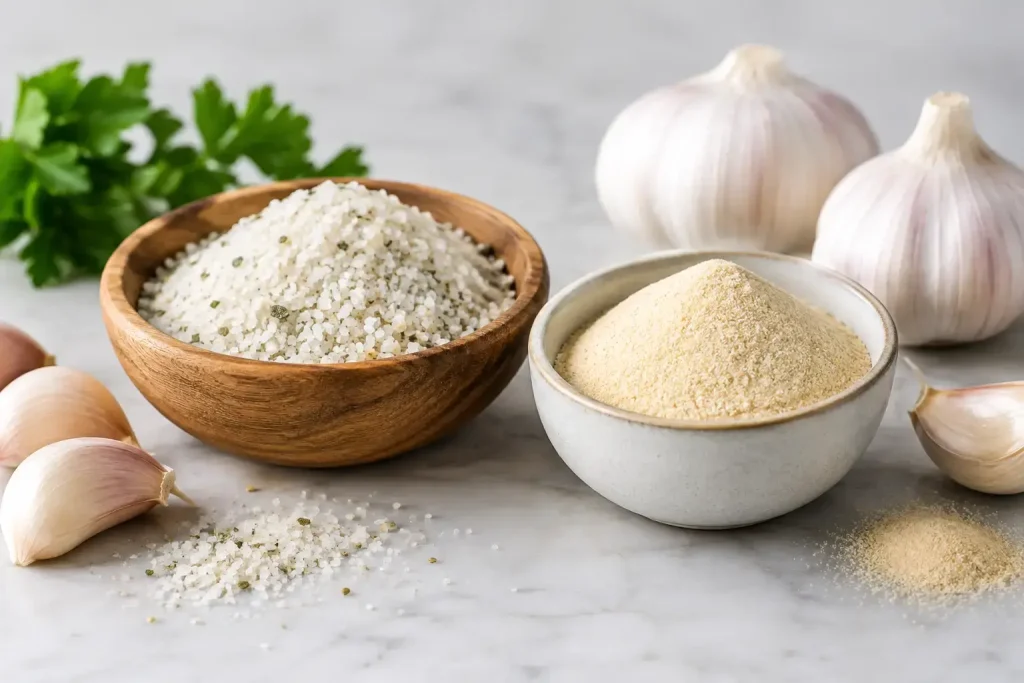
A shaker of garlic salt can rescue a plate of roasted potatoes in seconds. Garlic powder can bring deep, savory garlic flavor to a burger rub without making it too salty. That is the real difference in the garlic salt vs garlic powder debate: one seasons with salt and garlic at the same time, while the other lets you build flavor on your own terms.
Both deserve space in a flavor-forward kitchen. The better choice depends on what you are cooking, how much salt the recipe already contains, and whether you want a quick finishing touch or more control over every layer of seasoning.
What Is Garlic Salt?
Garlic salt is a blend of garlic powder and salt. Many grocery-store versions use a ratio close to three parts salt to one part garlic powder, though formulas vary by brand. Some also contain anti-caking agents to help the seasoning flow freely from the shaker.
Its biggest advantage is convenience. A few shakes can season scrambled eggs, popcorn, fries, chicken breasts, vegetables, or garlic bread without measuring separate ingredients. It is a handy all-in-one option when dinner is moving fast and the food needs a little savory lift.
The catch is that salt is doing most of the work. If you add garlic salt to a dish that already has table salt, kosher salt, soy sauce, broth, cheese, bacon, or a prepared seasoning blend, it is easy to cross the line from flavorful to overly salty.
For cooks who care about ingredient standards, the salt itself matters, too. A clean seasoning built with real herbs, spices, and a quality salt creates a better foundation than one padded with artificial flavors or unnecessary fillers.
What Is Garlic Powder?
Garlic powder is dehydrated garlic that has been finely ground. It is concentrated, shelf-stable, and milder than fresh garlic in the sharp, pungent sense, but it brings a warm, rounded garlic flavor that spreads evenly through food.
Because garlic powder contains no added salt, it gives you control. You can season a rack of ribs generously with garlic flavor, then decide exactly how much salt belongs in the rub. You can stir it into meatloaf, soups, creamy sauces, burger patties, marinades, and vegetable seasoning without throwing off the recipe’s salt balance.
Garlic powder is especially useful when fresh garlic is not practical. Fresh cloves can burn over high heat, clump in a dry rub, or leave uneven bits throughout a dish. Powder distributes smoothly, making it a dependable choice for grilling, roasting, and batch cooking.
Do not confuse it with garlic granules. Granulated garlic has a coarser texture and dissolves more slowly. Garlic powder is finer, so it blends quickly into sauces and seasonings. In most recipes, they can be swapped in a pinch, but garlic powder has a slightly more immediate presence.
Garlic Salt vs Garlic Powder: The Flavor Difference
Garlic salt tastes salt-forward first, with a familiar garlic note behind it. It is great when you want a fast, savory finish and the dish is otherwise lightly seasoned. Think buttered corn, grilled zucchini, home fries, or a simple piece of chicken coming off the grill.
Garlic powder tastes more like garlic first. It adds savory depth without immediately changing the salt level, which makes it more flexible in recipes with several bold ingredients. A Southwest-style taco filling, a smoky barbecue rub, or a lemony seafood seasoning often benefits from garlic powder because it supports the other flavors instead of taking over.
Neither one replaces fresh garlic exactly. Fresh garlic offers moisture, bite, and a brighter aroma, especially when gently sautéed in oil or butter. Garlic powder offers consistency. It is the seasoning you reach for when you want garlic flavor in every bite, with no chopping board required.
When Garlic Salt Is the Right Move
Use garlic salt when the food needs both salt and garlic, and when you are starting with a fairly plain base. It shines as a quick seasoning for vegetables before roasting, on air-fryer potatoes, mixed into softened butter for toast, or sprinkled over a grilled burger just before serving.
It also works well as a finishing seasoning. Keep the application light, then taste. You can always add another pinch, but once salt is built into a dish, there is no easy way to pull it back out.
Garlic salt is less ideal for brined meats, cured meats, canned soups, salty cheeses, packaged stocks, and recipes using a full seasoning blend. In those situations, garlic powder gives you more room to adjust. If you are using a salt-containing blend such as a steak or barbecue seasoning, adding garlic salt on top can crowd the flavor and overwhelm the food.
When to Reach for Garlic Powder
Garlic powder is the better everyday workhorse for cooks who like to season with intention. Add it to dry rubs for steak, pork shoulder, wings, and ribs. Blend it into burger meat, sprinkle it over chicken before grilling, or stir it into a pot of beans or chili where the flavors have time to come together.
It is also a smart choice for meal prep. When you are seasoning several pounds of protein or a big tray of vegetables, controlling the salt separately means every batch stays consistent. That is especially helpful when one person likes a bolder finish and another prefers a lighter hand.
At Heath’s Blends, that kind of balance is part of what makes a good seasoning memorable: enough savory character to make food exciting, with clean ingredients and no need to bury the meal under excess salt.
How to Substitute Garlic Salt for Garlic Powder
The basic swap is simple, but it requires one important adjustment: compensate for the salt.
If a recipe calls for 1 teaspoon of garlic powder, use about 3 teaspoons of garlic salt, then reduce the other added salt by roughly 2 teaspoons. That estimate works for many common garlic salt formulas, but check your label because ratios can differ.
If a recipe calls for garlic salt and you only have garlic powder, use about 1/4 teaspoon garlic powder for every 1 teaspoon garlic salt. Then add salt gradually to taste. This approach is usually safer because you can season as you go instead of committing to a full amount at the beginning.
Taste matters more than a conversion chart. Salty ingredients already in the recipe can change the equation quickly. A creamy potato dish may need more seasoning than a Parmesan-heavy pasta, while a soy-based marinade may need little or no added salt at all.
Best Uses Around the Grill and Kitchen
For high-heat grilling, garlic powder is usually the safer starting point. It adheres well when mixed with other dry spices and lets you salt the meat appropriately for its size. Pair it with black pepper, paprika, onion powder, chile powder, or dried herbs for a rub with serious depth.
For burgers, try garlic powder inside the patty and a light sprinkle of garlic salt on the finished burger only if it needs it. For chicken wings, use garlic powder in the rub, then toss the cooked wings with melted butter and a small pinch of garlic salt for that classic garlicky finish.
For vegetables, either can work. Garlic powder is excellent on broccoli, cauliflower, squash, and mushrooms before roasting. Garlic salt is great on hot vegetables after cooking, especially when they are finished with olive oil, butter, lemon, or a shower of Parmesan.
For soups and sauces, garlic powder offers better control because liquids concentrate as they simmer. Start modestly, give the flavors time to settle, and adjust salt near the end. A little garlic powder can make a simple tomato sauce or creamy potato soup taste like it has been cooking all afternoon.
A Better Way to Season With Either One
The best cooks do not treat seasoning as a single step. Season proteins before cooking so flavor can settle in. Taste vegetables and sauces near the end, when you know how much moisture has cooked away. Finish with a final pinch only when the food needs more lift.
Keep garlic powder in your core spice lineup for flexible cooking, and keep garlic salt for the moments when quick, salty-garlicky flavor is exactly what dinner needs. Use both with a light hand, taste as you go, and let the food tell you what it needs. It is amazing what the right pinch of spice can do.