
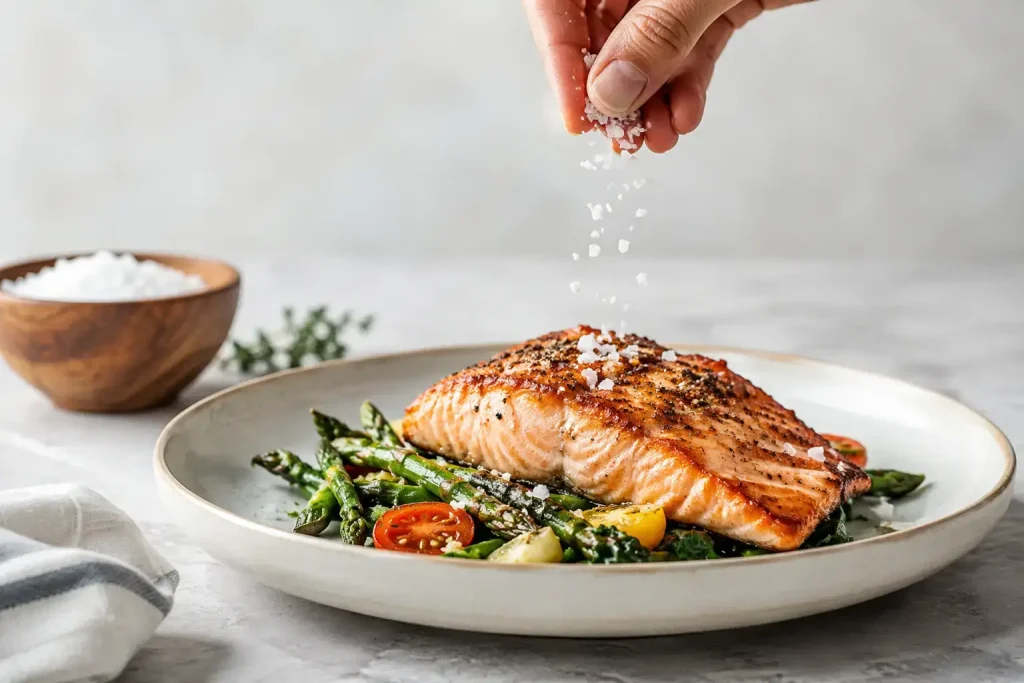
A great steak can come off the grill with a perfect crust, a roasted vegetable tray can be caramelized at the edges, and a piece of salmon can be cooked just right – then one final pinch can make the whole plate taste more alive. That is how to use finishing salt: add it at the end, when its clean flavor and delicate crunch can be noticed with every bite.
Finishing salt is not meant to carry an entire recipe on its back. It is the final touch that sharpens flavors already built through good ingredients, thoughtful seasoning, and proper cooking. Used with a little restraint, it gives everyday dinners the kind of bright, restaurant-caliber finish that makes people reach for one more bite.
What Makes a Salt a Finishing Salt?
Finishing salt is salt reserved for the moment food is ready to serve. Its crystals are often larger, flakier, or more distinct than everyday table salt, so they do not disappear into the food as quickly. Instead, they bring a small burst of salinity and texture right at the surface.
Think of the difference between salt added to pasta water and salt scattered over a warm tomato salad. The first seasons from within. The second lands on the tongue first, lifting the sweetness, acidity, and savory notes already on the plate. Both jobs matter, but they are not interchangeable.
Flaky sea salt is a popular choice because it has a light crunch and dissolves pleasantly. Coarser mineral salts, including Himalayan pink salt, can offer a slightly firmer texture and a beautiful natural color. Fine salt can still work as a finishing touch when used sparingly, especially on soups, eggs, and sauces, but it is easier to overdo because it dissolves so fast.
How to Use Finishing Salt at the Right Time
The simplest rule is this: season food during cooking, then taste it when it is done and add finishing salt just before serving. Do not throw it on early and expect the same result. Heat, steam, sauce, and resting time can dissolve the crystals and take away the crisp contrast that makes finishing salt special.
For dry foods, such as grilled steak, roasted potatoes, fried chicken, or charred broccoli, sprinkle salt from a few inches above the plate or serving platter. This helps distribute it more evenly instead of leaving one overly salty spot. Start with a pinch, then add another only if the food needs it.
For juicy foods, timing matters even more. Finish sliced tomatoes, cucumbers, watermelon, or ripe peaches immediately before they hit the table. Salt draws out moisture, which can be delicious in a salad but can also make a crisp dish watery if it sits too long.
With saucy foods, use a lighter hand. A small pinch over creamy pasta, chili, a pan sauce, or a bowl of soup gives the first spoonful extra dimension. You want a bright edge, not a layer of crystals competing with the texture of the dish.
Finish Proteins With a Pinch and a Pause
Steak is one of the best places to start. Season it before cooking with a flavorful blend or salt, then let it rest after it comes off the heat. Once sliced, add a few flakes or grains of finishing salt over the cut surface. The salt catches on the juices and rich browned crust, making the beef taste fuller without burying its natural flavor.
Burgers benefit from the same move. Finish them after the cheese melts and just before serving. If your burger has salty toppings like bacon, pickles, or a tangy sauce, use less than you think. The goal is balance, not a salt challenge.
Finishing salt is especially good on seafood because fish and shellfish have a clean, subtle flavor that can get lost under heavy seasoning. Try a light pinch over grilled shrimp, seared scallops, baked cod, or salmon with lemon. A peppery citrus seasoning underneath and a crisp salt finish on top make a simple seafood dinner feel like a special occasion.
Chicken, pork chops, and ribs are also fair game. For barbecue, wait until the glaze has set and the meat is on the platter. A pinch of finishing salt can wake up the sweet, smoky flavors in a sauce, but too much can make a carefully balanced rub taste harsh. Taste first, especially if the rub or sauce already contains salt.
Make Vegetables Taste More Like Themselves
A finishing salt does not turn vegetables into something they are not. It makes their best qualities easier to taste. On roasted carrots, it heightens sweetness. On grilled zucchini, it emphasizes the smoky char. On buttered corn, it brings the rich and sweet flavors together.
Use it on roasted potatoes while they are still hot, when a touch of salt can cling to their crisp edges. Sprinkle it over sautéed green beans with garlic, blistered shishito peppers, grilled asparagus, or a warm pile of mushrooms. A little salt added at the end also gives plant-based meals more depth, especially when they include beans, grains, lentils, or roasted squash.
Fresh vegetables call for a different approach. Salt a tomato salad, avocado toast, sliced radishes, or cucumber ribbons moments before serving. Pair it with olive oil, lemon, vinegar, fresh herbs, or cracked pepper, and let the produce do most of the talking.
Use Finishing Salt Beyond Dinner
The fun of finishing salt is that it is not limited to the grill. Sprinkle a few grains over soft scrambled eggs, an omelet, or a breakfast sandwich. Add a light pinch to buttered toast, savory oatmeal, or a bowl of creamy grits.
It can also make sweet-and-salty combinations shine. A tiny amount on chocolate cookies, brownies, caramel sauce, or sliced fruit can make sweetness taste more rounded and less one-note. This is a place to be especially careful: use a few flakes, not a full pinch. Desserts need contrast, not a mouthful of salt.
Finishing salt can also rescue a dish that tastes flat after cooking. If a soup, pasta, or roasted chicken seems dull, first ask whether it needs acid, fat, heat, or herbs. Salt is not the answer to every flavor problem. But if the food tastes well-built and simply needs a clearer final note, a modest pinch may be exactly what it is missing.
Avoid These Common Finishing Salt Mistakes
The biggest mistake is treating finishing salt like regular cooking salt. If you use it at every stage, you lose the texture and flavor contrast that made it worth using in the first place. Keep a separate small dish or pinch bowl near the stove so you remember its job is the last step.
Another common mistake is finishing food before tasting it. Brines, sauces, cheese, cured meats, seasoning blends, and store-bought broths can all bring plenty of sodium to a dish. Taste a bite from the center, then decide whether the surface needs a final lift.
It also helps to match the crystal size to the food. Large flakes look dramatic on a thick grilled ribeye or a chocolate brownie, but they can feel awkward on delicate fish, popcorn, or a smooth soup. A finer mineral salt is usually more comfortable for those foods.
Finally, do not confuse more salt with more flavor. The best finishing salt is noticeable for a moment, then makes the rest of the dish taste better. If all you taste is salt, the pinch was too generous.
Build a Better Final Bite
The easiest way to learn is to compare. Cook a batch of roasted potatoes or grilled chicken, then taste one piece as-is and another with a few grains of finishing salt. Notice the crunch, the way the flavor arrives, and how the salt changes what is already there. That quick side-by-side lesson makes the technique click.
For home cooks who love big flavor without a cabinet full of complicated ingredients, a quality seasoning blend can handle the foundation while finishing salt handles the final flourish. Heath’s Blends brings bold herbs and spices to the cooking stage, leaving room for that last clean pinch when the food reaches the table.
Keep your finishing salt where you plate your food, not hidden in the back of the pantry. When you use it with intention, even a simple Tuesday-night meal gets the kind of final bite worth slowing down for.