
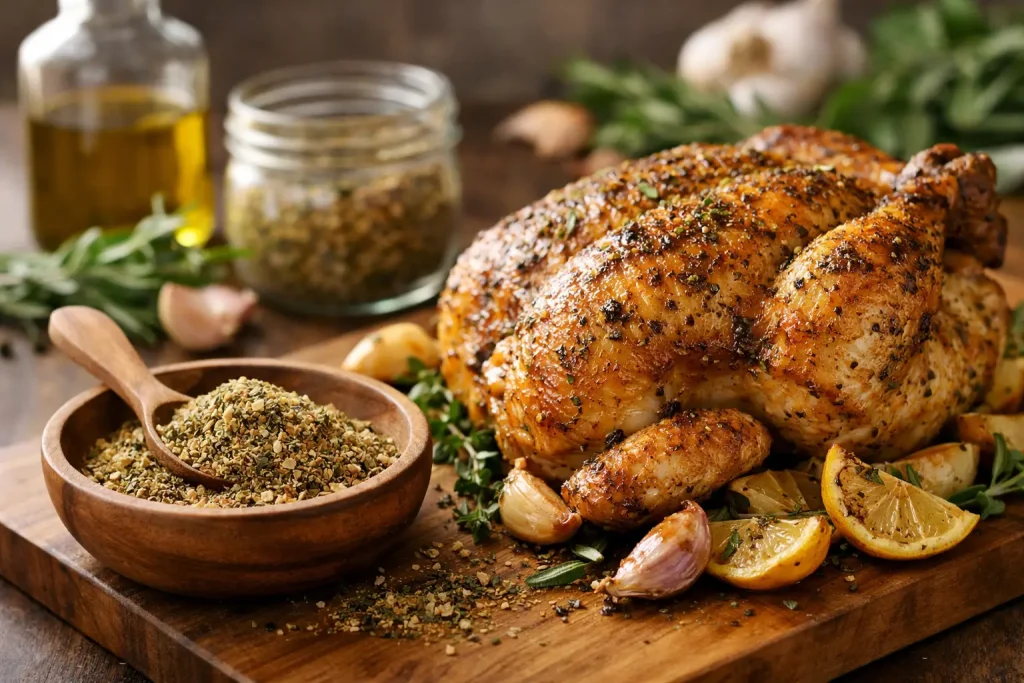
Chicken is one of the hardest-working ingredients in an American kitchen, but it can turn bland in a hurry. The right poultry seasoning changes that with a few confident shakes, bringing savory herbs, peppery warmth, and enough character to make a simple roast chicken feel like a meal worth talking about.
The best part is that you do not need a complicated marinade, a cabinet full of spice jars, or a culinary degree to get there. You need a well-balanced blend, a little attention to timing, and a cooking method that lets the seasoning do its job.
What Poultry Seasoning Actually Does
Poultry seasoning is an herb-forward blend made to complement the mild, juicy flavor of chicken and turkey. Traditional versions often lean on sage, thyme, rosemary, marjoram, black pepper, onion, garlic, and sometimes parsley or celery seed. Each ingredient has a purpose: sage brings that familiar roast-turkey aroma, thyme adds earthiness, rosemary gives a piney lift, and garlic and onion build savory depth.
A good blend should make poultry taste more like itself, not cover it up. That matters whether you are roasting a whole chicken for Sunday dinner, firing up chicken thighs on the grill, or making a quick skillet meal after work. The seasoning should hit savory notes first, then leave room for crispy skin, smoky char, pan juices, or your favorite sauce.
Salt is part of the equation, too. A blend made with a clean, mineral-rich salt such as Himalayan pink salt can season the meat evenly while helping you avoid reaching for several separate shakers. For cooks who care about what goes into dinner, it also pays to choose blends without MSG, artificial flavors, fillers, or preservatives. Straightforward ingredients deliver straightforward flavor.
How Much Poultry Seasoning to Use
For boneless chicken breasts, start with about 1 teaspoon of seasoning per pound of meat. For bone-in thighs, drumsticks, wings, or a whole bird, you can be more generous because skin, bones, and longer cook times need a little extra help. A tablespoon per pound is a good starting point for skin-on cuts, especially when grilling or roasting.
There is one catch: the salt level of your blend matters. If your poultry seasoning contains salt, season with the blend first and taste the finished dish before adding more. If it is salt-free, add salt separately. This small detail prevents an over-seasoned bird and gives you more control over the final bite.
For the most even coverage, pat the poultry dry before seasoning. Moisture on the surface can make herbs clump instead of adhere. A light coating of olive oil, melted butter, or mayonnaise can help spices stick to skinless chicken, while also encouraging a golden exterior.
When to Season Chicken and Turkey
You can season poultry right before cooking and still get great results. This is the move for a busy weeknight, when dinner needs to happen now. Apply the blend evenly, let the chicken sit while the oven or grill heats, then cook as planned.
If you have 30 minutes to a few hours, seasoning ahead gives the salt and aromatics more time to settle into the surface. This is especially helpful with thick chicken breasts, turkey tenderloins, and bone-in thighs. Keep the seasoned meat covered in the refrigerator, then take it out about 15 to 20 minutes before cooking so it loses some of its chill.
For a whole turkey, dry brining is hard to beat. Rub the seasoning all over the skin and, if possible, gently work some beneath the breast skin. Refrigerate the turkey uncovered or loosely covered for 12 to 24 hours. The skin dries out, which promotes better browning, while the seasoning has time to reach beyond the surface.
Best Ways to Use Poultry Seasoning
Roasted chicken with crisp, savory skin
Roasting gives herb blends a chance to bloom in the heat. Rub a whole chicken with oil or softened butter, season inside and out, and add lemon, onion, or a few garlic cloves to the cavity if you like. The poultry seasoning will mingle with the drippings, creating a built-in foundation for gravy, roasted potatoes, or vegetables tucked around the bird.
For chicken pieces, arrange them skin-side up on a sheet pan or in a baking dish with room between each piece. Crowding traps steam and works against crispy skin. Roast until the thickest part reaches 165°F, then let the chicken rest before serving.
Grilled chicken that does not taste flat
The grill brings smoke and char, but it can also burn delicate dried herbs if the heat is too aggressive. For grilled breasts, thighs, and tenders, coat the poultry with a little oil and poultry seasoning before it goes over medium or medium-high heat. Use two cooking zones when possible: sear over direct heat, then move the chicken to a cooler side to finish without scorching the spices.
If you love a saucy finish, add barbecue sauce during the last few minutes. Seasoning first gives the meat a savory backbone, so the sauce tastes like an extra layer rather than the only source of flavor. A tangy barbecue profile works beautifully with chicken thighs and wings, while a peppery lemon blend can brighten grilled chicken breasts and kebabs.
Skillet dinners, soups, and casseroles
Poultry seasoning is not only for the outside of a bird. Add it to onions and celery as they soften for chicken noodle soup, pot pie filling, stuffing, rice dishes, or creamy casseroles. Heat wakes up dried herbs, and seasoning the vegetables early builds flavor from the bottom up.
For skillet chicken, season the meat and also add a small pinch to the pan sauce. A splash of broth, lemon juice, or cream will carry those herbs through every bite. This is an easy way to make a plain package of chicken cutlets feel more like a restaurant plate.
Turkey beyond the holidays
Turkey burgers, turkey meatballs, ground turkey chili, and turkey cutlets all benefit from an herb blend. Ground turkey is lean and mild, so it needs seasoning mixed throughout rather than sprinkled only on top. Start with 1 to 1 1/2 teaspoons per pound, then cook a small test patty if you want to fine-tune the salt and pepper.
For Thanksgiving turkey, keep the rest of the menu in mind. A classic herb-forward poultry seasoning belongs naturally with gravy, stuffing, mashed potatoes, and cranberry sauce. If your meal has Southwestern sides, smoky beans, or grilled corn, a blend with a little more garlic, pepper, and warmth may fit better.
Pairing Poultry Seasoning With Other Flavors
Herbs love fat, acid, and a little sweetness. Butter makes poultry seasoning taste fuller and richer, while olive oil keeps things lighter and helps spices cling. Lemon, vinegar, and white wine cut through richness, particularly with roasted chicken thighs or turkey breast. Honey, maple syrup, and brown sugar can work in small amounts for sweet-savory wings or glazed turkey, but use them carefully over high heat because sugars burn fast.
Vegetables are natural partners. Toss carrots, potatoes, Brussels sprouts, cauliflower, or green beans with oil and a pinch of the same seasoning you use on the chicken. Cooking the components with a shared flavor profile makes a simple sheet-pan dinner taste intentional.
At Heath’s Blends, that kind of flexibility is the point: clean, flavor-first seasonings should earn their place on chicken, turkey, seafood, vegetables, and whatever else is headed to the table.
Common Poultry Seasoning Mistakes
The most common mistake is seasoning only the skin of a large piece of poultry. Skin carries flavor, but thicker cuts need seasoning on all sides, and whole birds benefit when some seasoning reaches beneath the skin or into the cavity. Another is using old spices. Dried herbs do not spoil quickly, but they lose their aroma over time. If your blend smells faint in the jar, it will taste faint on the plate.
Also watch the heat. Blackened chicken has its place, but charred rosemary and sage can taste bitter. When cooking with high direct heat, use a moderate amount of seasoning at first, then add a fresh pinch after cooking if the dish needs more herbal flavor.
Finally, let poultry rest. Five minutes is helpful for smaller cuts; a whole chicken or turkey needs longer. Resting keeps the juices in the meat, and juicy chicken gives every herb and spice a better stage.
The next time chicken is on the menu, do not settle for a sprinkle of salt and hope for the best. Pick a blend with real herbs and clean ingredients, season with purpose, and let the aroma coming out of your oven or grill make the case before anyone takes a bite.