
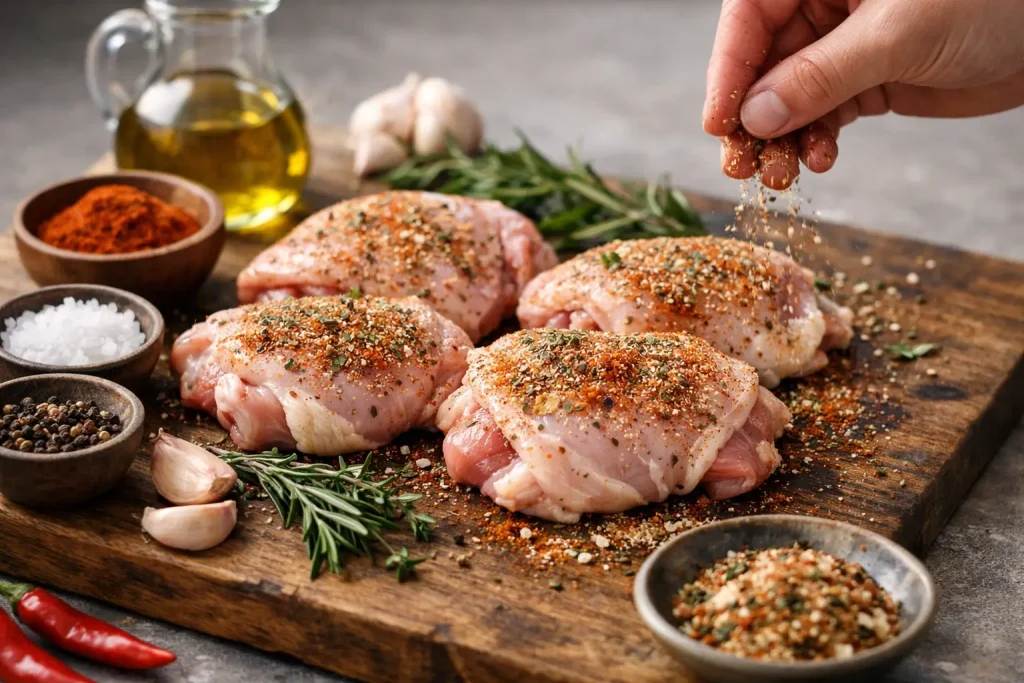
Chicken thighs bring plenty to the table before a single spice hits the meat: rich flavor, tender texture, and enough natural fat to stay juicy over high heat. Learning how to season chicken thighs is less about burying them under a long list of spices and more about choosing a flavor direction, seasoning at the right time, and cooking them with confidence.
Whether dinner means crispy skin from a hot skillet, smoky thighs from the grill, or a sheet pan headed for the oven, a good seasoning blend turns this affordable cut into something the whole table looks forward to. The goal is simple: flavorful meat, browned skin, and no bland bites near the bone.
Start With the Right Chicken Thighs
Bone-in, skin-on chicken thighs are the go-to choice when you want crackly skin and deep, roasted flavor. The bone helps the meat cook more gently, while the skin bastes the thigh as it renders. They take a little longer than boneless thighs, but the payoff is hard to beat.
Boneless, skinless thighs are a great weeknight option. They cook quickly, absorb seasoning well, and work beautifully in tacos, grain bowls, salads, sandwiches, and kabobs. Because they have less protection from the heat, keep an eye on them and avoid overcooking.
Whichever you choose, pat the chicken dry with paper towels before seasoning. Moisture on the surface creates steam, and steam is the enemy of crisp skin and serious browning. For skin-on thighs, gently lifting the skin and seasoning a little underneath gives you flavor in the meat, not just on the outside.
How to Season Chicken Thighs Step by Step
Start with a light coating of oil. Olive oil, avocado oil, or another neutral high-heat oil all work. You only need enough to help herbs and spices cling to the chicken – usually about 1 tablespoon for 1 1/2 to 2 pounds of thighs.
Next, season both sides generously. For bone-in, skin-on thighs, put most of the seasoning on the flesh side and under the skin, then use a lighter hand on top of the skin. Too much seasoning on the skin can darken before the fat has rendered, especially when grilling or pan-searing.
Use about 1 to 1 1/2 tablespoons of a salt-containing seasoning blend per 2 pounds of chicken as a starting point. That amount will vary with the blend, the size of the thighs, and whether you are adding a sauce later. A blend with Himalayan pink salt, pepper, garlic, onion, herbs, and warm spices does the heavy lifting without requiring a cabinet full of jars.
Finally, let the chicken rest after seasoning. Even 20 to 30 minutes on the counter while you prep the rest of dinner helps the flavor settle in. For a deeper seasoned finish, refrigerate the thighs uncovered for 2 to 12 hours. This dry-brine approach gives salt time to move into the meat and helps dry the skin for better browning.
Choose a Flavor Direction Before You Season
Chicken thighs are forgiving, but every flavor profile cooks a little differently. A simple savory blend of salt, black pepper, garlic, onion, and herbs is the most flexible choice. It belongs just as easily beside roasted potatoes as it does in a chicken Caesar salad or a backyard barbecue plate.
For barbecue flavor, look for paprika, chile, garlic, pepper, and a touch of brown sugar. The sugar encourages a gorgeous crust, but it also burns more easily. Keep sweet blends away from direct flare-ups, cook over indirect heat when grilling, and save extra sugary rub for the final minutes.
Southwest-style seasoning brings a little more energy to the party. Think cumin, smoked paprika, chile, coriander, garlic, and pepper. These thighs are made for tortillas, grilled corn, rice, beans, avocado, and a squeeze of lime after cooking. A bold blend such as Southwest Sizzler can bring that full flavor without making dinner feel like a measuring-cup project.
For a brighter finish, lemon pepper, garlic, herbs, and a little onion work especially well on grilled or oven-roasted thighs. Add fresh lemon juice after cooking, not before, if you want crisp skin. Acid on the skin before roasting can interfere with browning, while a fresh squeeze at the table wakes up every bite.
When to Season Chicken Thighs
Timing changes the result, and there is no single rule for every dinner. If you are short on time, season immediately before cooking. Chicken thighs have enough flavor and fat to still taste fantastic.
For more deeply seasoned meat, give a salt-based blend at least 30 minutes. Four to eight hours is excellent for bone-in thighs, particularly when roasting or grilling. Refrigerate them on a rack over a tray, uncovered if possible, so air can circulate around the skin.
Be careful with marinades that contain lots of citrus juice or vinegar. A short marinade of 30 minutes to 2 hours adds tang and works well for skinless thighs. Leave chicken in a highly acidic marinade too long, though, and the exterior can take on a soft, slightly mushy texture. If you love citrus, season with a dry blend first and finish with lime or lemon after cooking.
Match Your Seasoning to the Cooking Method
For Oven-Roasted Thighs
Roasting is dependable, hands-off, and ideal for family dinners. Season bone-in, skin-on thighs and place them skin-side up on a sheet pan or in a baking dish with space between each piece. Roast at 425°F until the skin is browned and the thickest part reaches at least 175°F.
Chicken is safe at 165°F, but thighs are usually more tender at 175°F to 185°F. Their connective tissue benefits from the extra time. Pair a savory, herb-forward blend with onions, carrots, potatoes, or Brussels sprouts, and let the drippings season the vegetables too.
For Grilled Thighs
Grilling calls for seasoning that can stand up to smoke and char. Start skin-on thighs over indirect heat, then move them over direct heat near the end to crisp the skin. This method avoids blackened spice before the meat has cooked through.
Keep a close eye on sugary barbecue blends. They taste incredible, but they need a little patience. If flare-ups start, shift the chicken to a cooler part of the grill rather than repeatedly flipping it over the flames.
For Pan-Seared Thighs
A cast-iron skillet creates a restaurant-worthy crust with very little fuss. For skin-on thighs, place them skin-side down in a cold skillet, then bring the heat to medium. Starting cold gives the fat time to render slowly, so the skin becomes crisp instead of scorched.
Use a peppery garlic blend or a lemon-herb profile here. Once the skin is golden, flip the thighs and finish them in a 400°F oven if they are thick or bone-in. Let them rest five to 10 minutes before serving so the juices stay where they belong.
Common Seasoning Mistakes That Flatten the Flavor
The most common mistake is underseasoning. Chicken thighs are not delicate fish fillets. They can handle a generous coating, particularly when you are cooking bone-in pieces or serving them with mild sides like rice or potatoes.
The second mistake is seasoning wet skin. Patting dry takes seconds and makes a major difference. The third is crowding the pan or grill, which prevents browning no matter how good your blend is.
Finally, do not forget the finishing touch. A pinch of flaky salt, fresh herbs, sliced scallions, a squeeze of citrus, or a spoonful of your favorite barbecue sauce can add contrast after cooking. Seasoning builds the foundation; a fresh finish makes the flavor pop.
A Dependable Formula for Any Night of the Week
For 2 pounds of chicken thighs, use 1 tablespoon oil and 1 to 1 1/2 tablespoons of your chosen seasoning blend. Let the chicken sit for 30 minutes if time allows, then cook until it reaches at least 175°F for that tender, pull-from-the-bone texture. Rest before serving.
Clean, thoughtfully chosen herbs and spices make this formula even better. When a blend skips fillers, artificial flavors, and MSG, the flavors on your plate taste like what they are meant to be: garlic, pepper, chile, herbs, citrus, and real smoke-kissed spice.
Tonight, pick the flavor you are craving, season with a confident hand, and let chicken thighs do what they do best: turn an ordinary dinner into the plate everyone reaches for first.