
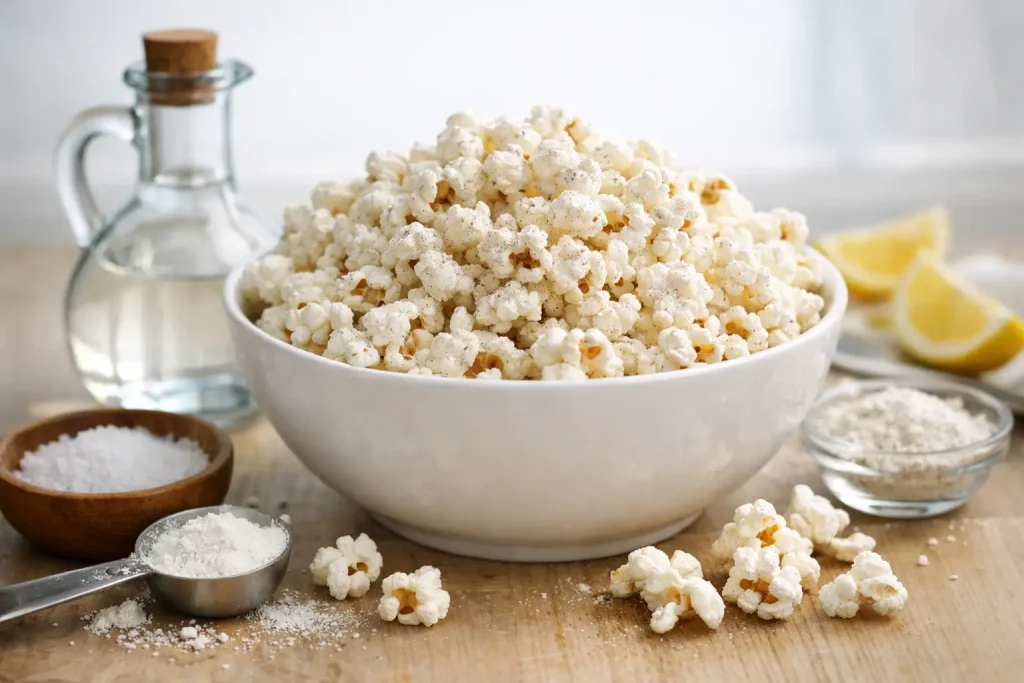
The best salt and vinegar popcorn seasoning should make your mouth water before the first handful reaches the couch. You want that sharp, bright vinegar tang, a clean hit of salt, and enough flavor on every kernel to keep the bowl from lasting through the opening credits. The catch? Popcorn is dry, light, and famously difficult to season evenly.
A good method makes all the difference. With warm popcorn, the right amount of oil or butter, and a confident toss, you can turn a plain bowl into the kind of snack that tastes right at home beside burgers, grilled wings, game-day dips, or a favorite movie.
Why Salt and Vinegar Belongs on Popcorn
Salt and vinegar has long been a powerhouse flavor for potato chips, but popcorn gives it a different kind of appeal. The crisp kernels are airy instead of dense, so the tang lands fast and clean. It cuts through rich, buttery popcorn while still delivering that snack-bar saltiness people crave.
This is a flavor for cooks who like contrast. Butter brings richness. Vinegar brings brightness. Salt pulls both together. The result is bold without needing cheese powder, sugar, or a complicated spice cabinet full of half-used jars.
It also works beyond movie night. Put a bowl out with cold drinks during a backyard cookout, serve it alongside sandwiches for an easy lunch, or make it for a road-trip snack. Salt and vinegar popcorn has enough personality to stand on its own, yet it will not compete with the rest of the spread.
The Trick to Salt and Vinegar Popcorn Seasoning That Sticks
The biggest popcorn mistake is sprinkling seasoning onto cold kernels and hoping for the best. Most of the blend falls to the bottom of the bowl, leaving a few overly seasoned pieces and a lot of plain popcorn.
Start seasoning while the popcorn is still warm. Heat creates a little steam at the surface of each kernel, which gives fine seasoning something to grab. Then add a light coating of melted butter, avocado oil, olive oil, or another neutral oil before the seasoning goes on.
Butter has the most classic movie-night flavor, but it comes with a trade-off: too much can make popcorn heavy and soften its crunch. Oil generally coats more evenly and keeps the texture a little lighter. For a rich-but-crisp middle ground, use mostly oil with just a small drizzle of melted butter.
Use a Big Bowl and Toss in Stages
A roomy bowl is not a small detail. It gives the popcorn space to move, rather than crushing it while you mix. Add about half your oil, sprinkle on half the seasoning, and toss. Repeat with the rest. This staged approach is far more effective than dumping everything on top at once.
If you have a bowl with a lid, shake it gently after each addition. Otherwise, use two large spoons or clean hands to lift the popcorn from the bottom and turn it over. The goal is a light, even coat – not a wet bowl of popcorn.
Go Lighter Than You Think, Then Taste
Vinegar seasoning can build quickly. Its tangy flavor is part of the fun, but a heavy hand can overwhelm the corn’s natural toasted flavor. Season lightly, taste a few kernels from different spots in the bowl, then add more if needed.
That is especially true when serving a crowd. Some folks want their popcorn aggressively tangy. Others prefer a gentler, salty finish. Put an extra shaker on the table and let everyone take it where they like it.
A Simple Salt and Vinegar Popcorn Method
For a generous shared bowl, pop about 1/3 cup of kernels using an air popper, stovetop method, or your preferred popcorn maker. You should end up with roughly 8 to 10 cups of popped corn, depending on the variety and method.
While it is hot, drizzle with 1 1/2 to 2 tablespoons of melted butter or oil. Sprinkle with salt and vinegar seasoning in two rounds, tossing thoroughly between each round. Taste, then finish with another pinch if the bowl needs more zip.
For an easy stovetop batch, heat 2 tablespoons of oil in a heavy pot over medium-high heat. Add three test kernels and cover. When they pop, add the remaining kernels, cover again, and gently shake the pot every few seconds. Once popping slows to several seconds between pops, remove the pot from the heat. Transfer immediately to a large bowl and season while warm.
Air-popped popcorn is a great choice when you want a lighter snack, but it needs a little oil or butter after popping. Without that coating, even a terrific salt and vinegar blend will struggle to cling.
Choosing a Seasoning With Real Flavor
Not every vinegar-style seasoning tastes the same. Some lean harsh or dusty, while others rely on artificial flavoring to create a loud first impression. A well-made blend should bring a bright tang that tastes clean, balanced saltiness, and enough savory depth to make you reach back into the bowl.
For ingredient-conscious households, look for a seasoning made without MSG, artificial flavors, fillers, or preservatives. Those details matter when a simple snack becomes a regular family favorite. Quality salt also changes the experience. Himalayan pink salt offers a clean, mineral-rich character that fits naturally with a sharp vinegar profile.
Heath’s Blends Salt & Vinegar seasoning is made for the kind of cook who wants big snack flavor with a clean ingredient standard. Its punchy tang is an easy fit for popcorn, but it does not need to stay there.
More Ways to Use Salt and Vinegar Seasoning
A great salt and vinegar popcorn seasoning earns its spot in the pantry because it does more than one job. Its tangy, salty profile is especially useful on foods that benefit from a bright finish.
Try it over hot French fries right after they leave the oven or air fryer. Toss it with roasted potato wedges, crispy smashed potatoes, or homemade potato chips. It is also terrific on fried fish, grilled shrimp, and flaky white fish, where the vinegar flavor gives a familiar fish-and-chips kind of energy.
Vegetables love this profile, too. Season roasted green beans, cauliflower, Brussels sprouts, or zucchini after cooking, when a light slick of oil helps the blend cling. For something unexpected, dust it over sliced avocado with a squeeze of lemon, or stir a small amount into a creamy dip for chips and raw vegetables.
The timing depends on what you are cooking. On popcorn, fries, and roasted vegetables, apply the seasoning after cooking so its bright vinegar notes stay lively. On proteins, use it as a finishing touch or add it near the end of cooking. High heat can mute delicate tang and leave you adding more than you actually need.
Popcorn Pairings Worth Keeping in Rotation
Salt and vinegar popcorn is excellent on its own, but it can also be part of a bigger snack spread. Serve it with grilled sliders and crunchy pickles for a casual backyard gathering. Pair it with smoked chicken wings when you want something tangy to offset rich barbecue flavors. At a family movie night, bring out a second bowl of plain buttered popcorn for anyone who prefers mild flavor.
For a grown-up snack board, use salt and vinegar popcorn as the crunchy piece alongside sharp cheddar, smoked almonds, olives, and fresh grapes. The popcorn’s acidity keeps the board from feeling too rich. Just season it close to serving time so it stays crisp and fragrant.
A little care turns popcorn from an afterthought into the snack everyone circles back to. Keep the kernels warm, coat them lightly, toss in layers, and let that salty vinegar tang do what it does best: make one more handful feel like a very good idea.