
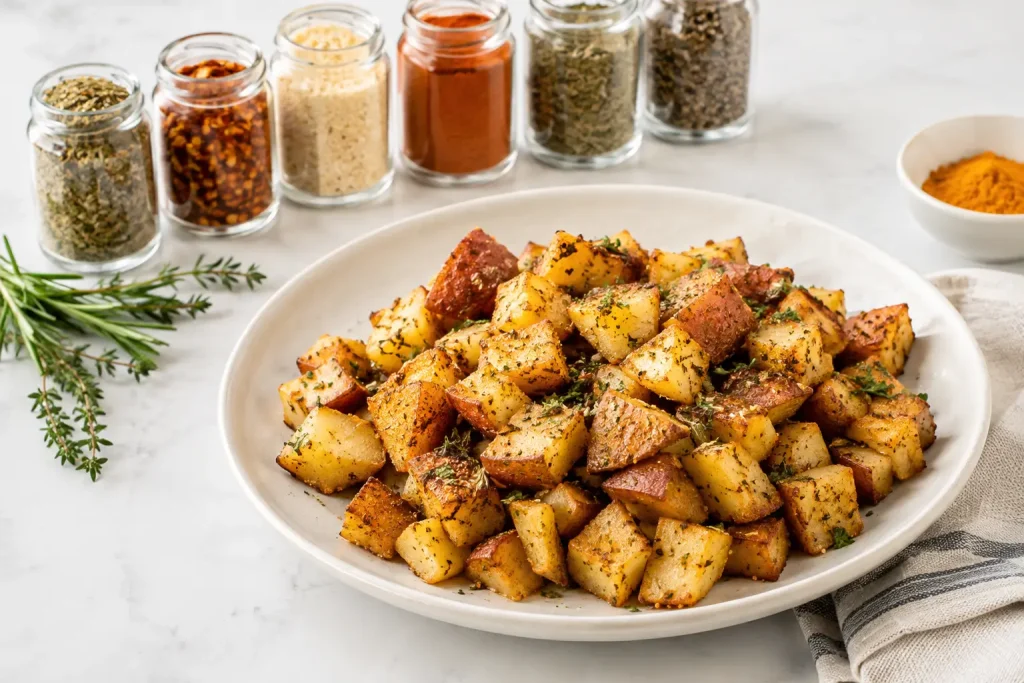
A great breakfast potato should do more than fill the plate. It should bring a crisp edge, a tender center, and enough savory flavor to stand up beside eggs, bacon, sausage, or a stack of pancakes. The best seasonings for breakfast potatoes make that happen without burying the natural, buttery flavor of the potato itself.
Whether you are working with russets, Yukon Golds, red potatoes, or a bag of frozen hash brown cubes, the formula is simple: season with purpose, use enough heat, and give the potatoes room to brown. Here are the flavors worth keeping close to the skillet.
1. Garlic, Onion, and Black Pepper
Garlic, onion, and black pepper are the foundation of a dependable breakfast potato seasoning. Garlic brings warmth, onion adds a subtle sweetness as the potatoes caramelize, and black pepper gives the whole pan a lively finish. This combination is familiar for a reason – it tastes at home with practically every breakfast protein.
For the best texture, use granulated garlic and onion powder instead of fresh garlic and onion at the beginning of cooking. Fresh aromatics can scorch before the potatoes develop their crust. If you want that fresh-cooked aroma, add diced onion once the potatoes are mostly browned, then finish with chopped chives or green onions.
2. Smoked Paprika for a Breakfast-Ready Crust
Smoked paprika gives potatoes the kind of depth that makes a simple diner-style skillet taste like it came off a backyard griddle. It adds a gentle smokiness, a rich red color, and a slightly sweet pepper flavor without necessarily adding heat.
This is an especially good choice when breakfast includes bacon, ham, sausage, or leftover brisket. The potatoes pick up a barbecue-inspired character without competing with the rest of the plate. Regular sweet paprika works beautifully, too, but smoked paprika has more personality when you want a bold, savory bite.
Use a light hand at first. Paprika can become bitter if it burns, so it is best added after the potatoes have cooked in oil for a few minutes or blended with your salt and other dry spices before it hits the pan.
3. Chili Powder and Cumin for Southwest Flavor
If your ideal breakfast includes eggs, salsa, avocado, or a warm tortilla, reach for chili powder and cumin. Chili powder brings earthy chile flavor, while cumin contributes a toasted, nutty note that feels right at home in a breakfast burrito or skillet hash.
This combination is not automatically hot. The heat depends on the chili powder you use and how generously you season. Start with a modest amount, then add crushed red pepper, cayenne, or sliced jalapeno only if you want the potatoes to bring a real kick.
A Southwest-style blend is one of the best seasonings for breakfast potatoes because it pulls together a full plate. Add bell peppers and onions to the skillet, top the potatoes with a fried egg, and suddenly breakfast has some serious Las Vegas-style energy. Heath’s Blends Southwest Sizzler is a convenient option when you want that layered flavor without measuring several jars before coffee.
4. Rosemary and Thyme for a Cozy, Savory Skillet
Herbs bring a different kind of breakfast comfort. Rosemary has a piney, woodsy flavor that is especially good with roasted potato chunks, while thyme adds a gentle earthiness that plays well with eggs and mushrooms. Together, they make breakfast potatoes feel a little more special without making them fussy.
This pairing works best with waxier potatoes such as Yukon Golds or red potatoes, which stay creamy inside while their surfaces brown. Toss the potatoes with oil, salt, pepper, rosemary, and thyme before roasting, or add dried herbs during the last few minutes in a skillet.
Fresh herbs are delicious, but timing matters. Fresh rosemary can handle heat fairly well when minced finely. Tender fresh thyme leaves are better added near the end, when their flavor stays bright instead of turning dark and dry.
5. Lemon Pepper for a Brighter Bite
Breakfast can get rich fast. Between eggs, cheese, sausage, butter, and gravy, a little brightness is often exactly what the plate needs. Lemon pepper brings that lift through citrusy tang and peppery warmth, making it a smart choice for potatoes served with eggs, smoked salmon, or a vegetable-heavy brunch spread.
The trade-off is that lemon-forward seasoning is not the obvious match for every classic bacon-and-pancake breakfast. It shines when the meal needs contrast. Try it on roasted fingerlings with asparagus and poached eggs, or on crispy diced potatoes alongside a simple veggie omelet.
Look for a blend made with real herbs and spices rather than artificial lemon flavor. The flavor should taste clean and lively, not candy-like or harsh.
6. Salt and Vinegar for Crispy, Craveable Potatoes
Salt and vinegar seasoning is a sleeper hit for breakfast potatoes. That tangy, salty flavor gives crisp potatoes a snackable quality, almost like your favorite kettle-cooked chips – only hot, tender, and made for a fork.
It is a great fit for home cooks who want a potato side that can hold its own next to rich food. Serve salt and vinegar potatoes with sausage gravy, cheesy scrambled eggs, or a loaded breakfast sandwich. The acidity cuts through the richness and keeps every bite interesting.
Add this type of seasoning after the potatoes are crisp. Vinegar notes can fade or turn sharp under prolonged high heat, while a final toss lets the flavor land right on the surface where you taste it most.
7. Steakhouse-Style Seasoning for a Hearty Hash
When breakfast potatoes are sharing space with steak and eggs, leftover roast, or a big weekend brunch, go steakhouse-style. Think cracked black pepper, garlic, onion, herbs, and mineral-rich salt. This flavor profile is savory, bold, and built for browned edges.
It also works well in a breakfast hash with peppers, onions, and leftover grilled vegetables. The goal is not to turn potatoes into a steak seasoning delivery system. The goal is to give them enough savory backbone to match a hearty plate.
A clean ingredient blend matters here. Potatoes absorb flavor readily, so there is no need for fillers, artificial flavors, or a heavy dose of sugar. Quality herbs, spices, and a balanced salt do more with less.
How to Season Breakfast Potatoes Without Losing the Crunch
Seasoning choice matters, but technique is what turns good flavor into great breakfast potatoes. Start by drying cut potatoes thoroughly. Surface moisture creates steam, and steam is the enemy of a crisp crust. If you have time, parboil dense potato cubes for a few minutes, drain them well, and let the steam evaporate before they meet the hot pan.
Use enough oil to coat the potatoes, then preheat the skillet before adding them. Cast iron is excellent, but any wide, heavy pan can work. Once the potatoes are in, resist the urge to stir constantly. Let them sit long enough to brown, then turn them in sections.
Salt deserves a little judgment. A lightly salted potato can brown more easily, but a heavily salted potato may release moisture too quickly. If you are using a blend with Himalayan pink salt or another quality salt already included, season in stages: a light coating before cooking, then a final pinch after tasting.
For roasted potatoes, spread them in a single layer with breathing room between the pieces. Crowding the pan is the fastest path to soft, pale potatoes. For skillet potatoes, cook in batches if needed. More space means more crisp edges, and more crisp edges mean more places for your seasoning to shine.
Build a Breakfast Potato Flavor You Will Make Again
The right seasoning depends on what is beside the potatoes. Garlic, onion, and pepper are reliable everyday favorites. Smoked paprika and steakhouse flavors bring depth to hearty plates. Chili powder and cumin wake up a breakfast burrito, while lemon pepper or salt and vinegar offers a bright change of pace.
Keep one rule in mind: potatoes do not need a crowded spice cabinet to taste memorable. Give them a clean, well-balanced blend, enough heat, and the patience to brown. Your breakfast skillet will take care of the rest.