
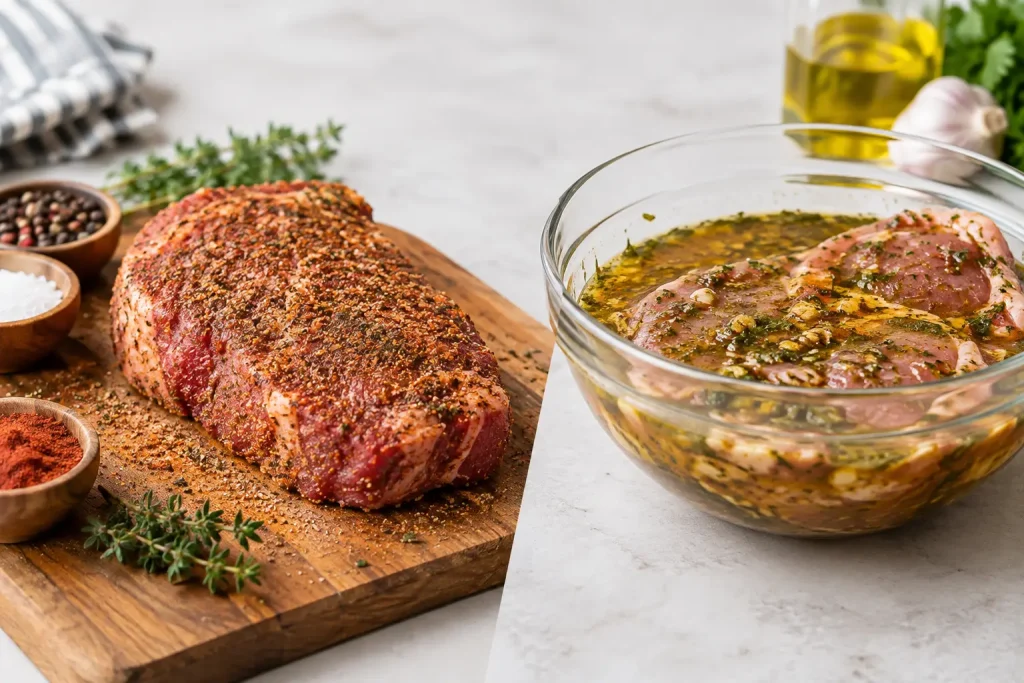
A steak hits a hot grill, and the difference is obvious before the first bite. One develops a dark, savory crust with a clean beefy center. The other may carry flavor deeper into the surface, but can steam instead of sear if it goes on wet. That is the real question behind dry seasoning versus marinade: not which method is better in every case, but which one gives the food in front of you its best shot.
For busy home cooks and serious backyard grillers alike, dry seasoning is usually the fast, dependable route to bigger flavor. Marinades have their place, especially when you want a specific flavor profile or have time to plan ahead. Knowing how each method behaves will help you stop guessing and start cooking food that bursts with flavor.
Dry Seasoning Versus Marinade: The Real Difference
Dry seasoning, often called a dry rub when applied generously, is a blend of salt, herbs, spices, chile, sugar, and other dried ingredients sprinkled directly onto food. It seasons the outside, pulls a little moisture to the surface, and creates the flavorful layer that browns beautifully during roasting, grilling, smoking, or pan-searing.
A marinade is a liquid mixture. It often contains oil, acid such as citrus juice or vinegar, salty ingredients, and aromatics. Food sits in it for anywhere from 15 minutes to overnight. Marinades add surface flavor and can change the texture of the outer portion of meat, particularly when acid is involved.
Neither approach is magic. A marinade does not usually carry flavor all the way to the center of a thick steak, pork chop, or chicken breast. Salt can gradually move inward over time, but most larger flavor compounds stay near the exterior. Dry seasoning also works primarily at the surface, yet a well-seasoned crust often delivers more impact than cooks expect because that is where your tongue meets the food first.
When Dry Seasoning Is the Better Move
Choose dry seasoning when you want browning, a crisp exterior, and quick control over flavor. It is especially good for steaks, burgers, ribs, chicken wings, roasted vegetables, potatoes, and anything headed for a hot skillet, grill grate, oven, or smoker.
You want a serious crust
Moisture is the enemy of a hard sear. A marinade leaves food wet, even after a quick shake or blot. Put wet meat over high heat and the surface must steam off that moisture before it can brown. A dry blend avoids that problem. Pat the food dry, season it, and let the heat do its work.
For steak, this is often the deciding factor. A clean blend with salt, black pepper, garlic, and onion supports the natural flavor of the beef without hiding it. Apply it 30 to 60 minutes before cooking if you can. That gives the salt time to dissolve and begin seasoning the surface. If dinner needs to happen now, season right before the steak hits the pan or grill.
You need dinner on the table soon
Dry blends are built for real life. Chicken thighs can be seasoned while the grill heats. Vegetables can be tossed with oil and spices just before roasting. Burgers need only a light hand with seasoning before they cook.
This is where a quality blend earns its place in the cabinet. Instead of measuring cumin, paprika, garlic, pepper, chile, and salt on a weeknight, you can use one dependable flavor profile and focus on cooking the food well. Heath’s Blends are made for that kind of easy confidence, from peppery steak and potatoes to bright seafood, smoky barbecue, and Southwest-style vegetables.
You are cooking vegetables, seafood, or thin cuts
Delicate foods do not need a long soak. Fish can turn soft or chalky in an acidic marinade surprisingly fast. Shrimp can become mealy. Thin chicken cutlets and pork chops can pick up too much salt or acid before the center benefits.
For salmon, shrimp, white fish, zucchini, asparagus, corn, and mushrooms, dry seasoning usually gives you better texture and a fresher final flavor. Add a little oil to help the spices adhere, then cook over medium-high heat. Finish with lemon after cooking if you want brightness. That final squeeze gives you the lively pop of acid without changing the texture beforehand.
When a Marinade Makes Sense
A good marinade is worth the bowl when it brings a flavor that dry seasoning cannot easily deliver. Think citrus and garlic on chicken, soy and ginger on flank steak, yogurt and warm spices on kebabs, or olive oil and herbs on vegetables destined for the grill.
Marinades can also be useful for lean proteins that benefit from a little insurance against drying out. The oil coats the surface, while salt helps the protein retain moisture. But the timing matters more than the size of the bowl.
Chicken pieces can usually marinate for two to eight hours. Flank steak and skirt steak do well with a few hours, particularly with savory, salty marinades. Pork tenderloin can take a few hours too. Fish and shrimp need far less time, often just 15 to 30 minutes if acid is present.
Acid deserves respect. Lemon juice, lime juice, wine, and vinegar can brighten flavor, but too much acid or too much time can leave the outside of meat mushy. Yogurt and buttermilk are gentler options for chicken because they add tang and help tenderize more gradually.
If your marinade contains sugar, honey, or a sweet barbecue component, watch the heat. Sugars burn quickly over a hot flame. Wipe off excess marinade, cook over moderate heat when needed, and save any glaze for the last minutes of cooking.
Salt Is the Part That Changes Everything
Whether you reach for dry seasoning or a marinade, salt is doing much of the heavy lifting. It makes food taste more like itself. It rounds out sweetness, softens bitterness, and gives herbs and spices a fuller stage.
With dry seasoning, salt has a chance to work like a dry brine when applied ahead of time. The surface first looks damp as salt draws out moisture. Then, given enough time, that seasoned moisture moves back into the food. The result can be better seasoning and a juicier bite.
With a marinade, salt can do similar work, but it is easier to overdo. Bottled sauces, soy sauce, Worcestershire, and salty spice blends can stack up fast. If the marinade already has a salty base, do not automatically add more salt at the end. Taste the cooked food first.
A Simple Choice for Every Cookout
Use a dry seasoning when the goal is a crisp skin, a dark crust, or a fast, bold finish. Use a marinade when you want a particular wet flavor profile and have enough time to let it work without overwhelming the food.
For ribs, pulled pork, chicken wings, burgers, roasted potatoes, and grilled vegetables, start dry. For citrus chicken, fajita-style skirt steak, herb-forward kebabs, or tangy grilled shrimp, a brief marinade can be the right call. You can even combine the methods carefully: marinate first, pat the food very dry, then add a light dusting of seasoning before cooking. Just account for the salt in both.
Common Mistakes That Steal Flavor
The biggest dry-seasoning mistake is applying too much too soon to a small or delicate item. A thick pork shoulder can handle a generous coating. A thin fish fillet cannot. Match the amount of seasoning to the size of the food, and remember that spices become more concentrated as moisture cooks away.
The biggest marinade mistake is treating time as automatically beneficial. Longer is not always better. An overnight marinade may be great for some chicken or pork preparations, but it can make seafood unpleasant and leave acidic meats with an odd, soft exterior.
Also, never use leftover marinade that touched raw meat as a finishing sauce unless you boil it thoroughly first. A safer option is to reserve a clean portion before the raw food goes in. That way, you can brush it on near the end or serve it alongside the finished dish.
The next time you are staring at chicken thighs, a tray of vegetables, or a beautiful steak, think about the finish you want before you season. Pick dry for crust and speed, pick a marinade for planned flavor, and let good ingredients do what they do best: make ordinary dinner taste like something worth gathering around.