
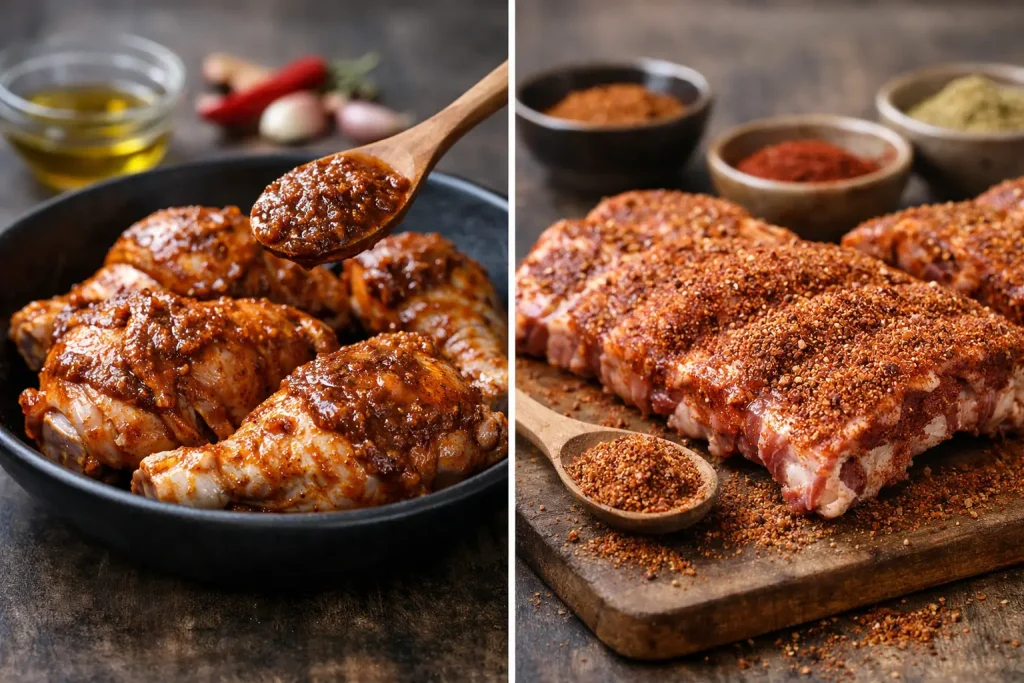
That rack of ribs, weeknight chicken, or skillet of roasted vegetables can go in two very different directions before it ever meets the heat. In the seasoning paste versus dry rub debate, there is no single champion. The better choice comes down to the food, the cooking method, how much time you have, and the kind of crust or juiciness you want on the plate.
A dry rub delivers concentrated flavor and a beautiful seasoned exterior with very little fuss. A paste brings moisture, cling, and a bolder surface coating that can feel closer to a quick marinade. Both can make everyday food burst with flavor. The trick is knowing when each one gives you the better bite.
What Is a Dry Rub?
A dry rub is a blend of dried herbs, spices, salt, and sometimes sugar that gets sprinkled or pressed directly onto food. Think black pepper, garlic, paprika, chile, onion, citrusy spices, and herbs layered in just the right proportion. It seasons the surface while helping build color and texture during roasting, grilling, smoking, or searing.
Dry rubs are especially handy because they are clean, fast, and flexible. Pat your protein dry, season it generously, and cook right away or let it rest in the refrigerator for a few hours. There is no blender to wash and no wet coating dripping through the grill grates.
For home cooks who want dependable flavor without measuring six different spices, a quality blend does the heavy lifting. Clean ingredients matter here. Fresh organic herbs and spices, Himalayan pink salt, and no MSG, fillers, artificial flavors, or preservatives let the ingredients do what they are supposed to do: make food taste more like itself, only better.
What Is Seasoning Paste?
Seasoning paste combines spices with a wet ingredient, often oil, citrus juice, vinegar, yogurt, fresh garlic, ginger, chile, tomato paste, or herbs. It may be loose enough to brush on or thick enough to massage into meat. Because it is moist, it adheres well and starts building a flavorful coating right away.
A paste is not automatically a marinade, although the two can overlap. Marinades are generally thinner and designed to surround food for a period of time. A seasoning paste is often thicker and applied more deliberately to the outside of chicken thighs, shrimp, pork shoulder, fish, or vegetables before cooking.
The biggest appeal is coverage. Garlic and herbs stay put on a chicken breast. Chile and citrus coat shrimp. A paste can also carry fat-soluble flavors from spices, which creates a rich, fragrant finish. But that moisture changes how food browns, and that is where the choice gets interesting.
Seasoning Paste Versus Dry Rub: The Real Differences
The central difference is moisture. A dry rub works with the natural moisture already on food. Salt begins to draw a little moisture to the surface, where the seasoning dissolves and adheres. With enough heat and the right amount of sugar, the exterior can become savory, crisp, and deeply browned.
A paste adds moisture from the beginning. That can protect lean foods from drying out and produce a luscious coating, but it can also slow browning. If you pile a thick, watery paste onto a steak and put it over aggressive heat, the herbs and garlic may scorch before the steak develops the crust you had in mind.
Dry rubs are usually the stronger choice when texture is the goal. They shine on brisket, ribs, burgers, pork chops, wings, roasted potatoes, and vegetables cooked at high heat. Pastes are often better when you want a pronounced aromatic layer, such as yogurt-spiced chicken, citrus-garlic shrimp, roasted cauliflower, or slow-cooked pork.
Salt deserves attention, too. With a dry rub, salt can work more like a dry brine when applied ahead of time, helping season meat beyond the surface. A paste can accomplish this as well, but wet ingredients may dilute the salt concentration. Neither approach is wrong. It simply means a paste may need a longer rest or a final pinch of seasoning after cooking.
Choose a Dry Rub When You Want a Great Crust
Reach for a dry rub when your meal needs direct heat, smoke, or crisp edges. It is the natural move for backyard barbecue because it lets smoke and rendered fat meet a seasoned surface without introducing extra liquid. On ribs and pork shoulder, apply the rub generously and let it sit while the grill or smoker comes to temperature. The seasoning becomes part of that craveable bark.
For steak, keep it simple and confident. Season a dry steak generously, especially around the edges, then let it sit for 30 to 40 minutes before searing. A blend with garlic, pepper, and savory herbs gives you depth without covering up a good cut of beef. Heath’s Blends Steak & Taters or S.P.O.G-style flavor profiles fit naturally into this kind of cooking.
Dry rubs also make vegetables feel anything but secondary. Toss broccoli, sweet potatoes, zucchini, or cauliflower with a little oil first, then add the seasoning. The oil is not the seasoning itself. It is just the helper that gives the dry blend something to cling to and encourages caramelized edges in the oven or air fryer.
Choose a Seasoning Paste When You Want More Coating
A paste earns its place with foods that benefit from moisture and aromatic intensity. Chicken thighs are a perfect example. Mix your favorite spice blend with olive oil, minced garlic, lemon zest, and just enough lemon juice to make a spreadable paste. Rub it beneath and over the skin, then roast or grill over moderate heat. You get bright flavor, tender meat, and a coating that feels built into every bite.
Pastes are also excellent for seafood, as long as you watch the clock. Shrimp and flaky fish do not need a long soak in acidic ingredients. A brief coating of oil, seasoning, citrus zest, and herbs before cooking is plenty. If your paste contains a lot of lemon or vinegar, apply it just 10 to 20 minutes ahead so the seafood stays tender rather than turning soft.
For vegetables, a paste can turn a plain sheet pan into something special. Try a smoky chile paste on corn, mushrooms, or cauliflower. Use a peppery lemon paste on asparagus. Spread a tangy barbecue-style paste over thick portobello caps before grilling. The wet coating gets into the nooks and crannies, creating big flavor with very little extra work.
How to Turn a Dry Blend Into a Simple Paste
You do not need a separate jar of seasoning paste for every meal. A quality dry blend gives you a useful starting point, then you can make a paste around the dish you are cooking.
For most proteins and vegetables, combine one tablespoon of dry seasoning with one tablespoon of oil. Add a teaspoon of water, citrus juice, vinegar, or Worcestershire sauce only if you need a looser consistency. Stir until it looks like wet sand or a thick sauce, then rub or brush it onto the food.
For a richer paste, use plain yogurt or mayonnaise in place of some of the oil. Yogurt works beautifully on chicken because it helps keep the exterior tender while the spices toast. Mayonnaise is surprisingly good on fish, corn, and roasted vegetables, where its fat helps promote browning. For pork or ribs, a small spoonful of mustard can add tang and give the spices extra grip.
Keep sugar in mind when grilling. A sweet paste can burn quickly over high heat, so save it for indirect heat, lower-temperature roasting, or the final stage of cooking. If you want a glossy barbecue finish, cook with a dry rub first and brush on the sweeter paste or sauce near the end.
Can You Use Both?
Absolutely. In fact, using both is one of the smartest ways to build layers of flavor. Start with a dry rub for a seasoned foundation and good crust. Then add a paste, glaze, or sauce late in the cook for moisture and shine. This works especially well for ribs, chicken wings, meatloaf, grilled pork tenderloin, and roasted vegetables.
The key is restraint. If the dry rub is salty and the paste is salty, the finished dish can cross the line fast. Build your paste from unsalted oil, yogurt, citrus, or fresh herbs when your initial seasoning already contains salt. Taste sauces before they hit the food, and remember that flavors concentrate as moisture cooks away.
The Best Choice Is the One That Fits Dinner
Choose a dry rub when you want a fast path to bold flavor, caramelized edges, and a serious crust. Choose a seasoning paste when the meal calls for cling, moisture, and fresh aromatic punch. Then trust your own taste buds. A great blend should give you room to cook steak one night, shrimp the next, and a pan of roasted vegetables after that. It is amazing what spice can do when you let the food lead the way.