
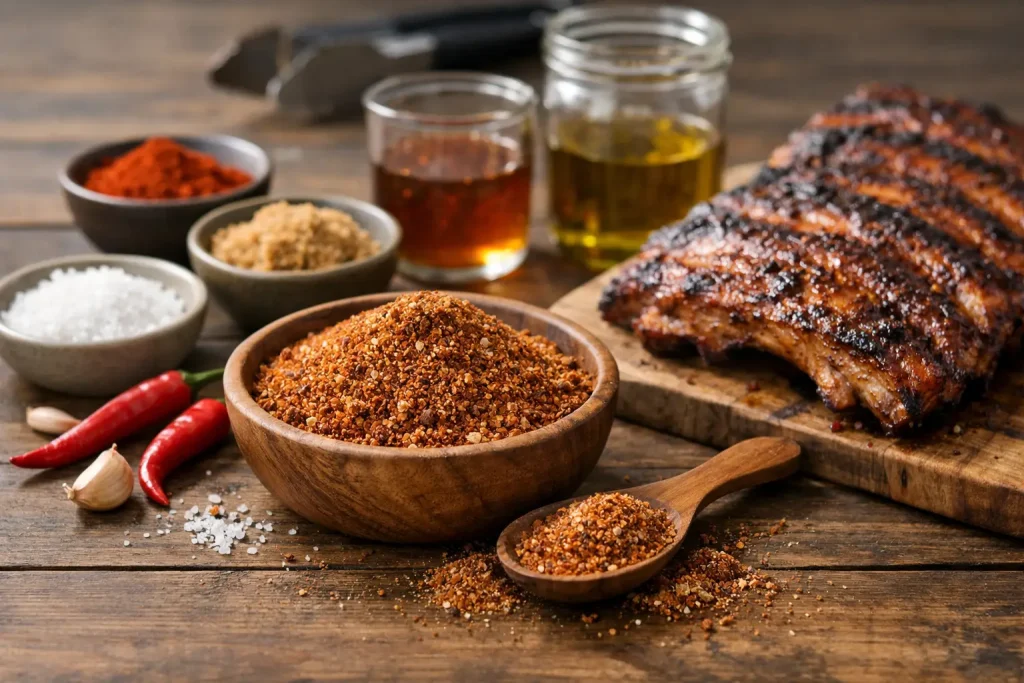
The best barbecue rub does more than make a rack of ribs look good. It creates that first flavorful crust, seasons the meat beneath it, and gives every bite a little personality before the sauce ever reaches the table. Whether dinner is chicken thighs on a weeknight, burgers for the neighborhood, or a long, slow brisket cook, a good rub turns simple ingredients into food people remember.
A great barbecue meal does not require a cabinet full of spices or a complicated pitmaster routine. It starts with a balanced blend, a little attention to timing, and enough heat to let those herbs and spices do their work.
What a Barbecue Rub Actually Does
A barbecue rub is a dry seasoning blend applied directly to food before cooking. Most blends combine salt, pepper, garlic, onion, paprika or chile, and herbs or other spices. Some lean sweet with brown sugar notes, some bring peppery heat, and others favor tang, smoke, citrus, or an earthy Southwest-style flavor.
Salt is the foundation. It helps season beyond the surface, especially when the rub has time to rest on the food. Spices build the aroma and color, while sugar can help form a dark, caramelized exterior. That exterior is commonly called bark, and it is one of the best parts of low-and-slow barbecue.
Not every cook needs a sweet rub, though. Sugar can darken quickly over higher heat, so a no-sugar or lower-sugar blend is often the better choice for steaks, fast-grilled chicken, seafood, or vegetables. The right barbecue rub depends on the food, the cooking method, and the kind of flavor you want on the plate.
Choose a Rub for the Food, Not Just the Grill
It is tempting to save barbecue seasoning for ribs and pulled pork. Those are classic pairings, but rubs deserve a much bigger role in the kitchen. A savory, garlic-forward blend can make roasted potatoes feel like a proper side dish. A peppery blend can sharpen the flavor of burgers, mushrooms, or grilled corn. A bright lemon-and-herb profile can bring life to salmon, shrimp, zucchini, and chicken.
For pork shoulder and ribs, look for a blend with a balance of savory spices, gentle sweetness, and enough pepper or chile to keep the flavor from becoming flat. Pork can handle bold seasoning and benefits from the contrast of sweet, smoky, and spicy notes.
For beef, think about the crust. Steaks, tri-tip, burgers, and brisket usually shine with black pepper, garlic, onion, and a confident amount of salt. A steak does not need to taste like dessert. A more savory barbecue rub lets the rich beef flavor stay front and center.
Chicken gives you room to play. Tangy blends are excellent on wings and thighs, while a smoky, warm spice profile works beautifully on drumsticks and beer-can chicken. If you are cooking skin-on chicken, make sure the skin is dry before seasoning so it has a better chance of crisping.
Fish and seafood need a lighter hand. A heavy, sugary rub can overpower delicate fillets, but a clean blend with lemon, pepper, garlic, and herbs can make grilled shrimp or flaky white fish taste fresh and exciting. The same rule applies to vegetables. Start modestly, then add a touch more after cooking if needed.
How Much Barbecue Rub Should You Use?
There is no need to measure every teaspoon, but there is a useful rule: season until you can see an even, generous coating without burying the food. For a full rack of ribs or a pork shoulder, that may mean several tablespoons. For two chicken breasts or a pound of shrimp, it may only take one to two tablespoons.
Pat meat dry first. Moisture on the surface can make the seasoning clump and prevents a consistent coating. Sprinkle the rub from several inches above the food, then lightly press it in with your hands. Pressing helps it adhere. Rubbing aggressively does not, and it can create uneven patches.
For vegetables, toss them with a little oil first, then add the seasoning. The oil gives the herbs and spices something to cling to and encourages browning on the grill or in the oven.
When using a blend that contains salt, remember that more is not always better. If you plan to brine chicken, inject a pork shoulder, or finish a dish with a salty sauce, use a lighter layer of rub. Great barbecue has depth, not a salt overload.
When to Apply It
For thin cuts such as steaks, chops, burgers, shrimp, and chicken breasts, apply your barbecue rub 15 to 30 minutes before cooking. That gives the seasoning time to settle in without drawing out too much surface moisture.
For larger cuts such as ribs, pork butt, brisket, and whole chicken, seasoning several hours ahead works well. Overnight is fine when the blend is not excessively salty, but it is not mandatory. Even 30 minutes can produce excellent results when the cook is handled well.
If you are short on time, season right before the food hits the heat. You will still get flavorful results. Consistency matters more than chasing a perfect schedule.
Make the Heat Work for Your Rub
A barbecue rub changes as it cooks. Pepper becomes more aromatic. Garlic and onion mellow. Paprika deepens in color. Sugar caramelizes, then burns if the heat gets too aggressive. That is why the grill temperature matters as much as the seasoning itself.
For ribs, pork shoulder, brisket, and other low-and-slow favorites, steady indirect heat is your friend. Keep the food away from direct flames and let the rub slowly build a rich exterior. If you use sauce, wait until the last part of cooking so its sugars do not scorch before the meat is tender.
For burgers, steaks, and vegetables, use direct heat but stay alert. A rub with sugar can char quickly, especially on a hot grate. Move food to a cooler part of the grill if the exterior is getting dark before the interior is done.
Oven roasting works, too. A sheet pan of barbecue-rubbed cauliflower, sweet potatoes, chicken thighs, or pork tenderloin can deliver plenty of color and flavor. Finish under the broiler briefly if you want a little extra char, but keep a close eye on it.
Clean Ingredients Let the Flavor Lead
A seasoning blend should make cooking easier without making you wonder what is in it. Quality herbs and spices, straightforward ingredients, and flavorful salt give home cooks a dependable starting point for any kind of food.
At Heath’s Blends, that means organic herbs and spices, Himalayan pink salt, and blends made without MSG, nuts, artificial flavors, fillers, or preservatives. The goal is simple: full, craveable flavor that tastes at home on the grill, in a skillet, and on the weeknight dinner table.
Freshness matters here. Spices do not necessarily spoil quickly, but their bright aroma and natural oils fade over time. Store your barbecue rub tightly sealed in a cool, dry cabinet, away from steam and direct sunlight. Avoid shaking it directly over a steaming pan, since moisture can find its way into the jar and cause clumping.
Do Not Forget the Finish
A rub is the beginning of flavor, not always the final step. Taste your food after it rests. A squeeze of lemon can brighten smoked chicken or grilled fish. A small pinch of finishing salt can wake up a thick steak. A tangy sauce can complement sweet ribs, while pickled onions or a crisp slaw can cut through rich pulled pork.
The trade-off is balance. If your rub is spicy, choose a cooler, creamier side. If the meat is sweet and smoky, bring acidity with vinegar, citrus, or pickles. Barbecue tastes bigger when every element on the plate has a job.
Start With One Meal You Already Love
You do not need to smoke a twelve-pound brisket to put a barbecue rub to work. Season burgers before grilling them. Dust chicken thighs before roasting. Toss potatoes with oil and a savory blend, then let the oven do the rest. Once you see how much flavor a thoughtful seasoning adds, you will find new reasons to reach for it.
That is the real fun of barbecue cooking: a few good spices can turn an ordinary meal into the one everybody asks you to make again.