
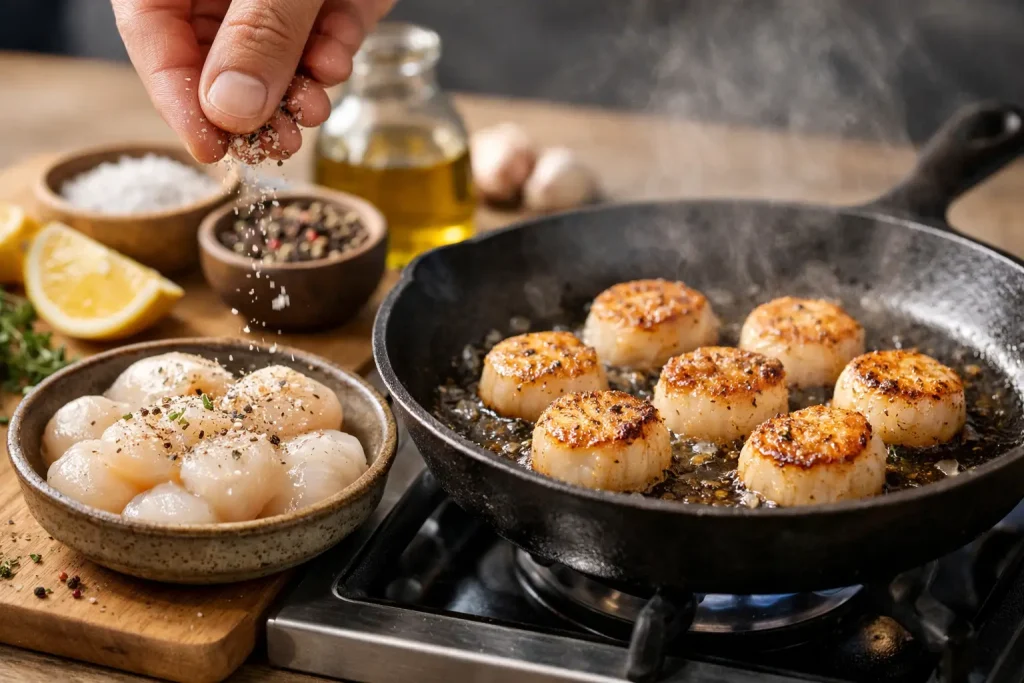
A great scallop needs very little help. Its natural sweetness, delicate briny flavor, and buttery texture are already doing plenty of work. The real trick in how to season scallops is knowing when to stop: use enough seasoning to bring out what is there, but not so much that every bite tastes like a spice cabinet.
When scallops are seasoned well and seared in a hot pan, they develop a caramelized golden crust while staying tender and almost creamy in the center. That restaurant-style result is absolutely possible at home, and it starts before the skillet ever gets hot.
Start With Dry, Good-Quality Scallops
Seasoning cannot make up for scallops that are waterlogged. Whenever possible, choose dry-packed sea scallops, which have not been treated with a solution that adds moisture. They tend to brown more easily and offer a cleaner, sweeter flavor.
Pat the scallops very dry with paper towels, including the sides. This is not a fussy extra step. Surface moisture creates steam, and steam is the enemy of that deep, golden sear. If time allows, place the dried scallops on a paper towel-lined plate in the refrigerator for 15 to 30 minutes before cooking. The chilled air helps dry the exterior even more.
Before seasoning, check for the small, firm side muscle on each scallop. It is edible, but it can be chewy. Pull it off if it is still attached, then give the scallops one more quick pat dry.
How to Season Scallops Without Overdoing It
For most pan-seared scallops, salt, pepper, and a touch of citrus-friendly seasoning are all you need. Scallops are naturally mild, so heavy coatings of cumin, smoked paprika, sugar, or dried herbs can bury their flavor instead of supporting it.
Season both flat sides lightly right before the scallops go into the pan. A fine or medium grind works best. Large salt crystals may not adhere evenly, while too much fine salt can quickly make a small scallop taste overly salty.
Himalayan pink salt brings clean salinity, while freshly cracked black pepper adds gentle warmth. A lemon-pepper blend can be especially good when you want a brighter finish without squeezing lemon into the pan. Heath’s Blends Peppery Lemon is a natural fit here: its zesty, pepper-forward profile complements seafood without turning the scallops into a side note.
The key word is lightly. Think of seasoning scallops as a finishing touch to premium ingredients, not a thick rub for a brisket.
Salt timing depends on your method
For a fast, hard sear, salt the scallops immediately before they hit the pan. Salt draws out moisture over time, so seasoning them 20 minutes ahead can leave you with a damp surface and less browning.
If you are grilling scallops on skewers or cooking them with a sauce, you have a little more flexibility. Even then, avoid a long salt rest. Season close to cooking time, then taste and adjust the finished dish with a final pinch only if it needs it.
Choose a Flavor Direction That Fits the Meal
The best seasoning for scallops depends on what is going next to them. A light salad, creamy risotto, grilled vegetables, or smoky corn each calls for a slightly different approach. Start with the scallops’ sweetness, then build the rest of the plate around it.
For a classic, clean seafood flavor, use salt, black pepper, and lemon zest. Finish the cooked scallops with a few drops of fresh lemon juice, not a full squeeze. Too much acid can overwhelm their sweetness.
For a richer, steakhouse-style plate, season with salt, black pepper, garlic powder, and a tiny pinch of onion powder. Serve with browned butter, roasted asparagus, or mashed potatoes. Garlic is delicious with scallops, but keep it restrained. Garlic powder burns quickly in a hot skillet, and fresh garlic is better added to butter after the scallops are seared.
For Southwest-inspired scallops, use salt, black pepper, a little ground coriander, and mild chile powder. This approach works beautifully with grilled corn, avocado, citrus, black beans, or a fresh mango salsa. Skip strong quantities of cumin or chipotle unless the scallops will be part of a bigger, bolder dish such as tacos.
For a gentle herb finish, season simply with salt and pepper before searing. Add chopped chives, parsley, tarragon, or basil after cooking. Dried herbs can scorch in a hot pan, while fresh herbs keep their color and fragrance when added at the end.
Avoid Sugary Rubs in a Hot Skillet
Sugar, brown sugar, honey powder, and many barbecue-style seasonings can burn before a scallop has time to cook through. That does not mean sweet-and-spicy scallops are off the table. It just means the sweet element belongs in a glaze, sauce, or finishing drizzle after the initial sear.
The same goes for heavy seasoning blends loaded with coarse herbs and spices. They can create bitter spots on the pan and prevent full contact between the scallop and the cooking surface. Save those bigger flavors for grilled seafood, bacon-wrapped scallops, or dishes where the scallops are combined with vegetables, pasta, rice, or sauce.
Get the Pan Ready Before You Cook
Perfect seasoning deserves a pan that can do its job. Use a heavy skillet, preferably cast iron or stainless steel, and heat it over medium-high to high heat until it is properly hot. Add a thin layer of a high-heat oil such as avocado, grapeseed, or canola oil. Butter alone is not the best starting fat because it can burn before the scallops are browned.
Set the seasoned scallops in the pan with space between them. You should hear a confident sizzle. If the pan is crowded, the scallops steam instead of sear, so cook in batches when necessary.
Leave them alone for about 1 1/2 to 2 minutes. Do not nudge, shake, or flip early. When the first side releases easily and has a rich golden-brown crust, turn them once. Cook the second side for roughly 1 to 2 minutes, depending on size.
A scallop is done when its center is just opaque and still tender. Overcooking turns that beautiful soft texture firm and rubbery in a hurry. If you want to add butter, garlic, herbs, or a squeeze of lemon, do it during the final 30 seconds after the main sear is already established.
Taste the Finished Scallop Before Adding More
The pan can make flavors seem stronger. Browning brings nuttiness, pepper blooms in hot oil, and butter adds richness, so do not automatically add more salt at the table. Taste one scallop first.
If it needs brightness, add lemon zest or a small squeeze of juice. If it needs more depth, a few flakes of finishing salt or a crack of black pepper may be enough. If it needs richness, spoon over a little browned butter rather than reaching for another heavy shake of seasoning.
That final taste is where home cooks start cooking with confidence. Scallops reward restraint, a hot pan, and a good pinch of seasoning – then they do the rest.