
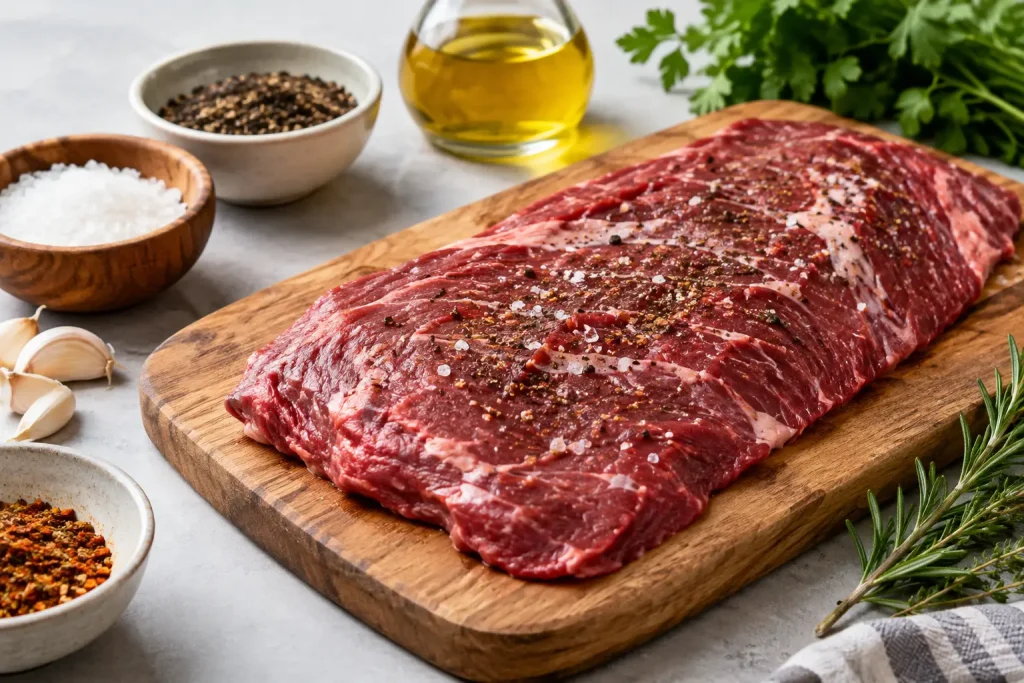
Flank steak has a bold, beefy personality, but it does not have much room for timid seasoning. This lean, long-cut steak can go from wonderfully juicy to chewy in a hurry, so learning how to season flank steak is about more than sprinkling on a little salt at the last minute. The right mix of salt, herbs, spices, and timing gives every thin slice a savory crust and plenty of flavor.
The good news? You do not need a complicated marinade or a cabinet full of spices. Start with a quality steak, season it with purpose, cook it hot and fast, and slice it correctly. That is how a simple weeknight dinner earns real grill-night applause.
Start With the Right Seasoning Approach
Flank steak comes from the abdominal muscles of the cow, which explains its loose grain and intense flavor. It is leaner than ribeye and less forgiving than a thick strip steak, but that is also what makes it such a great canvas for savory, smoky, tangy, or Southwest-inspired seasonings.
A dry seasoning works especially well when you want a deep seared crust. Salt draws a little moisture to the surface, then that moisture helps the herbs and spices cling to the meat. Over high heat, the outside browns beautifully while the center stays rosy.
A marinade is another good option, particularly if you have a few hours and want a brighter flavor profile. Acidic ingredients such as lime juice, vinegar, or Worcestershire sauce can complement flank steak, but there is a trade-off: too much acid or too much time can make the outer layer soft and mushy. For most marinades, two to six hours is plenty. If you want dependable flavor without waiting, a dry rub is your best friend.
How to Season Flank Steak Step by Step
1. Dry the steak first
Take the flank steak from its package and pat it very dry with paper towels. This small step matters. A wet surface steams instead of sears, which can leave you with gray meat rather than that craveable browned crust.
If the steak has a thin silvery membrane or excess fat, trim it away. Do not over-trim every bit of fat, though. A little fat adds flavor and helps protect the meat over high heat.
2. Salt early when you can
For a one-and-a-half to two-pound flank steak, use roughly 1 to 1 1/2 teaspoons of kosher salt, depending on the saltiness of your blend. Season both sides evenly and let the steak rest uncovered in the refrigerator for at least 30 minutes. An hour or two is even better.
This is a simple dry-brine method. Given time, the salt seasons the meat more deeply and helps it retain moisture during cooking. If dinner needs to happen fast, season immediately before it hits the grill or skillet. What you want to avoid is salting it 10 to 20 minutes ahead, then leaving it on the counter. In that middle window, salt pulls moisture to the surface without enough time for it to work back in.
3. Build a savory spice layer
After salting, add black pepper and your supporting spices. Flank steak loves a blend with garlic, onion, paprika, and a little earthy cumin. Those flavors stand up to the beef without hiding it.
For a classic steakhouse direction, use coarse black pepper, garlic powder, onion powder, and smoked paprika. For a Southwestern kick, add cumin, chili powder, coriander, and a pinch of cayenne. If you like a tangy barbecue edge, paprika, mustard powder, garlic, pepper, and a touch of brown sugar bring balance and color.
Sugar deserves a little care here. A small amount helps with caramelization, especially on a grill, but too much can burn before the steak is cooked. Keep sweet ingredients light when cooking over very high heat.
4. Use enough seasoning to cover the surface
Flank steak is thin and wide, so it needs a visible, even coat. For a two-pound steak, plan on about 1 to 2 tablespoons of a salt-free or lower-salt seasoning blend in addition to your salt. If the blend already contains salt, follow its label guidance and use a lighter hand with extra kosher salt.
Press the seasoning gently into both sides rather than rubbing aggressively. You want the spices to adhere, not turn the meat into a paste. Let the seasoned steak sit at room temperature for 20 to 30 minutes before cooking so it can lose its refrigerator chill. That helps it cook more evenly.
A Flavor Formula That Works Every Time
When you are seasoning from your own pantry, think in layers: salt for depth, pepper for bite, garlic and onion for savoriness, paprika or chile for color and warmth, and one supporting note such as cumin, rosemary, coriander, or mustard.
Here is an easy all-purpose mix for one flank steak: combine 1 teaspoon kosher salt, 1 teaspoon coarse black pepper, 1 teaspoon garlic powder, 1 teaspoon smoked paprika, 1/2 teaspoon onion powder, 1/2 teaspoon cumin, and 1/4 teaspoon cayenne. The cayenne is optional, but it gives the beef a gentle back-end warmth rather than overwhelming heat.
Want an even faster route? A balanced steak seasoning blend brings those layers together without measuring six jars every time dinner is on the clock. Heath’s Blends Steak & Taters is a natural fit when you want a hearty, savory steak flavor built around clean, quality ingredients and Himalayan pink salt.
Match the Seasoning to How You Cook It
The best seasoning for flank steak depends a little on the heat source and how you plan to serve it.
For grilling, use bolder flavors. Smoke, char, and open-flame heat can handle paprika, cumin, chile, pepper, and garlic. Grill over high heat, usually about four to six minutes per side, depending on thickness and grill temperature. Keep the lid closed between flips when possible, and move the steak if flare-ups start scorching the spices.
For a cast-iron skillet, skip overly sugary rubs and lean into pepper, garlic, paprika, and herbs. Preheat the skillet until it is very hot, add a high-smoke-point oil, and sear the steak without crowding the pan. A cast-iron crust is hard to beat, especially when the weather refuses to cooperate.
For the broiler, choose a straightforward savory rub and watch closely. Broilers vary wildly. Position the steak a few inches from the heat, turn it once, and do not walk away to set the table. Flank steak can move from beautifully browned to blackened faster than you expect.
Do Not Forget the Rest and the Slice
Even perfectly seasoned flank steak needs a rest. Move it to a cutting board and let it sit for 8 to 10 minutes before slicing. Resting lets the juices settle back into the meat instead of running across the board.
Then find the grain. On flank steak, the muscle fibers run in long, obvious lines. Slice across those lines, not alongside them, and keep the slices thin on a slight diagonal. Cutting against the grain shortens the fibers, making each bite noticeably more tender.
Aim for medium-rare to medium, around 130 to 140 degrees Fahrenheit after resting. Flank steak can be cooked beyond medium, but its lean texture becomes firmer as it goes. If some guests prefer more doneness, cook the steak to medium and slice it thinly. It will still eat well, especially with a punchy seasoning and a bright finishing sauce.
Finishing Touches That Make the Flavor Pop
A final squeeze of lime, a spoonful of chimichurri, or a quick sprinkle of flaky salt can bring seasoned flank steak to life. This is not about covering the beef. It is about adding contrast after the heat has done its work.
Serve it in warm tortillas with grilled onions, over a crisp salad, alongside roasted potatoes, or piled onto a rice bowl with charred peppers. One well-seasoned flank steak can stretch into several seriously good meals.
Give your seasoning a little time, cook the steak hot, and slice it against the grain. When that first juicy, spice-crusted piece hits the plate, you will understand why flank steak deserves a regular spot in the dinner lineup.