
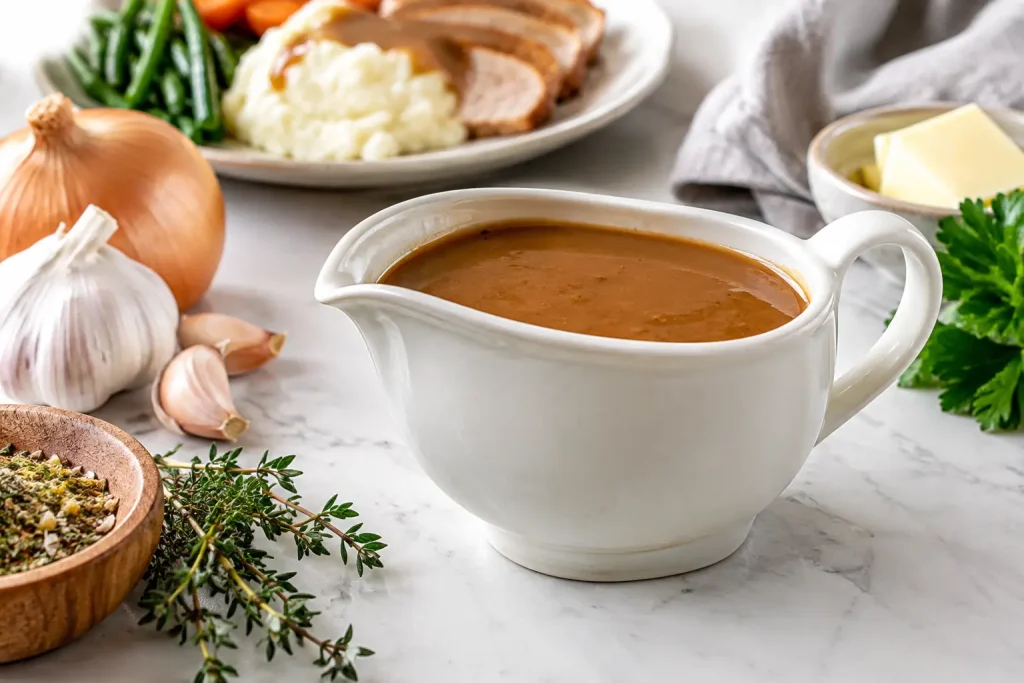
That packet, jar, or carton of gravy can save a weeknight roast or make holiday dinner much less stressful. The secret to enhance store bought gravy is not covering it up with a dozen ingredients. It is building the savory, glossy, slow-cooked flavor that gravy should have in the first place.
A good shortcut gravy already brings salt, body, and convenience. Your job is to taste it, decide what it is missing, and make one or two purposeful additions. Maybe it needs the roasted depth of pan drippings. Maybe it needs a little black pepper and herbs. Maybe it is too thick, too pale, or a little flat. A few minutes at the stove can make all the difference.
Start by Choosing the Right Kind of Gravy
Not every store-bought gravy needs the same fix. Dry mixes are usually the blankest canvas. They can be convenient, but they often benefit from richer liquid, fresh aromatics, and a final hit of seasoning. Jarred gravy tends to be thicker and more savory from the start, while boxed gravy is often looser and milder.
Before adding anything, warm the gravy in a small saucepan and taste it. Do this before salting. Packaged gravy is often well seasoned, especially if it will be paired with salty ham, stuffing, or mashed potatoes. What it may lack is freshness and depth, not more sodium.
If the gravy tastes thin or one-dimensional, use the ideas below to give it a homemade character without turning dinner into another project.
1. Add Real Pan Drippings for Roasted Flavor
The fastest way to make gravy taste connected to the meal is to add a spoonful or two of drippings from roasted chicken, turkey, steak, pork chops, or meatloaf. Those browned bits carry the flavor that packaged gravy cannot replicate on its own.
Pour off excess grease first, then whisk the drippings into warm gravy. If there are browned bits stuck in the skillet or roasting pan, loosen them with a splash of broth, water, or wine before adding that liquid. Keep the heat at a gentle simmer so the gravy stays smooth.
Use drippings with a light hand. A little goes a long way, particularly with smoky barbecue meats or heavily seasoned steak. You want the gravy to support the plate, not compete with it.
2. Build a Better Base With Broth, Milk, or Cream
Water gets dry gravy mix moving, but it does not add much flavor. Replace some or all of the water with low-sodium chicken, beef, mushroom, or vegetable broth. Match the broth to what you are serving: chicken broth for poultry, beef broth for pot roast, and mushroom or vegetable broth for mashed potatoes and meatless meals.
For a creamier gravy, stir in a small splash of milk, half-and-half, or heavy cream near the end. This is especially good for country-style sausage gravy, chicken-fried steak, biscuits, or roasted vegetables. Do not boil hard after adding dairy, since high heat can make the texture less smooth.
If you need to loosen gravy that became too thick, add warm broth a tablespoon at a time. For thin gravy, let it simmer uncovered for a few minutes before reaching for more thickener. Reducing it slightly often improves flavor and texture at the same time.
3. Use Seasoning to Give Store-Bought Gravy a Backbone
This is where a quality spice blend earns its place beside the stove. Gravy needs seasoning that brings more than salt. Black pepper adds a warm bite. Garlic and onion bring savory depth. Herbs make it taste more like it spent the afternoon beside a roasting pan.
Start with a small pinch, whisk well, and taste again. A pepper-forward blend can wake up beef gravy for steak and mashed potatoes. A garlic-and-herb profile fits roast chicken, turkey, pork tenderloin, and vegetables. For a bolder dinner, a touch of smoked paprika or a smoky seasoning can be excellent with brisket, grilled meatloaf, or barbecue chicken.
Heath’s Blends Steak & Taters is a natural fit when beef gravy needs a little more savory, peppery personality. Whatever blend you choose, remember that dried spices intensify as they warm. Give the gravy a minute or two before deciding whether it needs more.
4. Add One Fresh Aromatic
Fresh aromatics make packaged gravy taste less processed and more personal. You do not need a complicated sauté. Cook a tablespoon of finely minced shallot, onion, or garlic in a little butter until soft, then whisk in the gravy.
For turkey or chicken gravy, a few chopped sage leaves, thyme leaves, or parsley can make a big difference. For beef, try thyme, rosemary, or plenty of coarse black pepper. Mushrooms are another smart move: sauté them until deeply browned, then stir them into beef or pork gravy for earthy richness.
Keep fresh herbs in proportion. Rosemary can take over quickly, and raw garlic has a sharp edge that does not belong in gravy. Cook aromatics first, then add them gradually so the finished sauce stays balanced.
5. Brighten Heavy Gravy With a Small Acidic Finish
If your gravy tastes rich but dull, it probably needs acid. This is one of the most overlooked ways to enhance store bought gravy, especially when serving buttery mashed potatoes, stuffing, or fatty cuts of meat.
Stir in a few drops of apple cider vinegar, red wine vinegar, lemon juice, or Worcestershire sauce. The goal is not a tangy gravy. You should not be able to identify the acid. It should simply make the savory flavors feel clearer and keep each bite from becoming too heavy.
Apple cider vinegar is especially good with pork and turkey. Lemon works beautifully with chicken, seafood, and vegetable gravy. Worcestershire brings both acidity and umami to beef gravy, but use it sparingly because it is salty and distinctive.
6. Add Umami When the Gravy Tastes Flat
Umami is the deep, mouthwatering savory note that makes gravy taste like it belongs on a plate of roasted food. If the flavor is weak after you have adjusted seasoning, add a modest amount of an umami-rich ingredient.
Good options include a little Worcestershire sauce, soy sauce, mushroom powder, a spoonful of concentrated broth base, or finely chopped sautéed mushrooms. Tomato paste can also work with beef gravy, but cook it briefly in butter before whisking it in so it loses its raw taste.
Taste after every addition. Soy sauce and broth concentrates can push gravy from savory to overly salty in a hurry. If that happens, dilute with unsalted broth or water and add a small pat of butter to round it out.
7. Finish With Butter for a Glossy, Restaurant-Style Texture
A final pat of cold butter can transform the appearance and feel of gravy. Turn the heat to low, whisk in a tablespoon or two, and let it melt gently. The butter softens harsh edges, gives the sauce a richer mouthfeel, and adds a sheen that looks right at home on a holiday table.
This trick works best when the gravy is already seasoned the way you want it. Butter will not fix bland gravy, but it makes a well-balanced gravy feel more generous. For an even silkier finish, strain out herb stems, onion pieces, or mushroom bits if you prefer a smooth sauce.
Match the Gravy to What Is on the Plate
A rich beef gravy can handle black pepper, mushrooms, Worcestershire, and roasted garlic. Turkey gravy usually shines with poultry drippings, sage, thyme, and a touch of cider vinegar. Chicken gravy is flexible enough for lemon, parsley, garlic, or cream. For vegetarian gravy, use a flavorful vegetable or mushroom broth, browned mushrooms, herbs, and a little soy sauce or mushroom powder.
Think about the rest of dinner, too. If your potatoes are loaded with butter and cheese, keep the gravy bright and peppery. If the plate includes lean roasted turkey breast, a richer gravy with drippings and a buttery finish can bring everything together. Great gravy is not just about making one component taste better. It helps the whole meal eat better.
Give yourself permission to start with the shortcut. Warm it slowly, taste as you go, and add the flavor your dinner is asking for. A few good ingredients and the right seasoning can turn an ordinary gravy boat into the part of the meal everyone reaches for again.