
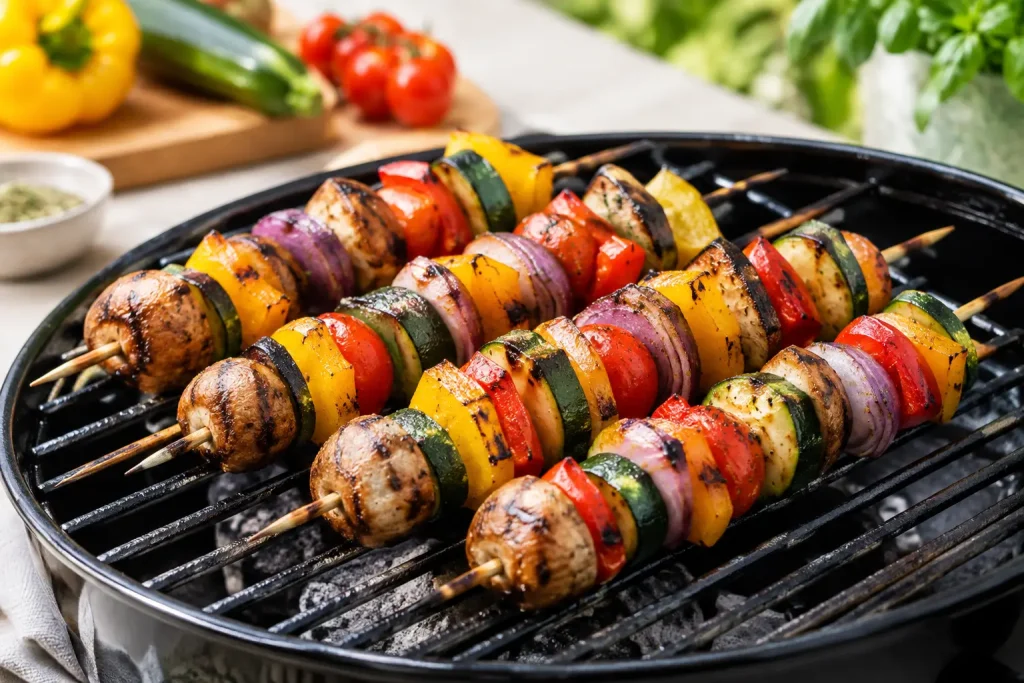
A great vegetable kebab should not feel like the side dish somebody remembered at the last minute. When you grill vegetable kebabs with the right cuts, steady heat, and a seasoning that brings every bite together, they become the colorful, smoky plate everyone reaches for first.
The challenge is that vegetables do not cook alike. Zucchini softens quickly, onions need more time, mushrooms release moisture, and bell peppers need enough heat to blister without falling through the grates. The answer is not more complicated prep. It is a little smart sorting before the skewers hit the fire.
Start With Vegetables That Belong Together
For kebabs that cook evenly, choose vegetables with similar cooking times and cut them to a similar size. A mix of red onion, bell pepper, zucchini, yellow squash, mushrooms, and cherry tomatoes makes a beautiful skewer, but it helps to think about how each ingredient behaves over direct heat.
Bell peppers and onions can take the hottest part of the grill. They benefit from char and stay pleasantly firm. Zucchini and yellow squash cook faster, so cut them into thick half-moons or sturdy chunks rather than thin slices. Mushrooms need to be large enough to stay put, while cherry tomatoes are best added near the end or placed on a separate skewer since their skins can split quickly.
If you want to add potatoes, sweet potatoes, carrots, or Brussels sprouts, give them a head start. Par-cook them in lightly salted water for a few minutes until just barely tender, then cool and skewer. Putting raw potatoes beside zucchini is a recipe for one vegetable to burn while the other stays underdone.
Cut for the grill, not the salad bowl
Aim for pieces around 1 to 1 1/2 inches wide. Smaller pieces may look tidy, but they cook too fast and are more likely to spin when you try to turn the skewers. Keep the pieces consistent so every bite reaches the finish line at about the same time.
For onions, cut through the root end into thick wedges so the layers stay connected. For peppers, skip the flimsy strips and use broad squares. For zucchini, thick rounds are fine if they are large, but half-moons usually hold their shape better.
Season Before You Skewer
Vegetables need oil before they need heat. Toss the cut vegetables with enough avocado oil, olive oil, or another high-heat cooking oil to lightly coat every surface. This helps prevent sticking, encourages browning, and gives your seasonings something to cling to.
Then season generously. Salt alone can make grilled vegetables taste good, but a balanced blend adds the kind of savory depth that makes a simple cookout meal feel planned. Peppery Lemon brings bright, fresh energy to zucchini, asparagus, mushrooms, and peppers. Southwest Sizzler is a natural fit when the menu includes corn, black beans, grilled chicken, or steak. Smokin’ Maria adds a deeper, barbecue-ready personality when you want the vegetables to stand up next to ribs, burgers, or sausages.
At Heath’s Blends, the idea is simple: clean, flavorful ingredients should make everyday cooking easier, not bury the food under artificial extras. Organic herbs and spices, Himalayan pink salt, and no MSG or fillers let the vegetables still taste like vegetables – only much more exciting.
Let the seasoned vegetables sit for 10 to 15 minutes while the grill heats. Longer is not always better. Salt pulls moisture from tender vegetables, especially zucchini and mushrooms, so avoid leaving them heavily seasoned for hours unless you are intentionally marinating them.
Choose Skewers That Make Turning Easy
Metal skewers are the simplest choice because they do not burn and they conduct a little heat into the center of the vegetables. Flat metal skewers are especially useful because peppers, onion wedges, and squash pieces are less likely to spin around when you turn them.
Wooden skewers work well too, but soak them in water for at least 30 minutes before grilling. That does not make them fireproof, but it gives them a much better chance of lasting through the cook. Keep an exposed end away from the hottest flames when possible.
Do not pack vegetables tightly together. Leave a small bit of space between pieces so heat can circulate and the sides can caramelize. An overcrowded skewer tends to steam, which means softer vegetables and less of that grill-kissed flavor everybody wants.
One vegetable per skewer can be the smarter move
Mixed kebabs are colorful and fun, but separate skewers are often the better call when you are cooking for a crowd. Put peppers and onions together, zucchini and squash together, and mushrooms on their own. You can pull each skewer when it is ready, then arrange everything on one platter before serving.
This method is also helpful if someone at the table loves onions while someone else would rather keep their kebab all peppers and mushrooms. Grilling should be generous, not a negotiation.
Set Up the Grill for Char Without Burnt Edges
Preheat a clean grill to medium-high heat, roughly 400 to 450 degrees F. Brush the grates clean, then lightly oil them right before cooking. A hot, clean grate is one of the easiest ways to avoid leaving half your dinner behind.
Place the kebabs over direct heat and close the lid. Let them cook undisturbed for about 3 to 4 minutes before the first turn. If you move them too soon, they are more likely to stick and tear. Turn every few minutes until the vegetables are browned in spots, lightly charred at the edges, and tender when pierced.
Most vegetable kebabs take 10 to 15 minutes total. Softer vegetables may be ready closer to 8 minutes, while thick onion wedges, mushrooms, and par-cooked root vegetables may need closer to 15. The grill itself matters, too. Gas grills offer easy control, while charcoal delivers deeper smoke and can have hotter zones that require a little more attention.
If flare-ups start licking at the vegetables, move the skewers to a cooler area rather than spraying the fire. A quick shift to indirect heat lets the inside finish cooking without turning the outside bitter or blackened.
Build a Kebab Plate That Feels Like Dinner
Grilled vegetable kebabs can be a side, but they are also an easy main event. Slide them over warm rice, couscous, or quinoa, then add a spoonful of yogurt sauce, chimichurri, or a squeeze of lemon. Serve them with grilled flatbread and hummus for a relaxed meatless meal, or pair them with salmon, shrimp, chicken, or a properly seasoned steak.
For a Southwest-style platter, grill peppers, red onions, zucchini, and corn rounds with a bold seasoning blend. Serve with warm tortillas, sliced avocado, lime wedges, and black beans. For a Mediterranean direction, use zucchini, mushrooms, peppers, and red onion with lemon-forward seasoning, then finish with crumbled feta after grilling.
The key is to add any delicate finish after the heat. Fresh herbs, citrus juice, grated cheese, flaky salt, and sauces taste brighter when they are not cooked into the vegetables.
A Few Mistakes Worth Avoiding
The biggest mistake is treating every vegetable as interchangeable. Hard vegetables need a head start, delicate ones need larger cuts, and tomatoes need gentler handling. The second is using low heat. A lukewarm grill dries vegetables before it can brown them.
Also, do not rely on char as the only sign of doneness. A dark spot can happen fast over a hot flame while the center of an onion wedge is still crunchy. Test a piece with a knife tip or fork. You want tenderness with a little structure, not mush.
Finally, remember that kebabs continue to soften for a minute or two after they leave the grill. Pull them when they are just tender, let them rest briefly, and finish with one last pinch of seasoning if needed. That small final touch is often what turns a colorful grilled side into the dish people ask you to make again.