
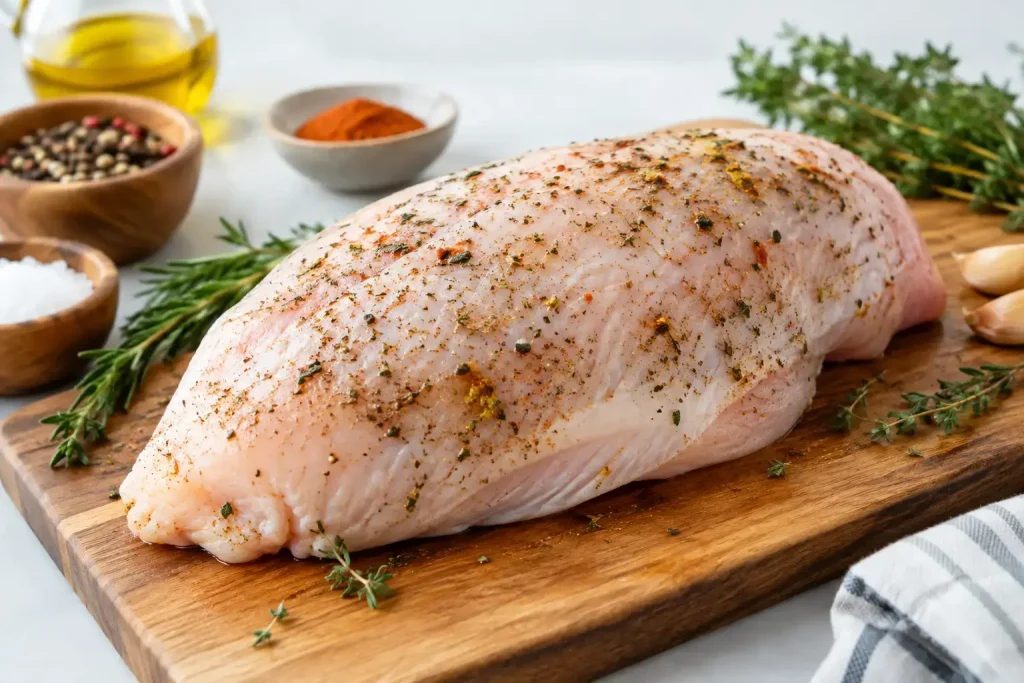
Turkey breast has a mild, clean flavor that can taste truly special or disappointingly bland. The difference usually comes down to seasoning before it ever reaches the oven, grill, or smoker. This guide to seasoning turkey breast will help you build layers of flavor without covering up the bird itself, whether you are making a simple Tuesday dinner or the centerpiece of a holiday table.
Start With the Right Amount of Salt
Salt is the foundation of a well-seasoned turkey breast. It does more than make food taste salty: it wakes up the natural savoriness of the meat, helps spices taste more distinct, and can improve the way the turkey holds onto moisture as it cooks.
For a turkey breast that has not been brined or injected, use about 3/4 to 1 teaspoon of kosher salt per pound of meat. If you are using a seasoning blend that already includes salt, check the label and season with a lighter hand. Himalayan pink salt offers a clean, balanced flavor, but it is still salt, so the same rule applies.
Salt the turkey at least 45 minutes before cooking when possible. For deeper seasoning, apply it the night before and leave the breast uncovered on a rack in the refrigerator. This dry-brining approach gives the salt time to move beyond the surface while also drying the skin slightly for better browning.
If your turkey breast has been pre-brined, is labeled self-basting, or comes injected with a solution, skip additional salt until you taste the finished meat. You can still use pepper, herbs, citrus, garlic, and smoky spices, but an overly salty turkey is difficult to rescue.
Choose a Flavor Direction Before You Season
Turkey works with plenty of flavors, but tossing every spice in the cabinet onto one breast can make the result muddy. Pick a direction first, then build around it. A good seasoning blend saves time here because the balance is already handled for you.
For a classic roasted turkey breast, think black pepper, garlic, onion, sage, thyme, rosemary, and a touch of paprika for color. This is familiar, savory, and especially good with gravy, stuffing, mashed potatoes, and roasted root vegetables.
For a brighter, lighter plate, pair lemon zest with black pepper, garlic, parsley, and oregano. This style shines with grilled turkey breast, rice pilaf, green beans, or a crisp salad. A citrus-forward blend such as Heath’s Blends Peppery Lemon can bring that fresh pop without requiring a long list of measuring spoons.
If you want more backyard barbecue character, reach for smoked paprika, chili powder, garlic, onion, black pepper, and a little brown sugar. The sugar is optional, but it helps create a dark, appealing crust. Keep it modest when cooking over high heat, since too much can burn before the turkey is done.
A Southwest-inspired turkey breast can handle cumin, coriander, chile, garlic, oregano, and lime. It is excellent sliced for tacos, grain bowls, sandwiches, or salads. Turkey is lean, so bold flavors give it personality without needing a heavy sauce.
Make a Dry Rub That Sticks
A dry rub needs a little help adhering to the meat. Pat the turkey breast dry first, then coat it lightly with olive oil, melted butter, or mayonnaise. This is not about adding a thick layer of fat. A thin film gives the spices something to hold onto and supports browning.
For each pound of turkey breast, plan on roughly 1 to 1 1/2 teaspoons of seasoning blend, plus salt if your blend is salt-free. Use more for a large bone-in breast with skin, since some seasoning will stay on the skin rather than reaching every slice. For a boneless, skinless breast, use a slightly lighter touch at first. You can always add a finishing sprinkle after slicing.
Rub the seasoning over every side, including the edges. If the breast is skin-on, gently loosen the skin with your fingers and work some seasoning directly onto the meat underneath. This small step creates better flavor in every bite, while seasoning the outside of the skin delivers color and crunch.
Do not forget the underside. It may not be the pretty side, but it still deserves seasoning. Even coverage is what keeps one slice flavorful and the next one flat.
Give the Seasoning Time to Work
You can season turkey breast right before cooking and still get a tasty meal. But when you have time, rest it after applying the rub. Thirty minutes at room temperature is enough to take the chill off before roasting. Two to eight hours in the refrigerator gives the herbs and spices more time to settle in.
For overnight seasoning, be thoughtful about salt. A salt-heavy rub left on too long can cure the exterior and make it taste firmer than you want. A dry brine is ideal when you are deliberately measuring the salt. A low-salt herb and spice blend is a better choice when you want a long rest without pushing salinity too far.
There is one exception: rubs with a lot of acid. Lemon juice, vinegar, and other acidic ingredients can make the surface of poultry mushy if they sit too long. If you are using a wet marinade with citrus or vinegar, keep the marinating window closer to 30 minutes to 2 hours. Save fresh lemon juice for the end if you want the cleanest texture.
Match the Seasoning to Your Cooking Method
Roasting gives you the most control. A butter-and-herb seasoning with garlic, pepper, sage, and thyme loves an oven set around 375°F. Start with the breast uncovered so the exterior can brown, and loosely tent it only if it darkens too quickly.
Grilling benefits from a little oil and a rub without too much sugar. Use medium or indirect heat, especially for thicker bone-in breasts. Smoky paprika, pepper, garlic, and chile create grill-friendly flavor and a beautiful bronze finish.
For smoking, keep the seasoning savory and confident. Smoke already adds a strong personality, so you do not need to bury it under ten competing spices. Pepper, garlic, onion, paprika, and herbs are dependable partners. A small amount of brown sugar is welcome if you like a bark with a hint of sweetness.
No matter how you cook it, use an instant-read thermometer. Pull turkey breast when the thickest part reaches 160°F, then let it rest. The temperature will continue climbing toward the safe final temperature of 165°F while the juices settle back into the meat. Rest a small breast for 10 to 15 minutes and a larger one for 20 minutes before slicing.
Avoid the Seasoning Mistakes That Dry Out Turkey
The first mistake is relying on seasoning alone to fix overcooked meat. Spices bring flavor, but no rub can replace moisture. Turkey breast is lean, so temperature matters as much as the ingredients in your shaker.
The second is using only surface seasoning on a thick breast. Season beneath the skin, dry-brine ahead, or butterfly a boneless breast for more even flavor and faster cooking. Butterflying is especially useful for grilling, where an unevenly thick piece can turn dry on one end before the center is ready.
The third is adding fresh herbs too early over high heat. Delicate parsley, basil, and fresh rosemary can burn. Use dried herbs or a dry blend during cooking, then finish with fresh herbs after the turkey rests for brighter color and aroma.
Finally, do not slice the turkey breast straight out of the oven. Those few resting minutes are not a formality. They are what keep the juices in the slices instead of on the cutting board.
A well-seasoned turkey breast does not need to be complicated. Start with enough salt, choose a flavor profile that fits the meal, give the spices a little time, and cook to temperature. Then slice it thick, catch every drop of juice, and let your table enjoy what a few good herbs and spices can do.