
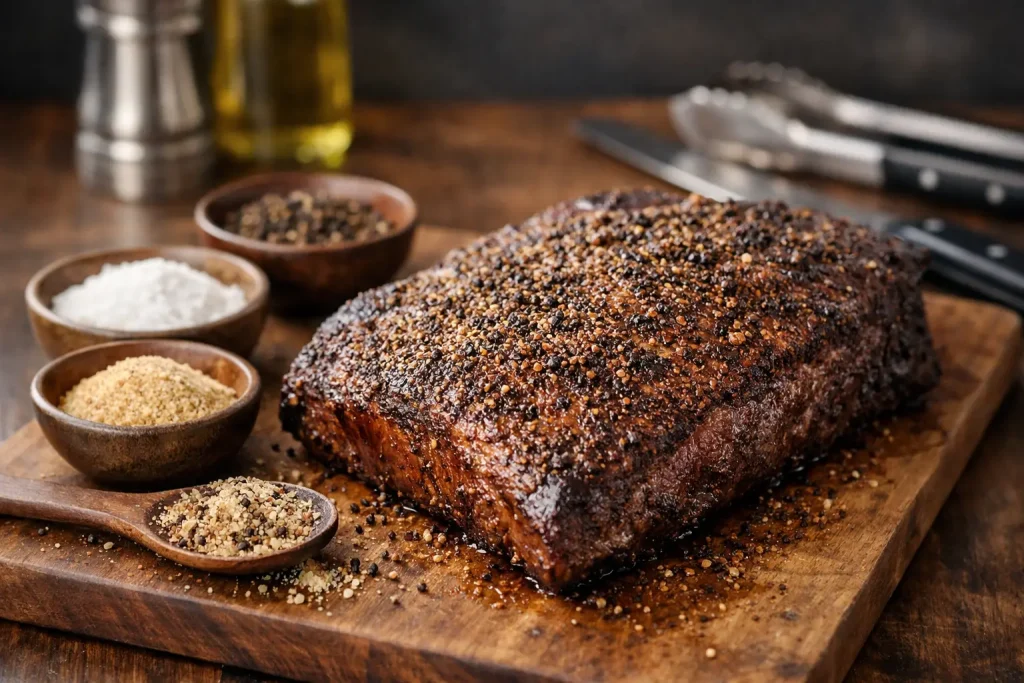
A great brisket does not need a crowded spice cabinet. It needs patience, steady heat, good smoke, and SPG seasoning for brisket that gives the beef room to taste like beef. Salt pulls its weight, pepper builds that handsome dark bark, and garlic brings a savory backbone that keeps every bite interesting.
For backyard pitmasters and first-time brisket cooks alike, this is barbecue at its most honest. Three familiar ingredients can turn a well-trimmed cut into tender, smoke-kissed slices worthy of a weekend crowd. The trick is not making the rub more complicated. It is knowing how to apply it, when to apply it, and how to cook the brisket until the connective tissue gives in.
Why SPG seasoning works so well on brisket
SPG means salt, pepper, and garlic. The classic approach is simple because brisket is already packed with deep, rich flavor. Heavy sugar, aggressive chili powders, and a long list of herbs can be delicious, but they can also compete with the natural character of the meat and turn dark during a long cook.
Salt seasons the brisket beyond the surface when it has time to rest. Coarse black pepper is the bark builder, catching smoke and creating that peppery, Texas-style crust. Garlic rounds out the flavor with a warm savoriness that feels complete without becoming loud.
The balance also works across the whole packer brisket. The leaner flat benefits from seasoning that helps it taste juicy and full, while the fattier point can carry plenty of pepper and smoke without becoming one-note. That makes SPG a dependable choice when one brisket needs to please the whole table.
Choosing the right SPG seasoning for brisket
Not every salt, pepper, and garlic blend behaves the same way over a 10- to 14-hour smoke. Texture matters as much as flavor. A blend with coarse pepper creates a more pronounced bark, while finely ground pepper gives a smoother finish and can look darker sooner. Neither is wrong. Choose based on the style of brisket you enjoy.
For the salt, a clean mineral-rich option such as Himalayan pink salt brings a crisp savory flavor without requiring extra additives. Look for a seasoning made with real herbs and spices, without MSG, fillers, artificial flavors, or preservatives. With a simple blend, every ingredient has a job, so ingredient quality shows up clearly on the plate.
Garlic should support rather than dominate. Granulated garlic is often a smart choice for long barbecue cooks because it distributes evenly and is less likely to scorch than very fine garlic powder. Heath’s Blends S.P.O.G adds onion to the familiar salt-pepper-garlic foundation, which is a welcome option for cooks who want a little more savory depth while keeping the brisket profile clean and beef-forward.
The best ratio depends on your bark goal
Traditional Texas-style brisket often leans hard into black pepper, sometimes using equal parts kosher salt and coarse black pepper with only a smaller amount of garlic. That produces a bold, pepper-crusted exterior that stands up to post oak smoke and rich rendered fat.
If your household prefers a less peppery bite, choose a balanced SPG blend or use a lighter hand on the pepper-forward rub. A brisket should have character, not make every guest reach for a glass of water. Similarly, if you are smoking with hickory or mesquite, a milder pepper level can keep the smoke from taking over.
How much seasoning to use on brisket
A whole packer brisket can handle more seasoning than most cooks think. It is a large cut with a thick fat cap, and a good portion of the rub stays on the exterior as bark. The goal is an even coat that looks generous without forming clumps.
After trimming, pat the brisket dry. Apply SPG from about 8 to 12 inches above the meat, moving your hand steadily so the seasoning falls in a light, even layer. Cover the top, bottom, and sides. Pay special attention to the edges of the flat, where a bland bite can hide.
You should still be able to see the meat beneath the seasoning. If the surface looks like it has been buried under a sandy blanket, you have probably gone too far. Too much salt is difficult to fix, especially on a smaller brisket flat. With a full packer, be generous but controlled.
A binder is optional. Yellow mustard, hot sauce, or a thin coat of beef tallow can help seasoning adhere, but brisket has enough natural moisture for SPG to stick on its own. If you use a binder, keep it light. You are not trying to add another major flavor layer.
When to season your brisket
For the deepest seasoning, apply SPG 8 to 24 hours before the brisket goes on the smoker. Place it uncovered on a rack in the refrigerator. This dry-brining window gives the salt time to work into the meat while the surface dries slightly, setting the stage for better bark.
If dinner plans came together at the last minute, seasoning immediately before smoking still makes excellent brisket. Do not let the lack of an overnight rest stop you from cooking. The longer rest is a bonus, not a requirement.
There is one timing issue to avoid: seasoning a brisket only 20 to 45 minutes before it hits the heat. During that short window, salt draws moisture to the surface but has not yet had time to move back into the meat. Either season well ahead or season right before the brisket goes on.
Smoking brisket with SPG: the moves that matter
Set your smoker for 225 to 275 degrees F. Lower temperatures can produce a beautiful bark and plenty of smoke flavor, while the higher end of that range shortens the cook and still delivers excellent results. Every smoker runs a little differently, so trust your brisket more than the clock.
Place the brisket with the fat side positioned for your cooker. If heat comes primarily from below, fat side down can shield the flat. If your smoker sends heat from above, fat side up may make more sense. This is less about tradition and more about protecting the leanest part of the brisket from harsh heat.
Let the bark develop before wrapping. Depending on the cooker, humidity, and size of the brisket, that often happens when the internal temperature reaches roughly 165 to 175 degrees F. The surface should look dark and set, and the seasoning should not smear easily when touched gently.
Wrapping in unwaxed butcher paper helps preserve a firmer bark while nudging the brisket through the stall. Foil speeds the cook and holds moisture very effectively, though it can soften the crust. For a first brisket, foil is forgiving. For cooks chasing a drier, pepperier bark, butcher paper is often the better fit.
Cook until the probe slides into the flat with very little resistance, usually somewhere around 195 to 205 degrees F. Temperature is a checkpoint, not the finish line. If the probe still feels tight, keep cooking. If it glides in like softened butter, the brisket is ready to rest.
Do not rush the rest
Resting is where a good brisket becomes a memorable one. Hold the wrapped brisket in a dry cooler or warm oven for at least one hour, and two to four hours is even better when your schedule allows. The meat relaxes, juices settle, and slices stay together instead of crumbling across the cutting board.
When it is time to serve, separate the point from the flat if needed and slice the flat across the grain in pencil-thick pieces. Turn the point about 90 degrees before slicing because its grain runs differently. A final light sprinkle of SPG on the slices can be tasty, but taste first. A properly seasoned brisket should not need rescuing at the table.
The beauty of SPG is that it keeps the spotlight where it belongs: on the brisket, the smoke, and the care you put into the cook. Start simple, make notes on the pepper level and cooking time, then make the next one even more your own.