
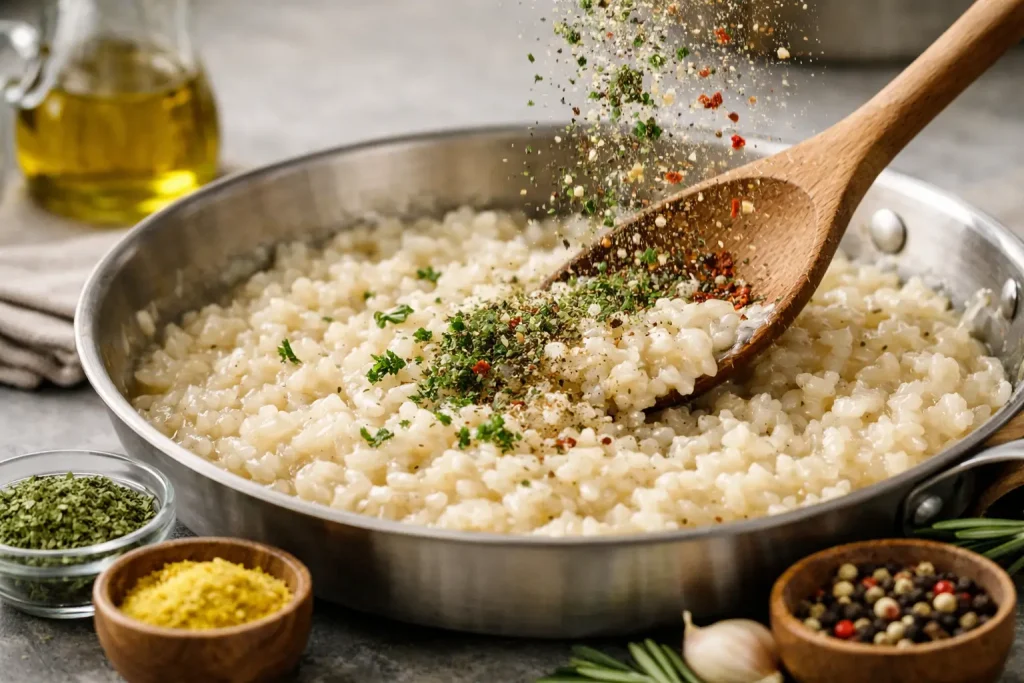
A great risotto does not need a crowded spice cabinet. It needs smart seasoning for risotto from the first sizzle of the shallots to the final spoonful of cheese. The rice should taste deeply savory, the broth should feel woven into every grain, and the finish should make you reach back into the bowl for one more bite.
That is where timing matters. Risotto has a gentle flavor at its center, so every seasoning choice shows up. Add too much too early and a bold spice can flatten the dish. Wait until the end to season at all, and the rice may taste creamy but bland. Build flavor in layers instead, and even a simple Parmesan risotto can taste like something special.
Seasoning for Risotto Starts With the Base
Risotto begins before the rice hits the pan. Start with a little olive oil, butter, or both, then cook finely chopped shallot or onion until soft and sweet. A small pinch of salt at this stage helps draw out moisture and creates a savory foundation without making the finished dish overly salty.
Garlic is welcome, but use a light hand. One minced clove can add warmth to a pot serving four people. More than that can take over the delicate flavor of Arborio or Carnaroli rice. If you want a deeper, more woodsy note, sauté sliced mushrooms with the shallots before adding the rice.
Toast the rice for a minute or two until the edges look slightly translucent and smell nutty. This is also a fine moment for dry spices that benefit from a little heat. Black pepper, a pinch of smoked paprika, or a small amount of crushed red pepper can bloom in the fat and bring a fuller flavor to the finished risotto.
Let Your Broth Do Some of the Work
The broth is not just liquid. It is a major part of the seasoning plan. Use a broth you would happily sip on its own, whether it is chicken, vegetable, mushroom, seafood, or a homemade stock from the freezer. Keep it warm in a separate pot so the rice continues cooking steadily as you add each ladleful.
Taste the broth before you begin. Store-bought broth can range from lightly salted to intensely salty, which changes how much salt your risotto needs later. If your broth is already salty, hold back on additional salt until the rice is nearly tender. If it is low-sodium, season gradually as you go so the flavor reaches the center of each grain instead of sitting only on top.
Wine also plays a seasoning role. A splash of dry white wine after toasting the rice brings brightness and helps keep rich ingredients from feeling heavy. Let it cook down until the sharp alcohol aroma fades, then begin adding warm broth. No wine on hand? A squeeze of lemon at the end can provide a similar lift, though it will taste fresher and more direct.
Choose a Flavor Direction Before You Add Spices
The best seasoning for risotto depends on what is going into the bowl. A simple cheese risotto wants restraint. A mushroom risotto can handle earthy herbs. Shrimp or scallops call for citrus and pepper. Roasted vegetables open the door to bolder Southwest-inspired flavor.
For classic Parmesan risotto
Use shallot, black pepper, a little garlic, Parmesan, and butter. Fresh parsley or chives at the finish keep it lively. Nutmeg is a traditional option, but it should be nearly invisible – think of it as warmth, not a featured flavor.
For mushroom risotto
Mushrooms love thyme, black pepper, garlic, and a touch of rosemary. Dried porcini powder or the strained soaking liquid from dried mushrooms can add major depth, but balance it with a bright finish. A little lemon zest or a splash of dry white wine prevents the earthy flavors from becoming too dark.
For seafood risotto
Try lemon zest, cracked black pepper, parsley, and a subtle garlic note. A clean pepper-and-citrus blend can make this easy. Heath’s Blends Peppery Lemon is especially at home with shrimp, crab, scallops, or a creamy risotto served beside grilled fish. Add it in small amounts and taste as you go, since seafood is easily overshadowed.
For vegetable or roasted squash risotto
Sage, thyme, black pepper, and a pinch of smoked paprika bring out the sweetness in squash, corn, roasted cauliflower, or sweet potatoes. For a little heat, use crushed red pepper rather than loading the pot with chili powder. You want a slow glow of spice, not a bowl that hides the vegetables.
Salt, Pepper, and the Finish Matter Most
Risotto gets its signature texture from starch released as the rice is stirred and cooked in broth. That creamy body can soften the perception of salt, which is why the final taste check is nonnegotiable. When the rice is tender with just a slight bite at the center, take the pan off the heat before finishing it.
Now comes the part Italian cooks call mantecatura: stir in cold butter and finely grated cheese until the risotto looks glossy and loose enough to spread gently across a warm bowl. Parmesan is the familiar choice, while Pecorino brings a saltier, sharper edge. For a lighter finish, use good olive oil and a little cheese rather than a heavy amount of both.
Taste after the butter and cheese are fully incorporated. Then adjust with salt, freshly cracked black pepper, or a final pinch of your chosen seasoning blend. This is the best time for lemon zest, tender herbs, truffle salt, or a few drops of lemon juice. Heat can dull these bright flavors, so adding them late keeps their personality intact.
Be careful with salt if you are using salty Parmesan, cured meats, olives, capers, or broth made from a concentrate. In those cases, black pepper, herbs, lemon, and a splash of wine can make the dish taste more seasoned without simply making it saltier.
Common Seasoning Mistakes That Make Risotto Flat
The most common mistake is treating risotto like plain rice and seasoning only at the table. Salt and aromatics need time to become part of the dish. Season lightly at the beginning, rely on a flavorful broth, and make your final adjustment after the cheese goes in.
The second mistake is adding every herb and spice at once. Dried thyme can go in early with the rice, but fresh basil, parsley, chives, and lemon zest belong near the end. Their fresh character is the contrast that makes a creamy risotto feel balanced rather than heavy.
Finally, do not confuse more seasoning with more flavor. Risotto rewards a clear point of view. Decide whether you want buttery and classic, earthy and mushroom-rich, bright and lemony, or smoky and vegetable-forward. Let two or three supporting flavors do their job well.
Serve risotto right away while it is still loose, glossy, and warm. A final turn of black pepper, a shower of herbs, or a little grated cheese may be all it needs. It is amazing what the right spice, added at the right moment, can do for a humble pot of rice.