
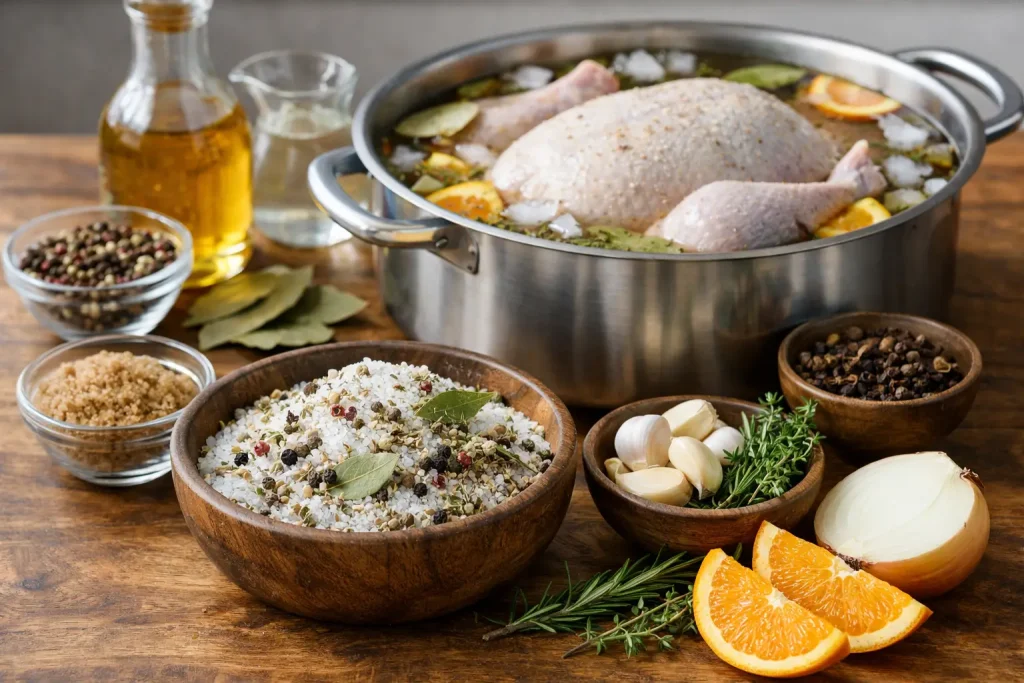
A great turkey brine seasoning recipe does more than make the bird taste salty. It carries flavor below the surface, helps the breast meat stay juicy, and gives every slice a savory, herb-forward foundation before the turkey ever reaches the oven, smoker, or grill. For a holiday centerpiece that earns seconds, the brine needs the right balance of salt, sweetness, aromatics, and patience.
Brining is one of the simplest ways to give a large turkey a little insurance. Turkey is lean, and the breast cooks faster than the legs. A properly brined bird holds onto more moisture during cooking, while herbs, pepper, citrus, and garlic build flavor that supports – rather than competes with – your favorite rub, butter, gravy, or barbecue sauce.
Why This Turkey Brine Seasoning Recipe Works
The key is restraint. Too much salt makes the turkey taste cured. Too much sugar can cause the skin to darken before the bird is finished. Too many loud spices can turn a beautiful roast turkey into something muddy and hard to identify.
This blend starts with kosher salt for effective brining, then adds brown sugar for roundness and better browning. Bay leaves, rosemary, thyme, garlic, black pepper, and citrus give it the classic holiday flavor people expect, with enough brightness to keep each bite lively. It is clean, familiar, and full-bodied – exactly what a turkey needs.
Use a wet brine when you want maximum moisture and you have refrigerator space for a large container. A dry brine is easier to manage and gives you exceptionally crisp skin, but it will not carry herbal flavor as deeply into the meat. Both methods work. For a first-time briner or a turkey that tends to come out dry, wet brining is a dependable place to start.
Turkey Brine Seasoning Recipe
This recipe makes enough wet brine for one 12- to 16-pound turkey. If your turkey is larger, scale the recipe up and make sure the bird is fully covered by the brine.
Ingredients
- 1 gallon water, divided
- 1 1/2 cups kosher salt
- 3/4 cup packed brown sugar
- 2 tablespoons whole black peppercorns
- 2 tablespoons dried rosemary, or 4 fresh rosemary sprigs
- 2 tablespoons dried thyme, or 8 fresh thyme sprigs
- 5 bay leaves
- 1 tablespoon garlic powder
- 1 tablespoon onion powder
- 2 oranges, sliced
- 1 lemon, sliced
- 1 gallon ice water
A quick note on salt: kosher salt crystals vary by brand. If you use a fine-grain kosher salt, measure by weight when possible. You want a seasoned turkey, not a salt bomb. Avoid table salt here because its smaller crystals pack much more densely into a cup.
Directions
In a large stockpot, combine 1 gallon of water with the kosher salt, brown sugar, peppercorns, rosemary, thyme, bay leaves, garlic powder, onion powder, orange slices, and lemon slices. Bring the mixture just to a simmer, stirring until the salt and sugar dissolve. There is no need to boil it hard. Gentle heat wakes up the herbs and spices without making the citrus bitter.
Remove the pot from the heat and let the seasoned liquid steep for 20 to 30 minutes. Pour it into a food-safe brining bucket, large stockpot, or brining bag set inside a sturdy roasting pan. Add the gallon of ice water and stir well. The brine must be fully chilled before the turkey goes in.
Remove the giblets and neck from the turkey cavities. Place the turkey breast-side down in the cooled brine, adding a little more cold water if needed to cover the bird. Keep it refrigerated at 40°F or below for 8 to 12 hours. A 12-pound turkey can usually use the full 12 hours; do not brine a smaller bird overnight if it is under 10 pounds.
When the brining time is up, lift out the turkey and discard the brine. Do not reuse it for gravy, basting, or anything else. Pat the bird very dry inside and out with paper towels, then place it uncovered in the refrigerator for 2 to 8 hours if time allows. That air-drying step is your friend for golden, crisp skin.
What to Do Before Roasting or Smoking
A brined turkey already has salt throughout the meat, so your finishing seasoning should lean on herbs, pepper, paprika, garlic, and citrus rather than extra salt. This is where many cooks accidentally overdo it. Brine first, then season with a lighter hand.
Rub the dried turkey with softened unsalted butter or a thin coat of oil. Add a salt-free or low-salt poultry rub over the skin and under the breast skin if you can reach it. For a bright, peppery finish, a light dusting of Heath’s Blends Peppery Lemon works especially well after brining, since the citrus and black pepper bring lift without burying the turkey’s natural flavor.
Roast at 325°F until the thickest part of the breast reaches 160°F and the thigh reaches at least 170°F. The breast temperature will continue to rise as the turkey rests. Give it 30 to 45 minutes before carving, loosely tented with foil if needed. Resting is not wasted time – it lets the juices settle back into the meat instead of running across the cutting board.
Brining Mistakes That Can Ruin a Good Turkey
The biggest mistake is putting a turkey into warm brine. Cooling the brine completely is a food-safety must, not a suggestion. Use ice water, refrigerate the liquid, and check that it is cold before adding the bird.
The second mistake is brining a turkey that already contains a salt solution. Check the label carefully. If it says “self-basting,” “enhanced,” or lists broth, sodium solution, or salt among the ingredients, skip a full wet brine. That turkey has already been treated for moisture, and an additional brine can make it unpleasantly salty. Instead, use a no-salt herb rub and focus on careful cooking temperatures.
Finally, do not rinse the turkey after brining. Rinsing does not remove salt from inside the meat, and it can spread raw poultry juices around the sink. Simply remove the bird from the brine, pat it dry thoroughly, and move on to your butter, rub, and cooking plan.
Easy Flavor Swaps for Your Table
This classic brine is built for a traditional herb-roasted turkey, but it is flexible enough to follow your menu. For a Southwest-style turkey, replace the orange with lime and add a tablespoon of smoked paprika plus a teaspoon of cumin. For a barbecue-friendly bird, add two teaspoons of crushed red pepper and a tablespoon of mustard seed, then finish the cooked turkey with your favorite tangy sauce.
If you are serving a rich spread of mashed potatoes, stuffing, and gravy, keep the brine classic and let the turkey be the savory centerpiece. If your sides are bright and fresh – think grilled vegetables, citrus salad, or cranberry relish – extra lemon and black pepper will fit right in. Great seasoning is not about using every spice in the cabinet. It is about choosing a flavor direction and letting it shine.
Make the brine the day before, give the turkey its proper time in the cold, and let the aroma of herbs, citrus, and roasted skin do the talking when everyone gathers around the table.